

Shopping is a crucial function in companies and organizations, encompassing the acquisition of goods and services from external sources. It involves activities such as sourcing Suppliers, negotiating contracts, managing Supplier relationships, and ensuring timely delivery of products or services. Effective procurement strategies can help companies reduce costs, improve quality, and streamline supply chain operations. In this article, we will discuss the significance of procurement, key strategies for effective procurement, and provide examples of how organizations can optimize their procurement processes. Check out What is Procurement as a Service (PaaS)?
📓 Procurement – definition 📓
Procurement, also known as purchasing or procurement management, is the process of acquiring goods, services, or works from an external source. It involves various stages, including identifying procurement needs, conducting market research, soliciting offers or proposals from Suppliers, evaluating offers, negotiating contracts, and ultimately selecting and managing the chosen Supplier. The primary goal of procurement is to obtain the necessary resources at the best possible cost, quality, and terms to meet the organization’s needs.
Effective procurement management contributes to optimizing profit margins, improving operational efficiency, and reducing costs. Access to reliable Suppliers and competitive prices is essential for companies to meet Customer expectations and achieve profits.
⚙️ How does procurement work? ⚙️
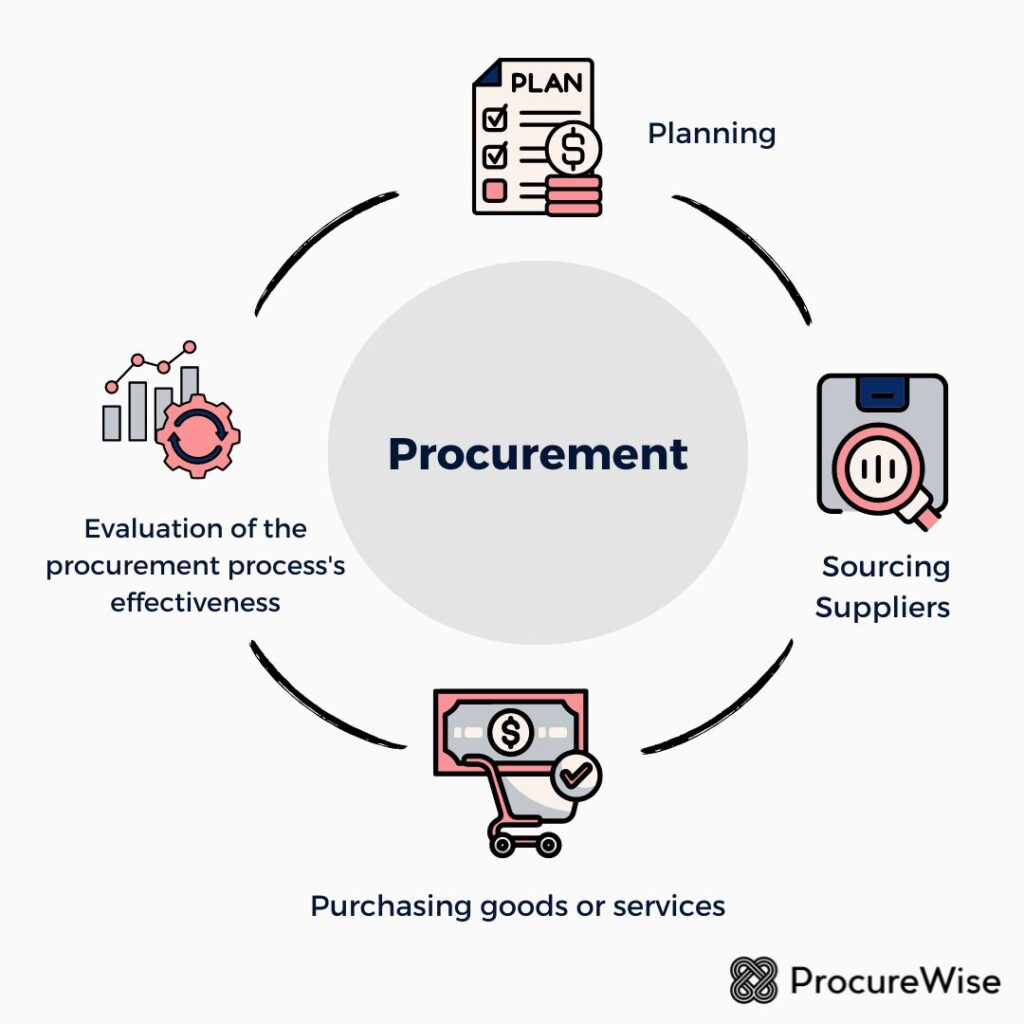
The procurement process is a crucial element of supply chain management in businesses. It involves various stages, including planning, sourcing Suppliers, purchasing goods or services, and evaluating the effectiveness of the process.
➡️ Planning involves determining the procurement needs of the company, analyzing the demand for materials, products, or services, and establishing a budget and procurement schedule.
➡️ Sourcing Suppliers entails finding Suppliers whose offerings meet specific requirements. Companies can use various sources of information, such as market research, procurement portals, or recommendations.
➡️ Purchasing goods or services involves negotiating contract terms, signing agreements, and conducting financial transactions (payment).
➡️ Evaluation of the procurement process’s effectiveness: The company analyzes the results, compares them with expectations, and takes actions to improve the procurement process.
Effective procurement management requires collaboration between different departments within the company, such as finance, legal, IT, and supply chain management. Each of these departments has unique tasks and responsibilities in the procurement process, making coordination and collaboration crucial for achieving positive outcomes.
🛍️ Procurement competetive bidding 🛍️
Procurement bidding is a crucial element of the procurement process, used for both goods and services. Competitive bidding ensures fairness and transparency in Supplier selection, allowing for comparison of offers and the selection of the most advantageous.
For goods procurement, the bidding process typically involves issuing an official invitation for companies to submit bids. The company that meets specified conditions and criteria is selected through the bidding process. Key factors considered in selecting Suppliers include product quality, price, delivery time, and payment terms.
However, for service procurement, the bidding process is more complex. Service bids require detailed analysis and evaluation. The selection of a Supplier is based not only on cost criteria but also on the quality of services, references, Supplier experience, and the ability to meet the company’s expectations and requirements.
Legal professionals play a crucial role in the bidding process, analyzing operational aspects and costs to choose the Supplier that best meets the company’s needs. Lawyers are responsible for reviewing bidding documents, negotiating contract terms, and drafting agreements.
📚 Types of procurement 📚
Types of procurement can be divided into several categories, such as direct procurement, indirect procurement, and service procurement. Each type of procurement plays a crucial role in maintaining the functioning of the enterprise.
👉 Direct procurement involves purchasing materials necessary for production within the company. These can include raw materials, spare parts, packaging materials, or production equipment. Direct procurement of these materials is crucial for the continuity of production and delivering products or services to Customers.
👉 Indirect procurement involves purchasing items not directly related to production but necessary for the company’s operations. These can include office supplies, computer equipment, office furniture, cleaning supplies, or services such as IT outsourcing or accounting services. Indirect procurement aims to ensure the smooth functioning of the enterprise by providing the necessary tools and auxiliary means.
👉 Purchasing services from external providers: This may include services such as transportation, construction and renovation work, consulting, advertising, or employee training. Service procurement allows companies to benefit from the knowledge and experience of external specialists, enriching their activities and enabling them to achieve higher quality and efficiency.

❓ How does the procurement process work in 7 steps❓
The procurement process includes the necessary steps and actions to acquire goods, services, or construction works from an external source. These steps typically include:
1️⃣ Identification of needs: At this stage, the organization determines what goods or services are required and in what quantity.
2️⃣ Planning: The organization develops a procurement plan, including defining the budget, identifying potential Suppliers, and selecting the appropriate procurement method.
3️⃣ Ordering: This step involves reaching out to potential Suppliers and requesting proposals or bids. This can be done through a request for proposal (RFP) or other procurement methods.
4️⃣ Evaluation and selection: The organization reviews the received proposals or bids and assesses them based on pre-established criteria. This includes evaluating the Supplier’s experience, quality, prices, and other factors. The organization then selects the Supplier or Suppliers that best meet its needs.
5️⃣ Contracting: After selecting the Supplier, the organization negotiates and finalizes the contract. This agreement outlines the terms of the order, including prices, delivery schedules, and other essential details.
6️⃣ Delivery and performance: The Supplier delivers goods or services according to the terms agreed upon in the contract. The organization may monitor the Supplier’s performance to ensure they fulfill their obligations and deliver high-quality products or services.
7️⃣ Payment and closure: Upon receiving and accepting the goods or services, the organization makes payments to the Supplier as per the contract. The ordering process is considered complete, and any necessary formalities or documentation are finalized.
Overall, the procurement process ensures that organizations acquire goods and services in a transparent, efficient, and cost-effective manner.
Summary
Understanding financial outcomes or profits is essential when making procurement decisions. This involves assessing the costs associated with purchases and can help companies identify cost-saving opportunities. Procurement and purchasing differ, with procurement encompassing the entire process of acquiring goods and services, while purchasing specifically refers to buying from a chosen Supplier.