
As the e-commerce landscape continues to evolve, it’s more important than ever for FMCG (Fast-Moving Consumer Goods) brands to implement effective strategies to stay competitive and drive sales online. From optimizing product listings to leveraging social media marketing, there are a variety of tactics that FMCG brands can use to boost their e-commerce performance. In this guide, we’ll explore some of the best e-commerce strategies specifically tailored for FMCG brands, helping you navigate the digital marketplace and reach your target audience effectively. Read more Mastering SEO in the FMCG Industry: Boosting Visibility and Sales
🍎 Understanding FMCG in e-Commerce 🛒
FMCG (fast-moving consumer goods) are products that are sold quickly and at relatively low cost, such as food, beverages, personal care items, household cleaning products, and toiletries. Recently, the FMCG industry has experienced a noticeable shift towards eCommerce, driven by several factors and trends that are reshaping consumer shopping habits.
🥬 One major factor is changing consumer behavior. With increased internet penetration and widespread smartphone use, consumers are more comfortable shopping online. The convenience of ordering FMCG products from home is a significant driver, further accelerated by the COVID-19 pandemic, which has made consumers more reluctant to visit physical stores due to safety concerns.
🥬 The rise of online marketplaces and digital platforms is another influential trend. These platforms offer a wide range of FMCG market products from various brands, enabling consumers to compare prices and make informed decisions. The convenience of accessing multiple brands on a single platform is appealing, along with frequent discounts and promotions, which encourage online shopping.
🥬 The shift to eCommerce has significantly impacted traditional retail stores. As more consumers shop online, brick-and-mortar stores face declining foot traffic and sales, leading to store closures, downsizing, and increased competition among retailers. Consequently, traditional retailers are investing in their own eCommerce capabilities and omnichannel strategies to remain competitive.
🥬 For FMCG brands, eCommerce offers several strategies and benefits. It allows brands to reach a broader audience, including consumers in remote areas or international markets, without needing physical distribution networks. Additionally, eCommerce enables brands to collect valuable data on consumer behavior, which can be used to personalize marketing campaigns and improve customer experiences.
🥬 Furthermore, eCommerce helps FMCG brands strengthen their brand presence through targeted marketing efforts, such as social media, online advertising, and influencer marketing. These strategies enhance brand visibility and enable direct consumer engagement, leading to improved brand loyalty and customer retention. Personalized shopping experiences and tailored promotions also contribute to this loyalty.
The shift towards FMCG eCommerce is driven by changing consumer behavior and the rise of online marketplaces. This shift challenges traditional retail stores, prompting them to enhance their eCommerce capabilities. For FMCG brands, eCommerce offers numerous benefits, including expanded customer reach, valuable consumer insights, and stronger brand presence, helping them stay competitive in the dynamic consumer goods industry.
Take advantage of our procurement process review services now!
✨ Recent Trends in Consumer Goods e-Commerce ✨
The consumer goods e-commerce industry has seen significant growth due to widespread smartphone adoption and high-speed internet. Online platforms like Amazon have further accelerated this trend, allowing consumers to shop anytime and anywhere, impacting traditional retail stores.
👉 Consumers increasingly prefer online shopping for daily needs due to the convenience of accessing e-commerce platforms via smartphones. This shift has prompted a demand for fast and reliable delivery services, with same-day or next-day delivery becoming crucial for success. Companies are leveraging technology and logistics to meet these expectations.
👉 Amazon and similar platforms revolutionize shopping by offering a wide range of products, competitive prices, and personalized recommendations. This accessibility and convenience boost sales and foster customer loyalty. The COVID-19 pandemic has further catalyzed e-commerce growth, as lockdowns and social distancing have made online shopping a safer alternative, leading to a surge in sales.
The growth of consumer goods e-commerce is driven by smartphone use, high-speed internet, and the popularity of platforms like Amazon. The convenience, vast product selection, and fast delivery options have transformed consumer shopping habits. The pandemic has reinforced this shift, with the industry poised for continued rapid growth.
🎖️ Best Practices for FMCG eCommerce 🎖️
FMCG eCommerce, or Fast Moving Consumer Goods eCommerce, refers to the online selling of non-durable goods such as food, beverages, personal care products, and household items. As the digital landscape continues to evolve, FMCG brands must adapt and embrace eCommerce to stay competitive. To ensure success in this rapidly growing sector, several best practices should be followed.
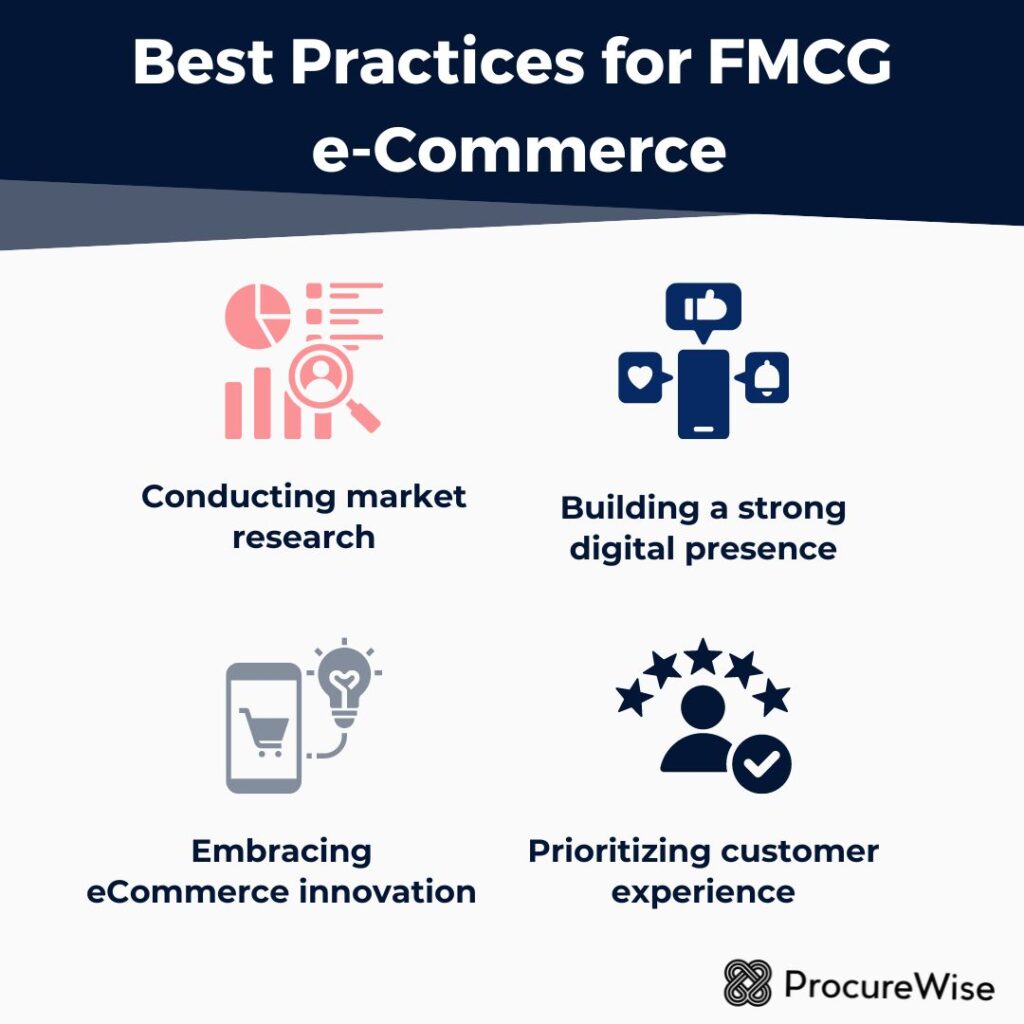
📌 Conducting market research: Understanding the target audience, their online behavior, and preferences is crucial for creating effective eCommerce strategies. By analyzing market trends, consumer demands, and competitive insights, brands can tailor their offerings and marketing efforts to meet customer needs.
📌 Building a strong digital presence: This involves creating an engaging and user-friendly website, optimizing it for search engines, and leveraging social media channels to connect with consumers. As more people turn to online channels for shopping, having a robust online presence is crucial for increasing brand visibility and attracting customers.
📌 Embracing eCommerce innovation: This involves adopting the latest technologies and tools to enhance the online shopping experience. For example, incorporating artificial intelligence and machine learning can personalize product recommendations, improve inventory management, and streamline the checkout process. Additionally, embracing emerging trends such as voice commerce and social commerce can help brands stay ahead of the curve.
📌 Prioritizing customer experience: Providing seamless navigation, secure payment options, and responsive customer service is vital for building trust and loyalty among online shoppers. Brands should invest in efficient supply chain management to ensure quick delivery and hassle-free returns. By prioritizing customer satisfaction, brands can foster long-term relationships and encourage repeat purchases.
Following these digital marketing strategies can significantly enhance FMCG eCommerce strategies. By conducting thorough market research, building a strong digital presence, embracing eCommerce innovation, and prioritizing customer experience, FMCG brands can increase their online visibility, attract more customers, and ultimately drive revenue growth. As the eCommerce landscape continues to evolve, staying proactive and adaptable is key for success in this competitive sector.
🏆 10 Best eCommerce strategies for FCMG 🏆
1️⃣ Building an informative and visually appealing website: Create a user-friendly website that showcases your FMCG products with detailed product descriptions, high-quality images, and easy navigation. Include user reviews and customer testimonials to build trust and credibility.
2️⃣ Mobile optimization: Optimize your website and e-commerce platform for mobile devices to cater to the increasing number of mobile shoppers. Ensure that your website loads quickly and is easy to navigate on smartphones and tablets.
3️⃣ Personalization and targeted marketing: Utilize customer data and analytics to personalize the shopping experience. Segment your target audience and create tailored marketing campaigns based on their preferences, purchase history, and demographics.
4️⃣ Social media marketing: Leverage social media sites like Facebook, Instagram, and Twitter to engage with your target audience, promote your FMCG products, and drive traffic to your e-commerce website. Use visually appealing content, influencers, and promotions to increase brand awareness and generate sales.
5️⃣ Email marketing: Implement an email marketing strategy to stay in touch with your customers. Send personalized offers, product recommendations, and updates on new arrivals. Use email automation tools to send triggered emails based on customer behavior and purchase history.
6️⃣ Seamless checkout process: Ensure that the checkout process on your e-commerce website is smooth and hassle-free. Enable multiple payment options and provide a secure payment gateway. Minimize the number of steps required for checkout to prevent cart abandonment.
7️⃣ Customer loyalty programs: Implement a customer loyalty program to reward repeat customers and encourage brand loyalty. Offer exclusive discounts, early access to new products, or freebies for loyal customers. Provide a seamless rewards redemption process to keep customers engaged.
8️⃣ Omnichannel presence: Integrate your online store with offline retail channels to provide a seamless shopping experience. Offer click-and-collect options, where customers can order online and pick up their items from a physical store. Enable in-store returns for online purchases.
9️⃣ Reviews and ratings: Encourage customers to leave reviews and ratings for your FMCG products. Positive reviews and high ratings build trust and influence purchase decisions. Monitor and respond to customer reviews to show that you value customer feedback.
🔟 Continuous optimization: Continuously analyze and optimize your e-commerce strategy based on customer data and feedback. Monitor website performance, analyze conversion rates, and make necessary improvements to increase sales and customer satisfactivon.
🤖 AI in e-Commerce FCMG strategies 🤖
Artificial intelligence (AI) plays a vital role in creating innovative e-commerce strategies for the Fast Moving Consumer Goods (FMCG) sector. By leveraging AI technologies, companies in this sector can optimize customer experiences, personalize marketing efforts, facilitate supply chain management, and improve operational efficiency.
➡️ One of the key benefits of using AI in e-commerce strategies is the ability to enhance customer experiences. AI-powered chatbots and virtual assistants can provide real-time assistance to customers, answering their queries and helping them make informed purchasing decisions. These intelligent systems can analyze customer data and preferences to offer personalized product recommendations, tailored offers, and promotions. This personalized approach helps in building customer loyalty and driving repeat purchases.
➡️ Additionally, AI enables FMCG companies to personalize their marketing efforts. By analyzing vast amounts of customer data, AI algorithms can identify consumer behavior patterns and segment customers accordingly. This enables companies to target specific customer segments with personalized advertisements and promotions, increasing the effectiveness of marketing campaigns and ultimately boosting sales.
➡️ AI is also transforming supply chain management in the FMCG sector. It automates and optimizes various aspects of the supply chain, including demand forecasting, inventory management, and logistics. Intelligent algorithms analyze historical sales data, market trends, and external factors to accurately predict demand, which in turn helps in managing inventory levels efficiently. AI-powered systems can also improve the accuracy of logistics planning and optimize routes, leading to faster delivery times and reduced costs.
➡️ Furthermore, AI improves operational efficiency by automating repetitive tasks and streamlining processes. For example, AI-powered systems can automate order processing, inventory tracking, and customer support, reducing the burden on human resources and minimizing errors. This automation frees up employees’ time, allowing them to focus on more strategic tasks and decision-making.
AI is revolutionizing the FMCG sector by providing companies with the tools to create innovative e-commerce strategies. From improving customer experiences to personalizing marketing efforts, facilitating supply chain management, and enhancing operational efficiency, AI has become an indispensable tool in driving growth and success in the FMCG e-commerce landscape.