

Content marketing is constantly evolving, and staying ahead of the trends is crucial to maintaining a successful strategy. As we look ahead to 2026, it’s important to anticipate the shifts in consumer behavior, technology, and industry best practices that will shape the content marketing landscape.
From the rise of interactive content and immersive experiences to the increasing importance of personalization and localization, there are several key trends to keep an eye on in 2026. By understanding and implementing these trends, marketers can stay relevant, engage their audiences, and drive results.
In this guide, we’ll explore the top content marketing trends to watch for in 2026, providing insights, examples, and strategies to help you stay ahead of the curve and make the most of your content marketing efforts in unconventional paths of development. Read more What is a marketing plan? Tips and examples
1. Embracing Artificial Intelligence (AI) in Content Marketing 🤖
Artificial Intelligence (AI) is a powerful tool transforming content marketing strategies. Marketers can utilize generative AI tools for content creation (AI-generated content), audience analysis, predictive modeling, targeting, and personalization, resulting in more engaging and conversion-driven content.
👾 AI streamlines content creation by analyzing data to generate new ideas, saving marketers time and delivering relevant content. Additionally, AI aids in automating tasks like report generation and article creation.
👾In audience analysis, AI extracts insights from various data and statistics sources to understand preferences and behaviors, enabling tailored piece of content.
👾 Predictive modeling helps anticipate future trends and behaviors, guiding content strategies for better audience engagement.
👾 Targeting and personalization benefit from AI’s segmentation capabilities, allowing marketers to deliver personalized content to specific audience segments.
👾 However, ethical considerations are crucial. Marketers must ensure transparency, privacy, and address biases in AI algorithms to maintain trust and inclusivity.
AI revolutionizes content marketing by enhancing content creation, audience analysis, targeting, and personalization. Ethical guidelines are essential for responsible AI usage, ensuring transparency and fairness while maximizing its impact on marketing strategies.

2. Developing podcast 🔊
Creating a podcast in 2026 demands staying abreast of content marketing trends. With podcasts burgeoning as a communication medium, businesses find new avenues to engage with audiences intimately. Crafting top-tier episodes, addressing audience pain points, and featuring industry experts are vital.
🎵 Producing high-quality episodes is essential for attracting and retaining listeners amidst fierce competition. Tailoring content to audience needs builds trust and credibility. Collaborating with industry experts not only adds credibility but also broadens the podcast’s reach through cross-promotion and social sharing.
🎵 Optimizing episodes with show notes, transcriptions, and relevant keywords enhances visibility on search engines. These additions improve accessibility and aid in search engine optimization.
🎵 Selecting an appropriate podcast category is crucial for discoverability and alignment with the audience. Careful category selection ensures visibility in curated playlists and recommendation algorithms.
Succeeding in podcasting in 2026 entails following content marketing trends. By creating quality content, featuring experts, optimizing episodes, and choosing the right category, businesses can effectively leverage podcasts as a potent marketing tool to foster audience connections and drive engagement.
Take advantage of our content marketing services now!
3. Focusing on video content 🎥
In recent years, video content has become a crucial element of marketing strategies for good reason. Incorporating videos into marketing campaigns offers numerous benefits and can significantly enhance visibility and engagement. In this article, we’ll discuss the importance of video content in marketing strategies and provide valuable tips on how to increase their visibility.
🎞️ It’s been proven that video content is highly effective in capturing and retaining audience attention. With the abundance of content online, companies must find innovative ways to stand out. Using video content allows marketers to convey their message in a more engaging and memorable manner, making their brand more memorable to consumers.
🎞️ Videos can effectively showcase products or services, providing potential customers with a better understanding of their features and benefits. Visual demonstrations are often more persuasive than written descriptions, making video content a powerful tool for convincing customers to make a purchase.
🎞️ To boost video visibility, optimizing them for search engines is crucial. This involves using relevant keywords in titles, descriptions, and tags, as well as hosting videos on popular platforms like YouTube and Vimeo, and embedding them on websites and social media platforms to drive organic traffic.
🎞️ However, it’s important to note that viral success shouldn’t be the sole focus of video marketing campaigns. While viral videos can generate views and shares, they may not align with overall campaign objectives. Creating content that resonates with the target audience and provides genuine value is more valuable in the long run.
Video content is essential for modern marketing strategies due to its ability to capture attention, engage audiences, and showcase products effectively. By optimizing videos for search engines and creating content aligned with long-term customer values, businesses can increase visibility and effectiveness in their video marketing efforts. Investing in video content is a long-term strategy that can yield significant benefits and help businesses stand out in today’s competitive market.
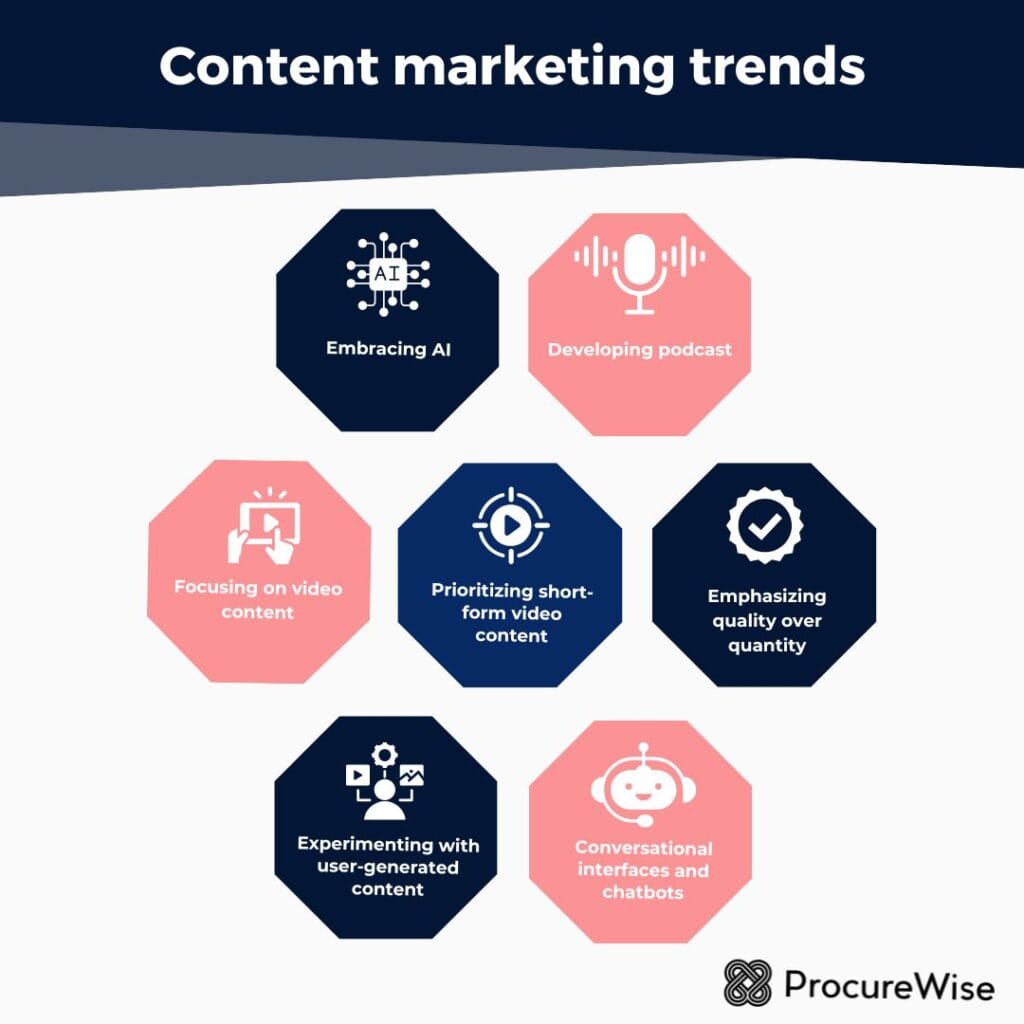
4. Prioritizing short-form video content 📺
In the digital era, content marketing is vital for businesses to engage their audience and boost brand awareness. Short-form videos, driven by social media and increasing demand, have become a potent trend in content marketing. Prioritizing these videos can significantly enhance engagement and campaign success.
➡️ Engagement metrics are pivotal in content strategy. Short videos excel in captivating viewers, boasting higher retention rates due to modern consumers’ preference for concise, digestible content.
➡️ Crafting effective short videos demands strategic planning. Clear objectives and impactful messaging are key, supported by attention-grabbing visuals and compelling storytelling.
➡️ Optimizing for mobile viewing is essential, considering the prevalence of smartphones. Videos must load swiftly, feature legible text, and include captions for soundless consumption.
➡️ Leveraging social media platforms maximizes video reach. Sharing across platforms like Instagram and TikTok, utilizing hashtags, partnering with influencers, and encouraging shares amplify video impact.
Embracing short-form video content is imperative in contemporary content marketing. Recognizing their engagement potential and employing effective strategies enables businesses to effectively engage their audience and elevate their marketing endeavors.
5. Emphasizing quality over quantity 🏆
One of the current trends in content marketing is a shift towards prioritizing quality over quantity. Marketers are realizing that producing a high volume of content is not enough to engage and convert customers. Instead, they are focusing on creating valuable, insightful, and well-crafted content that meets the specific needs and interests of their target audience.
🎖️ By emphasizing high-quality content, marketers are able to deliver content that resonates with their audience and positions their brand as a trusted source of information. This approach requires careful research and understanding of the target audience’s preferences, pain points, and interests. Content marketers are investing more time and resources into crafting compelling and well-researched content that provides in-depth insights and addresses their audience’s concerns.
🎖️ In addition to improving the overall quality of content, marketers are also focusing on delivering a personalized and targeted experience for their audience. This involves tailoring content to specific segments or individuals based on their demographics, interests, and behavior. By leveraging data-driven insights and AI-powered tools, marketers can create personalized content recommendations, customized emails, and targeted advertisements to enhance the user experience and increase engagement.
The trend of emphasizing quality over quantity in content marketing allows marketers to create more valuable and impactful content that resonates with their target audience. By investing in research, personalization, and well-crafted content, marketers can establish authority, build trust, and drive better results in terms of engagement and conversions.
6. Experimenting with user-generated content 👥
Another notable trend in content marketing is the increasing use of user-generated content (UGC) as a strategy. Marketers are recognizing the power of involving their audience in content creation and leveraging their authentic experiences to promote their brand.
👉 UGC refers to content generated by consumers or fans of a brand, such as reviews, testimonials, social media posts, and even creative submissions. By encouraging and showcasing UGC, marketers can tap into the trust and credibility of their audience, creating a more engaged and loyal customer base.
👉 Marketers are experimenting with different ways to incorporate UGC into their content marketing strategies. This may involve running contests or challenges that encourage customers to share their experiences with a brand or product. Marketers can then feature the best submissions on their website, social media channels, or even incorporate them into their advertising campaigns.
👉 Not only does UGC provide social proof, but it also ensures a diverse range of perspectives and experiences surrounding a brand or product. This can help attract new customers and build a sense of community around the brand.
👉 However, it’s important for social media marketers to carefully manage UGC to maintain brand alignment and ensure the content aligns with their marketing goals and values. Implementing moderation and guidelines can help maintain quality and avoid potential issues.
In summary, the trend of experimenting with user-generated content in content marketing allows brands to leverage the authentic experiences of their customers. By incorporating UGC, marketers can build trust, engage their audience, and foster a sense of community around their brand.
7. Conversational interfaces and chatbots 📨
Conversational interfaces and chatbots have revolutionized customer interactions for businesses, leveraging AI to enhance personalized engagement. Content marketing strategies have adapted to leverage these technologies, improving overall customer experience.
✏️ Personalized engagement stands out as a key trend, enabled by data-driven customization of messaging to match individual customer preferences. This fosters stronger connections, driving increased engagement and loyalty.
✏️ Integration of conversational interfaces and chatbots with popular communication platforms like Facebook Messenger and WhatsApp expands reach and enhances message delivery. Leveraging existing platform functionalities further improves customer service quality.
✏️ Interactive strategies utilizing these interfaces and chatbots are evolving, engaging customers in real-time conversations and providing valuable recommendations. This interactivity not only sustains engagement but also gathers precise customer preference data for marketing strategy personalization.
✏️ Technological integration of conversational interfaces and chatbots with other marketing tools and platforms streamlines processes, facilitating seamless customer data capture and management. This integration enhances marketing efficiency and enables more targeted and personalized approaches.
Conversational interfaces and chatbots have transformed content marketing, enabling personalized customer engagement, interactive strategies, and technological integration. Continued utilization of these technologies promises future innovations and more effective marketing strategies.