

In the fast-paced world of business-to-business (B2B) marketing, standing out from the competition is crucial. As industries evolve, so do the strategies that marketers utilize to engage and convert their target audiences. But what exactly are B2B content marketing strategies, and how can they help your business thrive in an increasingly digital landscape?
B2B content marketing strategies encompass a variety of tactics aimed at creating, distributing, and promoting valuable content with the goal of attracting and retaining a clearly-defined audience. Unlike B2C (business-to-consumer) strategies, which often focus on emotional appeals and brand loyalty, B2B tactics concentrate on building relationships, establishing expertise, and delivering solutions that meet specific business needs.
In this landscape, content plays a pivotal role – it’s not just about driving leads; it’s about nurturing them through the buyer’s journey. From case studies and whitepapers to informative blogs and engaging webinars, effective content marketing strategies can position your brand as a trusted authority. As we explore the key components of successful B2B content marketing strategies, you’ll uncover how aligning your content with your audience’s goals can lead to stronger connections and increased business opportunities. Whether you’re just starting out or looking to enhance your existing approach, this guide will equip you with insights and practical tips to elevate your B2B content marketing efforts. Read more 8 steps to craft a content marketing strategy
❔What is B2B content marketing❔
📢 B2B content marketing is a strategic approach focused on creating and distributing valuable content specifically designed for a clearly-defined business audience. Unlike traditional marketing, this method emphasizes providing resources that address the unique challenges and needs of other businesses, fostering a deeper connection with potential clients.
📢 At its core, B2B content marketing aims to establish trust and authority. By delivering informative materials—such as white papers, case studies, blogs, and webinars—brands can demonstrate their industry expertise. This not only addresses specific business needs but also positions the company as a thought leader, encouraging audience engagement and fostering loyalty.
📢 Moreover, effective B2B content marketing is integral for lead generation. High-quality, relevant content attracts the right audience and nurtures relationships over time, leading to increased conversions. By understanding the pain points of their target market, businesses can craft tailored content that resonates, ultimately driving both trust and authority within the industry. In an increasingly competitive landscape, B2B content marketing remains an essential tool for cultivating meaningful connections and achieving sustainable growth.
📚 Types of B2B content 📚
In B2B content marketing, leveraging various content types is crucial for connecting with the target audience effectively. Each format caters to different preferences and stages of the buyer’s journey, enhancing engagement and brand loyalty.
👉 Blog Posts: Insightful articles provide valuable information to prospects, improving SEO and establishing thought leadership.
👉 Whitepapers and eBooks: These in-depth resources position a brand as an authority in the industry while gathering leads through gated content.
👉 Case Studies: By showcasing real-world applications and outcomes, case studies build credibility and influence decision-making.
👉 Infographics: Visually appealing data representations simplify complex information, capturing attention and encouraging shares across marketing channels.
👉 Videos: Engaging visual content fosters deeper connections with the audience, making complex topics more digestible.
👉 Webinars: Live presentations offer interactive opportunities for education and relationship-building with potential clients, facilitating real-time feedback.
👉 Podcasts: Audio content allows for multitasking, broadening reach and providing insights through discussions with industry experts.
Incorporating these diverse content types ensures a comprehensive B2B content marketing strategy, enhancing engagement with your target audience and enriching your overall marketing efforts.
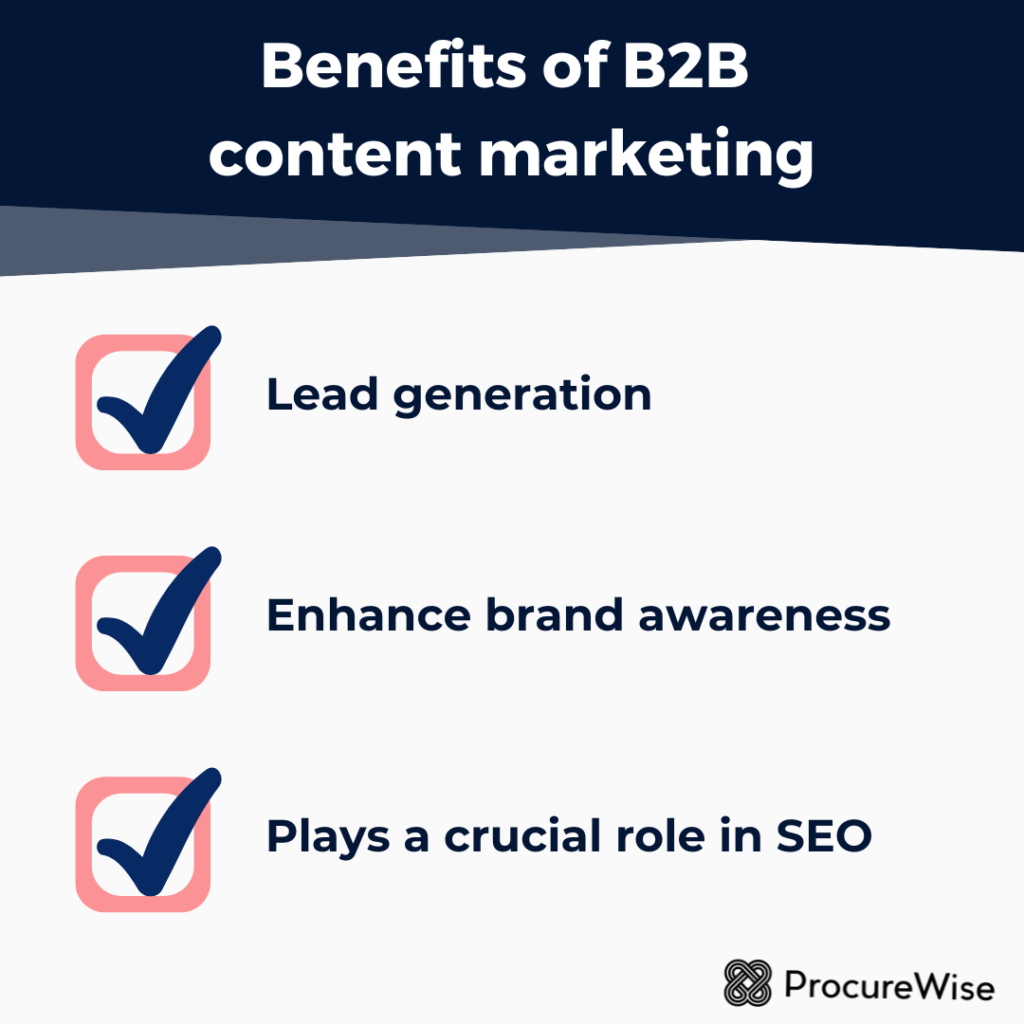
✅ Benefits of B2B content marketing ✅
B2B content marketing offers significant benefits that empower businesses to thrive in competitive markets.
✔️ One of the primary advantages is lead generation; by creating high-quality, informative content, companies attract potential customers actively seeking solutions. Tailored content meets the needs of targeted audiences, effectively nurturing customer relationships and guiding leads through the sales funnel.
✔️ Additionally, B2B content marketing enhances brand awareness, establishing a company’s presence in its industry. Consistent and engaging content helps build credibility and authority, positioning a brand as a thought leader. As businesses share valuable insights and solutions, they foster audience engagement, compelling prospects to return for more.
✔️ Effective content marketing also plays a crucial role in SEO. By optimizing content for relevant keywords, businesses can improve their search engine rankings, driving more organic traffic to their websites. Increased website traffic not only leads to higher visibility but also translates into improved conversions, directly impacting revenue.
B2B content marketing is an essential strategy that generates leads, nurtures relationships, enhances brand awareness, boosts SEO, and ultimately drives revenue growth.
⚠️ Why you should use B2B content marketing strategy? ⚠️
➡️ B2B marketers should definitely adopt a content marketing strategy due to its proven effectiveness in establishing thought leadership, targeting specific audiences, and generating high-quality leads. By creating informative and valuable content, businesses can position themselves as industry experts, fostering trust and credibility with potential clients. This thought leadership not only attracts more engagement but also differentiates brands in competitive markets.
➡️ Moreover, content marketing allows for precise audience targeting, ensuring that messages resonate with specific buyer personas. This focuses resources on reaching individuals who are more likely to convert, enhancing lead generation efforts. Notably, 71% of content marketers acknowledge the growing importance of content marketing in their strategies, reinforcing its relevance in today’s business landscape.
➡️ Additionally, content marketing is a cost-effective alternative to traditional advertising methods. It often yields higher ROI by generating organic traffic and leads over time, compared to the short-term impact of paid ads. In sum, leveraging a content strategy is essential for B2B marketers aiming to enhance their brand’s presence and drive measurable results in a competitive environment.
🏆 Best practices for a B2B content marketing strategy 🏆
🏅 A successful B2B content marketing strategy hinges on understanding the target audience and their pain points. By identifying the challenges and needs of potential clients, businesses can create content that resonates and provides real solutions. This leads to deeper connections and increased engagement.
🏅 Next, a well-structured content plan should align with overarching business goals. This ensures each piece of content strategically contributes to lead generation, brand awareness, or customer retention. Employing a diverse mix of content formats—such as blogs, videos, infographics, and webinars—across multiple channels maximizes reach and caters to different audience preferences.
🏅 High-quality content is non-negotiable; it builds trust and establishes authority in the industry. Effective promotion tactics, including social media campaigns and email marketing, amplify visibility and drive traffic to your content.
🏅 Data-driven performance tracking is essential for measuring the success of your content efforts. Regularly analyze metrics to understand what works, allowing for continuous improvement.
🏅 Finally, compelling calls to action (CTAs) encourage the audience to take the next step, turning passive readers into active prospects. By following these best practices, businesses can enhance their B2B content marketing strategy and achieve significant results.

📋 B2B content marketing strategy tactics 📋
✏️ Develop Detailed Buyer Personas: Create comprehensive buyer personas to understand your target audience’s pain points, preferences, and behaviors.
✏️ Conduct Audience Research: Utilize surveys and interviews to gather insights directly from potential customers.
✏️ Create High-Value Content: Focus on producing informative and helpful content that addresses audience needs and provides solutions.
✏️ Leverage SEO Best Practices: Optimize content for search engines to enhance visibility and attract organic traffic.
✏️ Utilize Visual Content: Incorporate infographics, videos, and webinars to engage audiences visually and simplify complex information.
✏️ Webinars and Live Events: Host events to showcase expertise and foster real-time interaction with potential clients.
✏️ Establish a Content Calendar: Plan and organize content strategy to ensure consistent and timely delivery of relevant information.
✏️ Guest Blogging: Collaborate with reputable blogs to reach new audiences and establish credibility.
✏️ Engage in Social Media: Utilize professional platforms like LinkedIn to share insights and engage with your audience.
✏️ Email Marketing Campaigns: Segment lists and send personalized content to nurture leads and maintain engagement.
✏️ Case Studies and Testimonials: Showcase client success stories to build trust and demonstrate value.
✏️ Create How-To Guides: Develop practical guides that address specific challenges faced by your prospects.
✏️ Podcasts: Start a podcast to discuss industry trends and topics, keeping your audience informed and engaged.
✏️ Utilize User-Generated Content: Encourage customers to share their experiences and insights about your brand.
✏️ A/B Testing: Continuously test different content formats and messaging to find what resonates best with your audience.
✏️ Remarketing Campaigns: Use retargeting ads to keep your brand top-of-mind for previous visitors.
✏️ Referral Programs: Encourage existing customers to become brand advocates by rewarding referrals.
✏️ Analyze Data and Metrics: Regularly review content performance metrics to refine strategies and enhance audience engagement.
✏️ Collaborate with Influencers: Partner with industry influencers to amplify your content reach and credibility.
✏️ Create Interactive Content: Develop quizzes, polls, or calculators that require audience participation.
By employing these B2B content marketing tactics, brands can effectively engage their audiences, develop meaningful buyer personas, and establish long-term relationships founded on trust and brand advocacy.