

In the fast-paced world of Fast-Moving Consumer Goods (FMCG), trade marketing plays a pivotal role in driving growth and fostering innovation at the retail level. But what exactly is trade marketing, and how can it be leveraged to create a competitive advantage in such a dynamic marketplace?
Trade marketing is the bridge between manufacturers and retailers, aiming to maintain a robust presence on shelves and maximize product visibility to consumers. It encompasses various strategies and activities, such as promotional campaigns, pricing models, and in-store displays, all designed to encourage retailers to favor your products over competitors’ offerings. In an environment where consumer preferences change rapidly, effective trade marketing can help brands not only stand out but also respond agilely to market trends and consumer demands.
In this guide, we’ll explore the key elements of successful trade marketing strategies, examine innovative practices within the FMCG sector, and provide real-world examples of brands that have successfully driven growth through targeted trade marketing initiatives. Whether you’re a brand manager, a marketing professional, or a retailer looking to enhance your strategic approach, understanding the nuances of FMCG trade marketing is essential for staying ahead in an ever-evolving retail landscape. Get ready to discover how smart trade marketing can lead to remarkable results and sustainable growth for your brand. Read more Best e-Commerce strategies for FMCG
❓What is Trade Marketing❓
Trade marketing is the process of promoting products specifically to retailers and wholesalers, enhancing brand visibility and driving demand directly at the point of sale. Unlike traditional marketing that targets end consumers, trade marketing focuses on the strategies that facilitate brand presence and sales in the retail environment.
📌 The importance of trade marketing lies in its ability to create effective partnerships with channel partners, maximizing sales opportunities and ensuring a mutually beneficial relationship. By aligning the interests of manufacturers and retailers, businesses can drive higher sales volumes and improve market positioning.
📌 Key strategies in trade marketing include merchandising, promotions, and trade shows. Merchandising involves the presentation and display of products to attract customer attention in-store, while retail promotions offer incentives to encourage purchases. Trade shows serve as a platform for showcasing products and fostering connections with potential channel partners. Together, these strategies enhance brand visibility, drive consumer engagement, and ultimately contribute to increased sales.
Overall, trade marketing plays a crucial role in aligning the efforts of manufacturers and retailers, ensuring that both parties benefit from enhanced product exposure and increased demand through well-executed sales strategies.
Take advantage of our marketing services now!
🛒 FMCG Trade Marketing 📢
FMCG (Fast-Moving Consumer Goods) trade marketing plays a crucial role in maximizing product visibility and driving sales within retail environments. By focusing on the relationship between manufacturers and retailers, trade marketing strategies ensure that products are optimally placed, promoted, and priced. This engagement facilitates a deeper connection with the end consumer, influencing purchasing decisions and enhancing brand loyalty.
🍎 Key retail strategies employed in FMCG trade marketing include negotiating prime shelf space, designing impactful point-of-sale displays, and implementing promotional campaigns that capture consumer attention. These tactics are often supported by data-driven insights that inform decision-making and help identify the optimal placement and promotion of products.
🍎 To evaluate the success of trade marketing initiatives, key performance metrics such as sales volume, market share, and return on investment (ROI) are commonly used. Additionally, monitoring category performance and retailer compliance can provide valuable feedback on the effectiveness of product placement strategies. By continuously assessing these metrics, FMCG companies can refine their trade marketing efforts to optimize visibility and drive sustained sales growth in competitive retail landscapes.
⚠️ Importance of FMCG Trade Marketing ⚠️
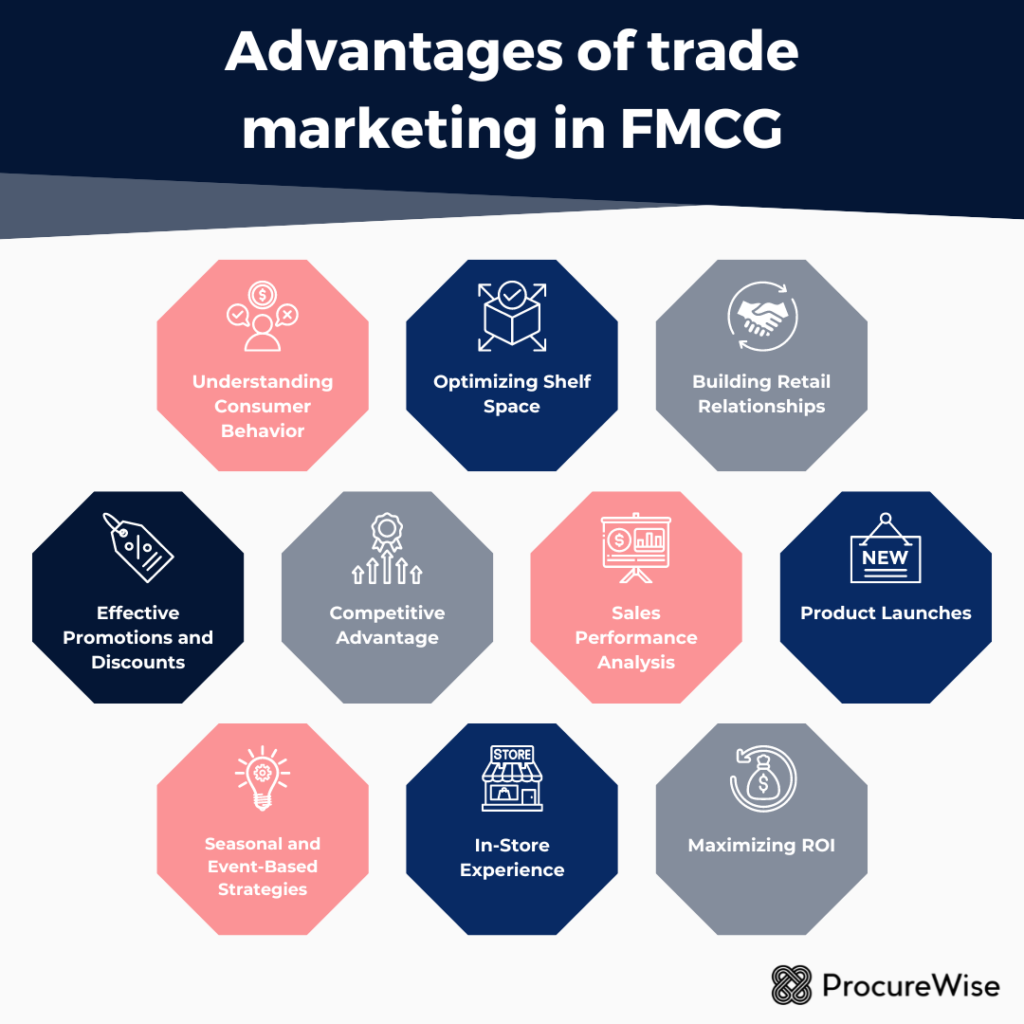
FCMG (Fast-Moving Consumer Goods) trade marketing is a critical function in the consumer goods industry, as it directly impacts how products are presented, promoted, and sold at the retail level. Here are several reasons why FCMG trade marketing is essential:
➡️ Understanding Consumer Behavior: Trade marketing helps brands understand consumer preferences and shopping behaviors. By analyzing data and market trends, businesses can tailor their strategies to meet consumer needs effectively.
➡️ Optimizing Shelf Space: Trade marketing focuses on the allocation of shelf space, ensuring that products are displayed prominently for maximum visibility. Effective shelf management can significantly influence purchasing decisions.
➡️ Building Retail Relationships: Strong trade marketing fosters relationships with retailers. Collaborative promotions and partnerships can lead to better shelf placements and increased sales opportunities.
➡️ Effective Promotions and Discounts: Trade marketing involves planning and executing promotions, discounts, and offers that entice consumers to purchase products. This strategy can drive short-term sales spikes and enhance brand visibility.
➡️ Competitive Advantage: In the crowded FCMG market, a strong trade marketing strategy can differentiate a brand from its competitors. Innovative promotions, eye-catching displays, and effective marketing tactics can help attract consumers.
➡️ Sales Performance Analysis: Trade marketing includes tracking performance metrics and sales data. This analysis allows businesses to assess the success of marketing strategies and make necessary adjustments for future campaigns.
➡️ Product Launches: When introducing new products, trade marketing plays a pivotal role in ensuring that retailers effectively merchandise the product and that consumers are aware of its availability.
➡️ Seasonal and Event-Based Strategies: Effective trade marketing helps brands capitalize on seasonal trends and events, allowing them to align their offerings with consumer interests at specific times of the year.
➡️ In-Store Experience: Trade marketing contributes to creating a positive in-store experience for consumers, making it easier for them to find and choose products. This can lead to increased customer satisfaction and loyalty.
➡️ Maximizing ROI: By strategically planning promotions and marketing activities in collaboration with retailers, FCMG companies can maximize their return on investment, ensuring that marketing dollars are spent effectively.
FCMG trade marketing is essential for businesses looking to succeed in a competitive market. It helps brands connect with consumers at the point of purchase, optimize sales strategies, and build strong relationships with retailers, ultimately leading to increased sales and market share.
🏆 What Is A Successful Trade Marketing Strategy for FMCG? 🏆
A successful trade marketing strategy for FMCG (Fast-Moving Consumer Goods) hinges on effective retail collaboration, tailored promotional activities, and clear communication of product benefits.
🏅 Retail collaboration is critical; establishing strong relationships with retailers allows brands to gain insights into market trends and customer preferences. This partnership enables better alignment on stock levels and promotional scheduling, ultimately enhancing the shopping experience and driving sales.
🏅 Tailored promotional activities are essential to capturing consumer attention in a crowded marketplace. By customizing promotions to fit specific retailer dynamics and consumer needs, FMCG brands can create targeted campaigns that resonate better with shoppers. This may include in-store displays, exclusive discounts, and seasonal events that highlight the product’s unique features.
🏅 Furthermore, clear communication of product benefits helps differentiate a brand from its competitors. Educating retailers on key selling points equips them to promote the product effectively, ensuring that the right message reaches the customer.
By combining these elements—retail collaboration, tailored promotions, and effective communication—FMCG brands can boost sales and enhance brand visibility, ultimately improving their competitive position in the market.

🥊 Trade Marketing vs. Conventional Marketing 🥊
Trade marketing and conventional marketing serve distinct purposes in the Fast-Moving Consumer Goods (FMCG) sector, each targeting different audiences to enhance product visibility and sales performance.
💥 Trade Marketing primarily focuses on building strong relationships with distributors and retailers. Its strategies include promotional allowances, trade shows, and in-store displays to encourage retailers to promote and stock products. This approach not only strengthens the distribution channels but also ensures that products are placed prominently, enhancing visibility in stores. Trade marketing seeks to create a partnership with retailers, maximizing their willingness to engage with the brand, ultimately leading to higher sales volumes.
💥 In contrast, Conventional Marketing targets the end consumers directly, aiming to drive consumer engagement and brand loyalty. Strategies include advertising, digital marketing, and social media campaigns that create awareness and interest among buyers. The main goal is to convince consumers to choose a particular brand over competitors, enhancing their connection with the product.
By focusing on different aspects of the sales funnel, both approaches play crucial roles in the FMCG landscape. While trade marketing creates the necessary infrastructure for product availability, conventional marketing drives the consumer’s desire to purchase, together forming a comprehensive marketing strategy that optimizes product visibility and boosts overall sales performance.
🚀 4 FMCG Trade Marketing Strategies 🚀
In the fast-moving consumer goods (FMCG) sector, effective trade marketing strategies are essential for enhancing product visibility and driving sales. Here are four key strategies:
1️⃣ Promotional Pricing: Implementing limited-time discounts or special offers can attract consumers and encourage trial purchases. Promotional pricing not only boosts sales volume but also creates a sense of urgency that can drive faster inventory turnover.
2️⃣ In-Store Displays: Eye-catching displays strategically placed near high-traffic areas can significantly enhance product visibility. Utilizing vibrant colors and creative designs can captivate shoppers’ attention, making them more likely to choose your product over competitors.
3️⃣ Trade Promotions: Offering incentives such as volume discounts or promotional allowances to retailers can stimulate their interest in carrying or promoting your product. These promotions encourage retailers to prioritize your brand, leading to increased shelf space and visibility.
4️⃣ Retailer Partnerships: Establishing strong partnerships with retailers involves collaborating on marketing initiatives, co-promotions, and category management strategies. These alliances foster loyalty and create a shared responsibility for driving consumer demand, ultimately benefiting both parties.
By leveraging these trade marketing strategies, FMCG brands can maintain robust relationships with retailers, enhance product visibility, and drive consumer demand. Each strategy plays a crucial role in ensuring that products not only reach shelves but also resonate with customers.