

In an era where online presence is crucial for success, mastering SEO (Search Engine Optimization) in the fast-moving consumer goods (FMCG) industry has never been more vital. As consumers increasingly rely on digital platforms for their shopping needs, ensuring your brand stands out in search results is essential for driving visibility and boosting sales.
But what does it really take to excel in SEO within the competitive FMCG landscape? From understanding consumer behavior to implementing the right keywords and optimizing your content, there are various strategies that can elevate your brand’s online profile. The world of FMCG is fast-paced and ever-changing, which means your SEO tactics must be agile and adaptable to keep up with consumer trends and demands.
In this guide, we will delve deep into the intricacies of SEO tailored specifically for the FMCG sector. We’ll explore effective techniques, share valuable insights, and provide actionable steps that can help your brand harness the power of SEO to enhance visibility, attract potential customers, and ultimately drive sales. Whether you are a seasoned marketer or just starting, this comprehensive overview will provide you with the tools and knowledge to navigate and succeed in the dynamic world of FMCG SEO. Let’s get started on the journey to mastering your brand’s online presence! Read more Jak napisać treści SEO? – wskazówki i strategie
❓What is SEO❓
SEO, or Search Engine Optimization, is the practice of enhancing a website’s visibility on search engine results pages (SERPs) to attract more organic (non-paid) traffic from search engines like Google, Bing, and Yahoo. It involves various strategies and techniques aimed at improving the quality and quantity of traffic to a website based on relevant searches.
Take advantage of our content marketing services now!
Key Components of SEO:
➡️ Keyword Research: Identifying the words and phrases that potential customers use when searching for products or services. This forms the foundation for optimizing website content.
➡️ On-Page SEO: The optimization of individual web pages to improve their ranking and user experience. This includes the use of relevant keywords, creating compelling meta tags, optimizing headers, ensuring proper URL structure, and improving content quality.
➡️ Off-Page SEO: Activities conducted outside the website to improve its visibility and authority. This mainly focuses on building high-quality backlinks from other reputable websites, social media promotion, and online reputation management.
➡️ Technical SEO: This involves optimizing the infrastructure of the website to help search engines crawl and index it more effectively. Key aspects include improving site speed, implementing mobile-friendliness, creating an XML sitemap, and ensuring secure connections (SSL).
➡️ Content Creation: Producing high-quality, valuable content that meets the needs of users and encourages engagement. This content can take many forms, including blog posts, articles, videos, infographics, and more.
➡️ User Experience (UX): Improving how users interact with a website. Factors that contribute to a positive UX include site speed, mobile optimization, intuitive navigation, and overall design.
➡️ Analytics and Monitoring: Using tools like Google Analytics and Google Search Console to track website performance, user behavior, and the effectiveness of SEO strategies. This data can help inform ongoing optimization efforts.
Goals of SEO:
✔️ Increase Website Traffic: Attract more visitors to the site through improved rankings for relevant search queries.
✔️ Enhance Brand Visibility: Increase the visibility of a brand in search engines to build recognition and trust among consumers.
✔️ Improve User Engagement: Provide a better user experience which can lead to longer visit durations, reduced bounce rates, and higher conversion rates.
✔️ Generate Leads and Sales: Ultimately, SEO aims to drive targeted traffic that translates into leads, sales, and overall business growth.
In summary, SEO is a critical digital marketing strategy that focuses on improving a website’s visibility in search engines, which can lead to increased traffic and conversions. It requires a combination of technical skills, creativity, and a good understanding of user behavior.
🔎 SEO For Fast Moving Consumer Goods (FMCG) Brands 🔎
💡 FMCG brands face unique challenges in the realm of SEO that can significantly impact their online visibility. Intense competition is one major hurdle; numerous brands vie for attention in a crowded marketplace, making it crucial to differentiate themselves. Moreover, given the fast-paced nature of FMCG, brands often require quick results from their SEO efforts, leading them to prioritize short-term gains over long-term strategies.
💡 Local SEO is vital for FMCG brands, as consumer behavior tends to vary dramatically across regions. Local preferences, cultural nuances, and regional shopping habits can all influence search strategies, necessitating a tailored approach. For instance, a brand may find that consumers in one area prioritize organic products, while another demographic leans towards value-centric options.
💡 By leveraging local SEO, FMCG brands can enhance their relevance in specific markets and connect with consumers more effectively. Adapting content and keywords to align with local interests can significantly improve search engine rankings and, ultimately, brand visibility. Therefore, understanding consumer behavior at a local level is indispensable for developing effective search strategies that not only improve online visibility but also drive sales in a competitive landscape.

📌 Keyword research for FMCG 📌
Keyword research for FMCG (Fast-Moving Consumer Goods) is a crucial step in developing effective SEO strategies. This process involves identifying the specific search terms that consumers use when looking for everyday products like food, beverages, and household items. To begin with, businesses must analyze consumer behavior, focusing on what drives purchasing decisions and how these trends shift over time.
This is where consumer goods keywords come into play. By leveraging tools like Google Keyword Planner or SEMrush, marketers can conduct keyword analysis to uncover high-volume terms and seasonal trends relevant to their products. Understanding these dynamics allows brands to target the right keywords that resonate with their consumers’ needs.
Additionally, mapping out the competitive landscape is essential in FMCG marketing. Analyzing competitor keywords and content strategies provides insights into industry standards and gaps that can be exploited. Overall, effective keyword research not only guides content creation and advertising but also enhances visibility and engagement in a crowded marketplace. Thus, a comprehensive approach combining consumer insights, market research, and competitive analysis is vital for optimizing keyword strategies in the FMCG sector.
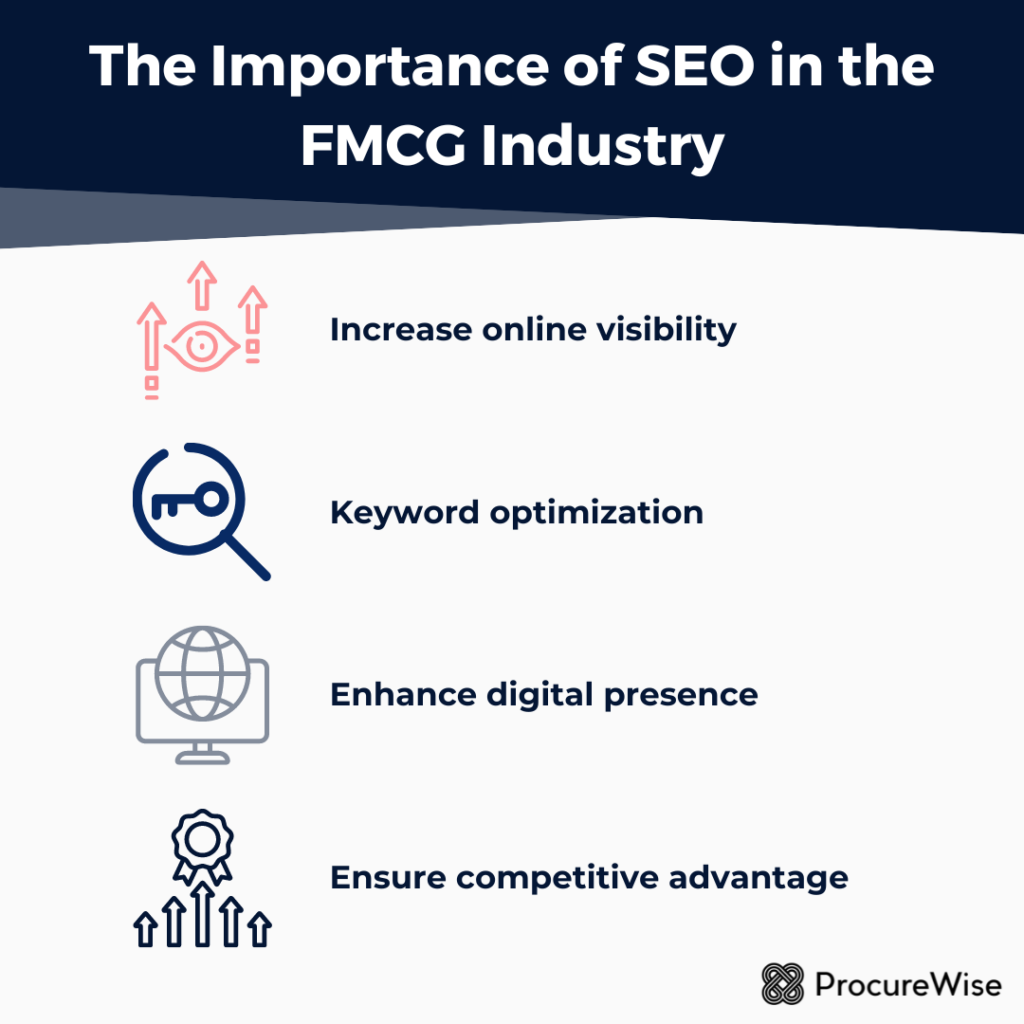
⚠️ The Importance of SEO in the FMCG Industry ⚠️
In the fast-moving consumer goods (FMCG) industry, where competition is fierce and consumer habits are ever-evolving, search engine optimization (SEO) has become a critical tool for success. The ability to stand out in a crowded digital marketplace depends largely on how easily potential customers can find a brand’s products online.
👉 SEO helps companies increase their online visibility by improving search engine rankings, which is crucial for driving both traffic and sales. When an FMCG brand appears higher in search results, it becomes more accessible to consumers, significantly increasing the likelihood of conversions.
👉 One of the key elements of successful SEO in the FMCG industry is keyword optimization. By conducting comprehensive keyword research, companies can identify the terms and phrases that their target consumers are searching for most frequently. This allows FMCG brands to strategically integrate these keywords into their product descriptions, blog posts, and other forms of online content. The result is higher rankings in search engine results pages (SERPs), making it easier for potential customers to find relevant products. For example, optimizing product listings with phrases that capture consumer intent—such as “organic snacks” or “affordable skincare”—can dramatically improve visibility.
👉 Moreover, content creation plays an integral role in strengthening SEO efforts. FMCG companies can enhance their digital presence by producing high-quality, informative, and engaging content that resonates with their target audience. This not only improves search rankings but also builds consumer trust, as people tend to engage more with brands that offer valuable, relevant information.
👉 Ultimately, SEO provides FMCG brands with a competitive edge, allowing them to thrive in an increasingly digital-first marketplace. By optimizing for relevant keywords, refining product descriptions, and producing engaging content, businesses can significantly boost their online visibility and, in turn, drive sales. A robust SEO strategy is essential for long-term growth and customer acquisition in the FMCG sector.
🏆 Best Practices in FMCG SEO Services 🏆
In the fast-paced world of Fast-Moving Consumer Goods (FMCG), effective SEO is paramount for enhancing visibility and driving sales. Our best practices focus on three key strategies: product page optimization, leveraging local SEO, and utilizing structured data.
🏅 Product page optimization is essential for FMCG brands. This involves crafting compelling product descriptions, incorporating high-quality images, and integrating relevant keywords throughout the content. Such practices not only enhance user experience but also improve search engine rankings.
🏅 Local SEO plays a crucial role as well, especially for brands with physical storefronts. By targeting location-specific keywords and optimizing Google My Business listings, FMCG companies can attract local customers, increasing foot traffic and sales.
🏅 Finally, utilizing structured data helps search engines better understand the content of product pages. Implementing schema markup enables rich snippets, which can significantly enhance visibility in search results.
Keeping up with consumer trends and search behaviors is vital in the FMCG sector. Regularly analyzing shifts in preferences and intents allows businesses to adapt their SEO strategies promptly, ensuring sustained impact and relevance in a competitive market.