

In an increasingly competitive marketplace, procurement can no longer be an afterthought. The role of procurement is evolving, shifting from simple cost-cutting measures to strategic partnerships crucial for business growth. Companies that embrace next-level procurement can drive innovation and efficiency.
Modern procurement strategies involve aligning with broader business goals, leveraging advanced technologies, and enhancing supplier relationships. Sustainable practices and risk mitigation techniques are essential in today’s economic landscape, where businesses face dynamic market changes and compliance pressures.
This article explores transformative procurement strategies that can elevate modern businesses. From utilizing data analytics to adopting best practices, we will outline how to measure success and address prevalent challenges in procurement today.
🗝️Components of a Procurement Strategy 🗝️
An effective procurement strategy focuses on optimizing supply chain costs while ensuring supply reliability. It supports social and corporate responsibilities by establishing clear objectives aligned with broader organizational goals. These objectives facilitate performance tracking for continuous improvement, which is vital for success.
👉 Strategic sourcing and data-driven procurement practices play a key role. They help foster stronger vendor relationships, enhancing collaboration and compliance. By implementing robust procurement strategies, businesses can identify innovative suppliers and products, securing a competitive edge and enabling growth.
👉 Lowering third-party risk is another critical component. This is achieved through selective supplier relationships and increased due diligence. Enhanced tracking improves the organization’s overall risk profile, providing a safeguard against potential disruptions.
Take advantage of our procurement process review services now!
Aligning Procurement with Business Goals 🎯
Aligning procurement with business goals ensures that procurement activities directly contribute to organizational success. This alignment fosters collaboration across different functions, making procurement an integral part of achieving the company’s strategic direction.
Procurement goals must be specific, measurable, attainable, relevant, and time-bound to ensure focus. Clear objectives help track procurement performance, enabling continuous improvement. Effective procurement strategies deliver high-value results by aligning sourcing, contracting, and purchasing with leadership-defined business objectives.
The primary aim of aligning procurement with business goals is to deliver business value. This is achieved through cost optimization, increased efficiency, and improved performance, ultimately gaining competitive advantage.
Leveraging Technology for Efficiency 🖥️
Leveraging technology can significantly enhance procurement efficiency by streamlining processes and reducing errors. Implementing an e-procurement system helps organizations manage supplier relationships, contracts, and procurement activities more effectively, minimizing administrative burdens.
Technology provides valuable data for internal analysis, offering actionable insights for developing procurement strategies. Tools like procurement software and e-procurement platforms automate tasks, providing real-time data for informed decision-making.
These technologies also aid in spend management by identifying savings opportunities, managing risks more effectively, and optimizing buying power. Ultimately, the right technology application boosts efficiency and supports a robust procurement strategy.
📋 Top Procurement Strategies 📋
A robust procurement strategy is essential for aligning purchasing decisions with business goals. It involves building strategic relationships with suppliers to acquire quality goods and services cost-effectively. Procurement leaders should balance immediate cost savings with long-term objectives like sustainability and innovation. Tools such as total cost of ownership (TCO) and the category positioning matrix can identify savings opportunities.
Successful procurement strategies require continuous assessment of internal needs, market trends, and legal compliance. Organizations must navigate responsibilities beyond cost savings, including risk mitigation, innovation, and DEI compliance. By integrating these factors, businesses can create procurement strategies that are adaptable to market conditions and focused on continuous improvement.
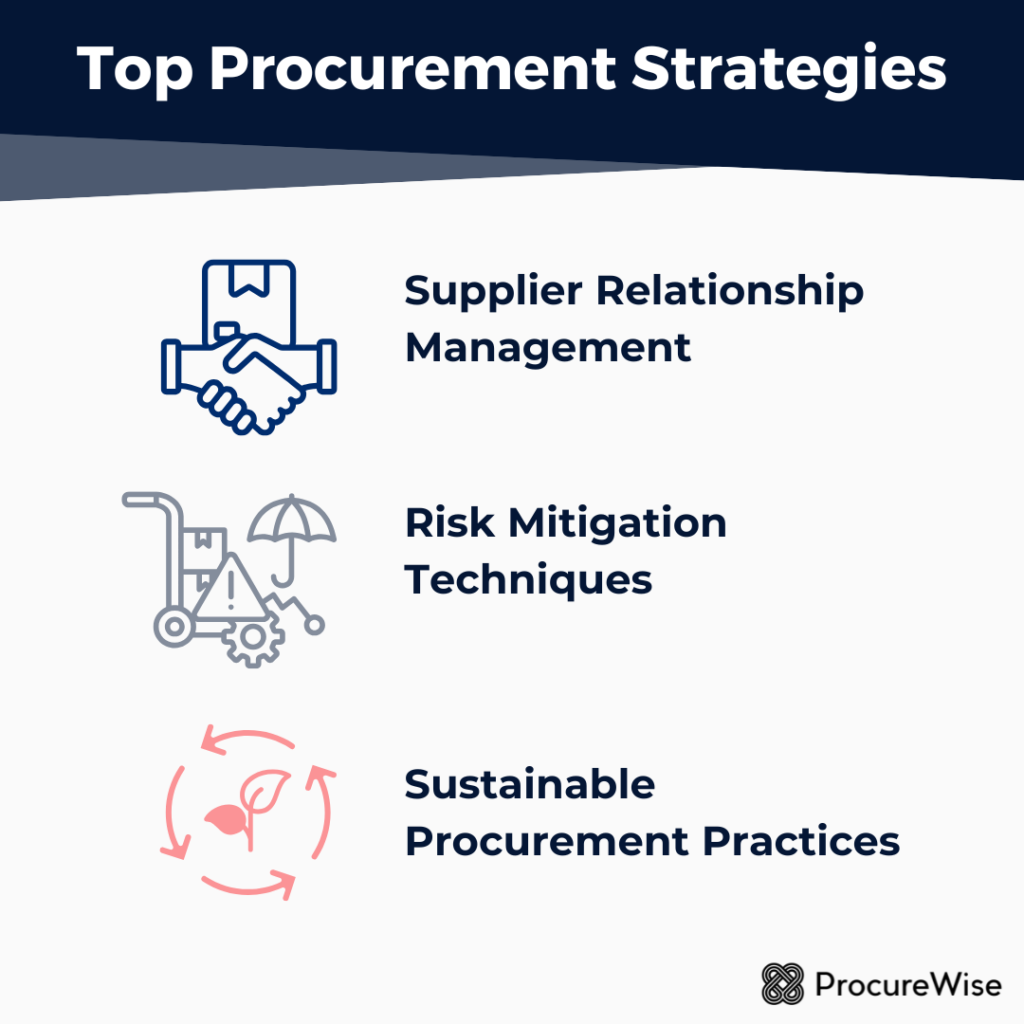
Supplier Relationship Management 🤝
Effective supplier relationship management is crucial for achieving business goals. This process involves selecting the right suppliers, negotiating favorable contracts, and monitoring supplier performance. Strong relationships enhance supplier capabilities and risk management. Activities include vendor development and contract negotiation to ensure operational efficiency.
Building robust supplier relationships can significantly reduce supply chain disruptions. Collaborating with suppliers leads to better quality control and cost savings. Organizations must establish performance metrics and take a proactive approach in supplier management to maintain a resilient supply chain.

Risk Mitigation Techniques ⛔
Incorporating risk mitigation techniques into procurement strategies is vital for overcoming procurement process challenges. Organizations must identify potential risks and prepare contingency plans. Proactive supplier risk management ensures that procurement teams can anticipate and resolve issues effectively, especially when dealing with high-risk suppliers.
Key performance indicators (KPIs) are essential for regular monitoring of supplier performance. By setting clear risk thresholds and enhancing supply base visibility, companies can develop effective risk response plans. Diversifying suppliers and conducting regular risk assessments are proactive measures that reduce vulnerabilities in procurement operations.
Sustainable Procurement Practices ♻️
Sustainable procurement practices focus on minimizing waste and promoting positive environmental practices. Over 60% of B2B buyers prioritize sustainability, highlighting its importance in the supply chain. Companies can improve sustainability by reducing inventory and transportation needs and choosing eco-friendly products.
Embracing ESG factors in supplier assessments helps measure sustainability performance. Organizations should develop standard metrics for areas like greenhouse gas emissions and renewable energy to enhance procurement efforts. Sustainable practices not only benefit the environment but also align with broader business strategy goals.
🔝 Continuous Improvement in Procurement 🔝
Continuous improvement in procurement demands setting SMART objectives: Specific, Measurable, Attainable, Relevant, and Time-bound. This allows procurement teams to track their performance effectively. Implementing Total Quality Management (TQM) emphasizes an ongoing optimization process throughout the transaction lifecycle, identifying errors and areas for enhancement.
Training competitive procurement teams is essential for efficient operations. Continuous professional development ensures procurement professionals possess the skills to adapt to evolving practices. Streamlining procurement processes boosts operational efficiency, reduces cycle times, and enhances productivity. Implementing procurement software minimizes human errors, facilitating improvements in the procure-to-pay process.
Utilization of Data Analytics 📊
Utilizing data analytics is crucial for a robust procurement strategy. An e-procurement system enhances supplier relationship management by providing actionable insights. Historical data analysis reveals product demand patterns, enabling more informed strategies. Data-informed spending decisions help identify the true cost of goods and services, optimizing spending efficiently.
Real-time data integration in procurement strategies accelerates savings opportunities and boosts organizational efficiency. Internal and external data analytics optimize spending and improve procurement performance. Access to actionable data allows organizations to make value-driven decisions, crucial for continuous enhancement.
Optimizing Spending 💰
Optimizing spending involves implementing strategic sourcing tactics like bulk purchasing and supplier consolidation, providing significant cost-saving opportunities without compromising quality. Procurement forecasting anticipates future needs, allowing better long-term contract negotiations and ensuring cash efficiency.
Negotiating volume purchases secures favorable per-item pricing and terms, enhancing spending efficiency. Automating procurement processes saves significant time and costs, directing focus toward satisfaction and efficiency. A comprehensive procurement strategy guides organizations in managing procurement activities to achieve cost optimization and value creation.
Enhancing Supplier Performance 📦
Enhancing supplier performance requires establishing robust quality assurance processes, including supplier audits and product testing. Clear communication and feedback transform suppliers into strategic partners, aiding problem resolution and boosting performance. Structural changes, like embedding sustainability in performance scorecards, improve supplier capabilities.
Comprehensive supplier management practices foster collaboration, revealing supplier strengths and weaknesses which drive continuous performance improvement. Financial incentives, such as supply chain financing and long-term contracts, help suppliers overcome barriers and enhance their performance. Prioritizing these strategies ensures robust supplier relationships and operational success.
🏆 Best Practices for Modern Procurement 🏆
Modern procurement demands agile and effective strategies that ensure resilience and efficiency. Identifying and mitigating risks is crucial, requiring proactive risk assessment frameworks to address potential hazards. Streamlining procurement processes is equally vital, with studies showing a 42% increase in success when bottlenecks are eliminated and routine tasks are automated. Tailored procurement strategies with clear objectives help teams focus on desired outcomes and support continuous improvement.
Robotic Process Automation (RPA) is a game-changer in managing repetitive tasks, offering significant boosts in productivity and ROI. Additionally, investing in relevant training for procurement staff enhances both hard and soft skills, maximizing team effectiveness. A robust procurement strategy aligns with business goals, manages supplier relationships, and focuses on cost savings, all while navigating market conditions and potential supply chain disruptions.
Process Standardization ⚙️
Process standardization ensures consistent due diligence and approval for all purchases. This consistency across an organization facilitates easier spending evaluation by establishing clear requirements and expectations across categories. Standardization also enhances visibility, allowing businesses to spot improvement areas throughout the purchasing process, ultimately boosting operational efficiency.
By streamlining workflows through standardization, organizations can eliminate bottlenecks and reduce manual interventions. This facilitates a smooth procurement function, increasing productivity and enabling more strategic focus. Standardized processes lay the foundation for continual improvements, aiding procurement professionals in achieving strategic sourcing and supplier management goals.
Cross-Functional Collaboration 🔃
Effective procurement strategies rely on collaboration across departments. Cross-departmental teamwork positions procurement to harness supplier-led innovations and integrate into a collective intelligence process. Aligning procurement goals with overall business objectives strengthens collaboration and supports growth strategies.
Engaging stakeholders such as finance professionals, suppliers, and customers during strategy development ensures a comprehensive understanding and appreciation of contributions. Organizations that foster this cross-functional collaboration see a 42% increase in procurement transformation success. By aligning efforts, companies can optimize procurement processes across various functions, facilitating continuous improvement and strategic advancement in business operations.
⏱️ Measuring Procurement Success ⏱️
Measuring procurement success involves aligning procurement strategies with an organization’s overall business goals. Clear objectives must be established to ensure all stakeholders understand the procurement targets. Procurement strategies should be reviewed periodically to incorporate actionable insights from success metrics, adapting to market conditions and technological advancements.
A robust procurement strategy relies on data-driven insights to enhance supply chain performance. Organizations face challenges in measuring procurement success, particularly in sustainability. This highlights the need for a comprehensive approach during supplier assessments. Successfully managing supplier relationships and mitigating risks requires a focus on collaboration and performance oversight.
Key Performance Indicators (KPIs) 💡
Key Performance Indicators (KPIs) are vital for assessing supplier performance and driving improvements in procurement processes. Important KPIs include on-time delivery, product quality, and responsiveness. These metrics are essential for regularly monitoring supplier performance. Establishing SMART (Specific, Measurable, Attainable, Relevant, and Time-bound) objectives through KPIs helps procurement teams focus on desired outcomes.
Aligning procurement KPIs with broader business objectives ensures coherence in organizational goals. This alignment is critical for delivering significant business impact. Tracking performance through KPIs fosters a performance-driven environment, engaging stakeholders and enhancing accountability within the procurement team.
Regular Performance Reviews 💼
Regular performance reviews are crucial in gauging stakeholder satisfaction and refining procurement strategies. These reviews help integrate feedback and ensure alignment with internal needs. Scheduling regular performance reviews enables continuous assessment of supplier risk management, ensuring that potential risks are documented and addressed promptly.
Conducting periodic evaluations helps promote a performance-driven culture. Procurement teams become more engaged and responsible for their outcomes. Using pre-determined KPIs during reviews ensures alignment with broader business objectives, taking a comprehensive approach to procuring success. Regular communication and performance reviews also foster strong relationships with stakeholders, tailoring procurement goals to meet their needs effectively.
🥊 Challenges in Modern Procurement 🥊
Modern procurement faces significant disruptions due to increased competition, aggressive pricing strategies, evolving technologies, and stringent regulations. These factors challenge procurement operations and create hurdles in maintaining efficiency and cost-effectiveness. Without a well-defined procurement process, inconsistencies arise, leading to higher costs, strained supplier relationships, operational risks, and overall inefficiencies.
An effective procurement strategy is essential for risk mitigation. Implementing quality, delivery, and ethical standards for suppliers minimizes supply chain disruptions. Businesses aiming for profitability should focus on aligning procurement strategies with organizational goals, optimizing costs, and building strong supplier relationships. Growing companies often struggle with streamlining procurement processes, relying on inefficient methods like spreadsheets and paper invoicing, hampering critical system upgrades.