

Pricing is one of the most crucial aspects of any business strategy, directly impacting revenue, customer perception, and market positioning. Whether you’re setting standard prices or running promotional campaigns, having the right pricing model tool can make all the difference in maximizing profitability and maintaining competitive advantage.
To choose the best pricing model tool, you first need to understand your specific business needs and goals. Are you looking to streamline your pricing strategies, enhance your promotional efforts, or both? Once your objectives are clear, you can start evaluating tools based on key factors such as functionality, ease of use, integration capabilities, and cost-effectiveness.
A good pricing model tool should offer features like dynamic pricing, data analytics, and competitor analysis. It should also be flexible enough to adapt to changing market conditions and scale with your business as it grows. Additionally, consider tools that provide customer segmentation and targeting capabilities, which can significantly enhance your promotional strategies.
In this guide, we’ll walk you through the essential features to look for in a pricing model tool, discuss different types of pricing models and their applications, and provide examples of top-rated tools in the market. Let’s delve into how you can effectively choose and implement a pricing model tool that aligns with your business objectives and helps you achieve optimal pricing strategies.
🔎 Differentiating Between Standard and Promotional Pricing 🔎
Understanding the distinction between standard and promotional pricing is crucial for both consumers and businesses. Standard pricing refers to the regular, baseline prices set for goods or services. These prices are determined by factors such as production costs, market conditions, competition, and perceived value, and they typically remain stable over time.
In contrast, promotional pricing is a strategic tool employed to temporarily reduce prices to attract customers, clear out inventory, or boost sales during slower periods. This type of pricing can include discounts, coupons, seasonal sales, and time-limited offers. While promotional pricing can effectively drive short-term sales and increase brand visibility, it’s important for businesses to manage it carefully to avoid devaluing their products or damaging brand perception.
For consumers, recognizing the difference between these pricing strategies can aid in making informed purchasing decisions and taking advantage of genuine deals. Meanwhile, businesses must balance these pricing strategies to maintain profitability while also appealing to their target market.
🗝️ Key Pricing Strategies 🗝️
➡️ Cost-Plus Pricing: Calculate the total cost of production and add a fixed profit margin. Simple and straightforward, ensuring costs are covered and profits guaranteed.
➡️ Competitive Pricing: Set prices based on competitors’ pricing. Useful in highly competitive markets to maintain market share.
➡️ Value-Based Pricing: Price determined by the perceived value to the customer rather than the cost of goods. Often used for highly differentiated products or services.
➡️ Penetration Pricing: Initially set a low price to enter a competitive market and attract customers. Aim to gain market share quickly; prices may increase once established.
➡️ Skimming Pricing: Start with high initial prices and lower them over time. Capitalize on early adopters willing to pay more, then appeal to a broader audience.
➡️ Dynamic Pricing: Prices fluctuate based on demand, time, and customer profile. Common in industries like airlines and hospitality where demand varies.
➡️ Bundle Pricing: Offer packages of products/services at a lower price than bought separately. Encourages higher sales volume and moves excess inventory.
➡️ Psychological Pricing: Set prices that have a psychological impact, such as $9.99 instead of $10. Plays on consumer perceptions and perceived value.
➡️ Freemium Pricing: Provide basic services for free, while charging for advanced features. Popular in digital products and services, encouraging user acquisition and upgrades.
➡️ Geographical Pricing: Prices adjusted based on the geographical location of customers.
Accounts for varying cost structures and market demand in different regions.
Each strategy has its own advantages and is best suited to specific contexts, offering businesses flexibility to align pricing with overall objectives and market conditions.
💼 Assessing Your Business Needs 💼
👉 Identify Business Objectives: Determine if your pricing strategy focuses on profit, market share, or loyalty, and align it with both short- and long-term goals.
👉 Evaluate Customer Segmentation: Analyze segments and their price sensitivities; choose a tool that accommodates varied pricing needs, like personalized discounts. Analyze
👉 Competitors: Study competitors to identify differentiation opportunities; ensure the tool tracks competitor pricing and adapts strategies swiftly.
👉 Assess Product Complexity: Consider product range complexity. Ensure the tool manages standard and promotional pricing across products efficiently.
👉 Growth Projections: Opt for a scalable tool that integrates with your existing systems to support anticipated growth.
👉 Technology Needs: Check for compatibility with your tech stack and robust integrations for seamless data flow.
👉 Budget: Set a budget balancing cost and ROI; compare feature sets for the best value.
User Interface: Ensure the tool is intuitive with customization options for your processes. 👉 Support: Verify if the vendor provides support and training; check customer feedback on post-purchase support.
👉 Compliance: The tool should comply with industry regulations and safeguard data integrity. Assess these areas to select a pricing model tool that fulfills needs and enhances competitive advantage.
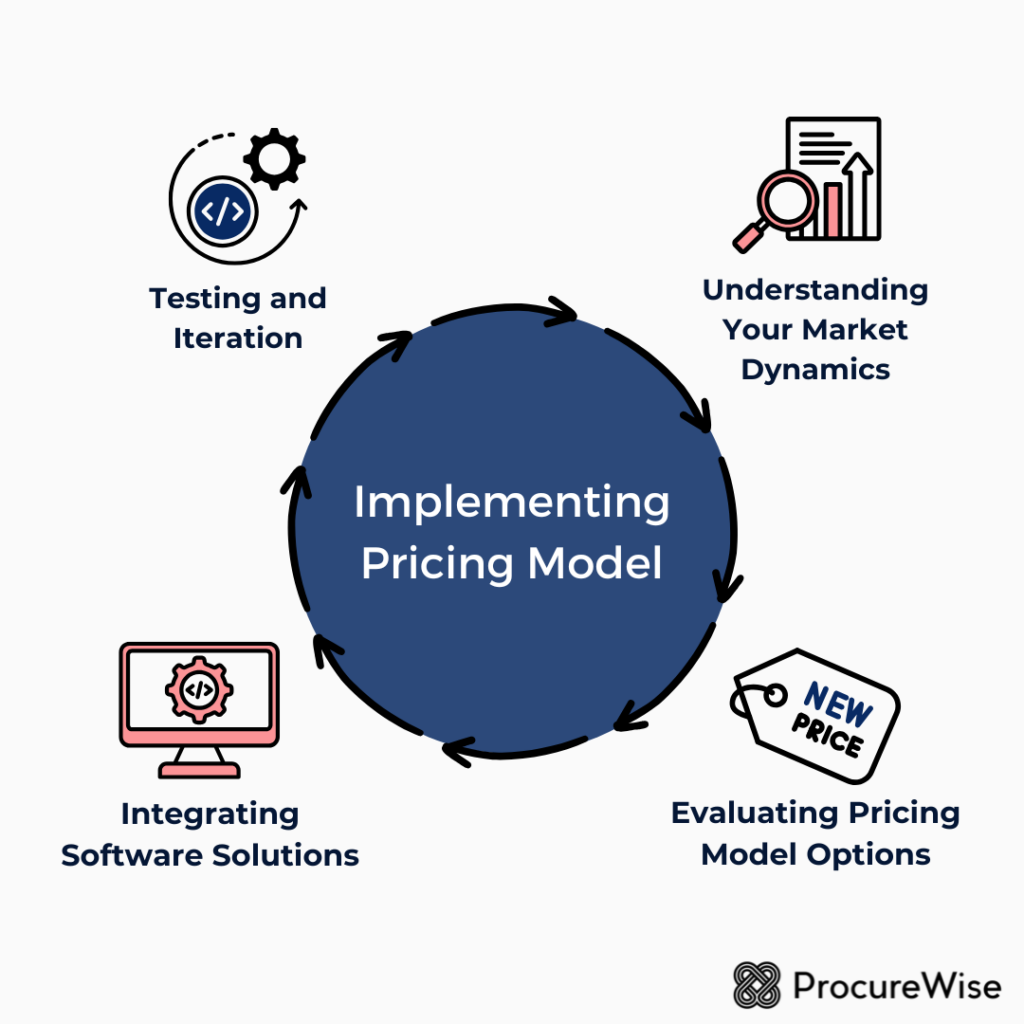
🔌 Implementing the Right Pricing Model 🔌
Choosing the right pricing model is crucial for businesses aiming to balance profitability with market competitiveness. When it comes to implementing a pricing model, it’s important to consider both standard and promotional prices to create a comprehensive strategy that meets your financial objectives while appealing to your target audience. Here’s how to navigate this process effectively:
Understanding Your Market Dynamics 📊
Before selecting a pricing model, conduct thorough market research to understand your industry landscape, customer behavior, and competitor pricing strategies. Market dynamics, including supply and demand fluctuations, seasonal trends, and consumer purchasing power, significantly influence pricing decisions. By acquiring in-depth market insights, businesses can tailor their pricing models to align with not only customer expectations but also the competitive environment.
Evaluating Pricing Model Options 🏷️
There are several common pricing models to consider, each with its unique advantages and drawbacks:
⭐ Cost-Plus Pricing: A straightforward approach where a fixed percentage margin is added to the cost of goods. This model ensures coverage of costs and a consistent profit margin but may not always reflect market conditions.
⭐ Value-Based Pricing: Centers on the perceived value of a product to the customer rather than the production cost. While this model can maximize profits, accurately gauging customer perceptions can be challenging.
⭐ Dynamic Pricing: Utilizes real-time data and algorithms to adjust prices based on market conditions and demand. Ideal for industries with fluctuating demand, dynamic pricing can maximize revenue but requires sophisticated technology and monitoring.
⭐ Penetration Pricing: Involves setting lower prices to gain market share rapidly, with potential plans to increase prices later. This model is effective for entering competitive markets but requires careful long-term planning to ensure profitability.
⭐ Promotional Pricing: Implemented temporarily to boost sales through discounts and deals. While effective for clearing inventory or attracting new customers, overuse can erode brand value and profit margins.
Integrating Software Solutions 🖥️
Adopting pricing model tools can streamline the implementation process by providing real-time analytics, price elasticity insights, and competitor analysis. When selecting a pricing tool, consider the following factors:
📌 Scalability: Ensure the tool can scale with your business and accommodate increased product ranges or market expansions.
📌 Usability: Opt for user-friendly interfaces that allow seamless integration with existing systems and facilitate easy data interpretation by your team.
📌 Customization: Look for flexibility in the tool to adapt to your specific industry requirements and allow customization of pricing rules and algorithms.
📌 Support and Training: Ensure available support and training resources to empower your team to fully leverage the tool’s capabilities.
Testing and Iteration 🔄
Once the pricing model is implemented, continual testing and iteration are crucial. Employ A/B testing to compare the effectiveness of different pricing strategies and gather feedback through customer analytics. Adjust pricing tactics as needed based on your findings and market changes to consistently hit your revenue goals.
In essence, implementing the right pricing model requires a combination of market intelligence, strategic model selection, and the adept use of technology. By doing so, businesses can optimize their pricing strategies to achieve sustained growth and profitability.
💡 Insights into Promotional Pricing Tactics 💡
▶️ Market Research: Conduct comprehensive market analysis to understand customer preferences, competitor pricing, and industry trends. Use insights to make informed pricing adjustments.
▶️ Cost Analysis: Evaluate the costs involved in production and delivery. Ensure pricing covers costs while providing a reasonable profit margin.
▶️ Customer Segmentation: Identify and segment target audience based on buying behavior, preferences, and price sensitivity. Tailor pricing strategies to meet different customer needs.
▶️ Value Proposition: Focus on the unique value your product or service offers. Ensure your pricing reflects the perceived worth to customers.
▶️ Dynamic Pricing Models: Implement flexible pricing strategies such as tiered pricing, subscriptions, or dynamic pricing to adapt to market changes and demand fluctuations.
▶️ Competitor Benchmarking: Regularly monitor competitor pricing and adjust your strategies to remain competitive while maintaining brand value.
▶️ Price Testing: Use techniques such as A/B testing or pilot programs to experiment with different pricing models and identify the most effective price points.
▶️ Consumer Feedback: Gather and analyze customer feedback related to pricing. Use this data to adjust prices in a way that aligns with customer expectations and perceived value.
▶️ Seasonal and Promotional Discounts: Strategically offer discounts or promotions in response to seasonal demand or special events to boost sales and customer engagement.
▶️ Economic Factors: Keep an eye on broader economic conditions such as inflation, exchange rates, and consumer confidence, which can influence pricing decisions.
▶️ Regulatory Compliance: Ensure all pricing strategies comply with legal standards and industry regulations to avoid penalties and maintain customer trust.