

For startups, every decision is a high-stakes bet on the future. Outsourcing is often seen as a critical move to conserve capital and access specialized talent, but the real advantage isn’t just in the act of delegating—it’s in the art of negotiation.
Many founders view negotiation as a confrontational process focused solely on reducing costs. This is a critical misstep. Strategic outsourcing negotiation is not about winning a single battle over price; it’s about architecting a partnership that acts as a growth catalyst, fueling your startup’s long-term success.
🚀 The Strategic Imperative: Why Negotiation is Crucial for Startup Growth 🚀
For a lean startup, a poorly negotiated outsourcing contract can be devastating. It can lead to budget overruns, missed deadlines, intellectual property disputes, and a damaged reputation.
Conversely, a well-negotiated agreement does more than just save money — it aligns your partner with your business objectives, builds in flexibility for future pivots, protects your most valuable assets, and establishes a framework for scalable growth.
Effective negotiation transforms an external vendor into a strategic partner invested in your success, directly impacting your ability to deliver value to customers and stakeholders.
🤝 The Unique Negotiation Landscape for Startups 🤝
Startups negotiate from a unique position. Unlike established corporations, you may lack leverage in terms of volume or brand recognition. However, you possess other assets: agility, potential for massive growth, and the chance to offer a partner entry into an innovative new market.
Your negotiation strategy must leverage these strengths. It’s about trading future potential for present value — whether that means favorable payment terms, dedicated resources, or a partner willing to invest extra effort to be part of your growth story.
The goal is to craft a deal that recognizes your current constraints while building a bridge to your future ambitions.
🧩 Phase 1: Strategic Preparation – Laying Your Negotiation Foundation 🧩
Successful negotiation happens long before you sit down at the table. For startups, this preparation phase is about building a foundation of clarity, research, and strategy. Rushing this stage is a recipe for accepting unfavorable terms that can hinder growth later on.
Defining Your Outsourcing “Why” and “What” with Growth in Mind 💡
Before seeking a partner, define precisely why you are outsourcing and what you need to achieve. Is the primary driver cost savings, access to missing skills (like specialized software development), or accelerating time-to-market? Your “why” dictates your negotiation priorities.
Next, define the “what” with a detailed Scope of Work (SOW). A vague SOW is the leading cause of conflict and cost overruns. Clearly articulate the deliverables, timelines, and acceptance criteria. This document is not just a task list — it’s the cornerstone of your negotiation, ensuring both parties share a mutual understanding of success.
The Power of a Startup-Centric Cost-Benefit Analysis 📊
Startups must look beyond the sticker price. A true cost-benefit analysis evaluates the total impact on your business:
- Opportunity Cost: What could your in-house team achieve if freed from this task?
- Management Overhead: How much time will your team spend managing the outsourced partner?
- Risk Mitigation: What is the cost of potential data breaches or IP loss if not addressed properly?
- Scalability Cost: How will pricing change as your needs grow?
This holistic financial view allows you to negotiate on value, not just price. Almost 59% of companies cite cost reduction as their primary reason for outsourcing — yet savvy startups know that the lowest bid is rarely the best deal.
🔎 Thorough Due Diligence: Researching Potential Outsourcing Companies & Freelancers 🔎
Investigate potential partners as if you were hiring a key executive. Look beyond polished marketing materials and dive into evidence of real performance.
- Reputation and Reviews: Check platforms like Clutch or G2. Seek out past clients and ask about their experience.
- Expertise: Do they have demonstrable experience in your industry or with the specific technology you need?
- Financial Stability: Ensure the partner is financially sound and likely to remain in business long-term.
- Communication & Culture: Assess their communication style and whether their company culture aligns with yours — because a mismatch here can create serious friction later.
Building Your Internal Negotiating Teams and Strategy 🧠
Even in a small startup, negotiation should never be a solo effort. Assemble a focused team that brings diverse expertise and perspective.
This team might include:
- the founder or CEO (vision and financial direction),
- a technical lead (to define deliverables and ensure feasibility),
- and potentially a legal advisor (to manage risk and compliance).
Before making contact with potential partners, define your negotiation strategy:
- Identify Your Priorities: What are your must-haves versus nice-to-haves?
- Set Your Walk-Away Point: Determine the terms that would make you walk away — your BATNA (Best Alternative to a Negotiated Agreement).
- Anticipate Their Goals: What does your outsourcing partner want most? Understanding their motivations helps you find common ground and propose win-win solutions.
💼 Phase 2: Mastering the Negotiation Phase – Crafting Advantageous Deals 💼
With a solid foundation of preparation, you can enter the negotiation phase with confidence. This is where your strategic groundwork turns into a binding agreement that both protects your interests and enables your growth.
The Startup’s Negotiation Toolkit: Tactics for Leverage and Value Creation 🎯
As a startup, your leverage lies in your potential — use it wisely.
- Focus on the Partnership: Frame the negotiation as the start of a long-term collaboration, not a one-off transaction. This encourages cooperation over confrontation.
- Offer Performance-Based Incentives: Link a portion of the payment to achieving Key Performance Indicators (KPIs). This aligns your partner’s success with yours and reduces your risk.
- Negotiate for Flexibility: Instead of long, rigid contracts, negotiate for shorter initial terms with renewal or scaling options — preserving your agility.
- Unbundle Services: Ask for a detailed pricing breakdown. This often reveals areas where you can trim costs or phase in services over time to manage cash flow.
Critical Contract Terms to Strategically Negotiate ⚖️
The contract is your primary risk management tool — treat it as such. Do not rely on standard templates; tailor every clause to your business reality.
Pay special attention to:
- Scope of Work (SOW) & Deliverables: Ensure the SOW is an appendix to the contract and explicitly detailed. Define how deliverables will be approved and what happens if they don’t meet standards.
- Intellectual Property (IP): The contract must clearly state that your startup owns all work product and pre-existing IP — this is non-negotiable, especially in software development.
- Data Security and Confidentiality: Specify security protocols for protecting your data and your customers’ data. Include incident response procedures for handling a breach.
- Payment Terms: Structure payments around milestones tied to deliverable acceptance, protecting cash flow and incentivizing quality performance.
- Termination Clause: Include a “termination for convenience” clause allowing you to exit the agreement with reasonable notice — a vital safeguard if the partnership underperforms.
- Scalability and Change Orders: Define the process and pricing for adjusting the scope of work or adding services. This avoids hidden cost increases as your needs evolve.
Utilizing Legal & Digital Tools in Contract Negotiations 🧾
Leverage technology to make the negotiation process more efficient and transparent. Use Contract Lifecycle Management (CLM) software to:
- Track revisions and approvals,
- Manage document versions, and
- Secure digital signatures for faster turnaround.
However, technology is no substitute for legal expertise. For any significant outsourcing agreement — especially those involving core business functions or intellectual property — consult a lawyer who specializes in startup or tech contracts. The upfront cost is a small investment compared to the potential liabilities of a poorly structured deal.
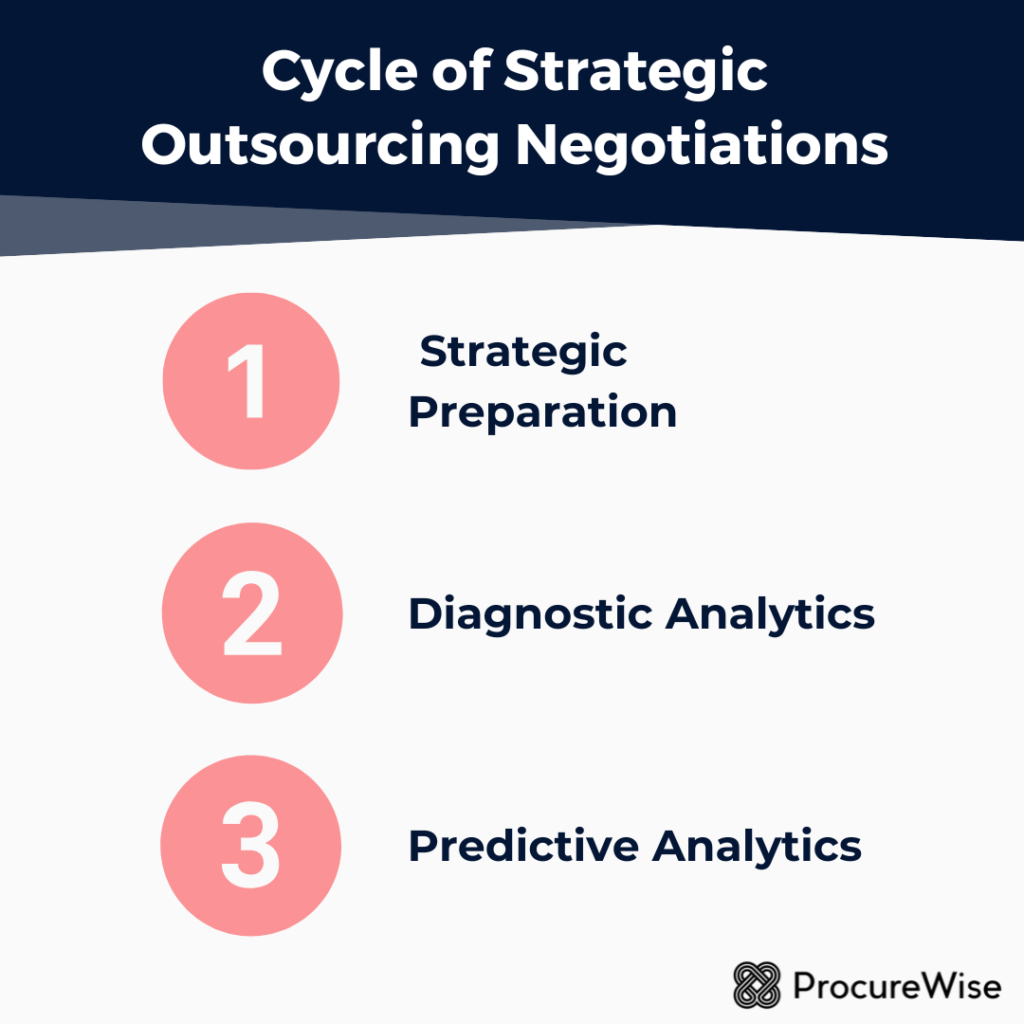
🌱 Phase 3: Post-Negotiation to Growth – Building and Nurturing Strategic Partnerships 🌱
Signing the contract is the starting line, not the finish line. The true value of a well-negotiated deal is realized only through consistent management and a commitment to partnership building.
Onboarding and Collaboration: Setting the Stage for Ongoing Success 🤝
A structured onboarding process is critical. Treat your outsourcing partner as an extension of your internal team, not an outsider.
- Kick-Off Meeting: Hold a formal kickoff to introduce key members, review the Scope of Work (SOW), and align on communication protocols.
- Establish Communication Channels: Use shared tools like Slack, Jira, or Trello for transparency and real-time updates.
- Share Your Vision: Explain your business goals, target audience, and company culture. The more your partner understands your “why,” the better the outcomes they’ll deliver.
Performance Management and Continuous Optimization 📈
Negotiation success is sustained through consistent performance tracking. Monitor progress against the KPIs and deliverables defined in your agreement.
- Regular Performance Reviews: Schedule monthly or quarterly check-ins to assess progress, tackle obstacles, and realign goals.
- Data-Driven Decisions: Use your KPIs to ensure objective performance discussions. If metrics fall short, refer to the contract for next steps.
- Foster Open Feedback: Encourage a culture of honest dialogue. Addressing small issues early prevents major problems later.
Continuous optimization turns an outsourcing vendor into a true strategic growth partner.
Scaling with Your Partners: Future-Proofing Your Outsourcing Strategy 🚀
Your startup will evolve, and your outsourcing needs will evolve with it. A strong foundation and well-structured contract enable smooth scaling when the time comes.
Because you’ve negotiated scalability clauses, you already have a framework for expanding services or adjusting terms. As your company grows, involve your partners in long-term planning.
Their experience and external perspective can provide valuable insights, helping you anticipate future challenges and scale operations efficiently and cost-effectively.
💡 Strategic Outsourcing Areas for Startups: Negotiation in Action 💡
The principles of strategic negotiation apply across all business functions. Outsourcing is a powerful tool — with research showing that 37% of small businesses outsource at least one process. Here’s how startups can apply smart negotiation strategies in key outsourcing areas:
IT Outsourcing (e.g., Software Development, Web Development, UI/UX Design) 💻
This is a high-stakes domain where negotiation precision is vital. Focus on:
- Intellectual Property (IP) ownership — your startup must own all source code and deliverables.
- A crystal-clear SOW detailing technical specs and delivery milestones.
- Agile sprints with regular demos to stay aligned on progress and vision.
- Strong data security clauses, which are non-negotiable.
Digital Marketing (e.g., Content Marketing, Social Media, Lead Generation) 📣
In marketing, success is measurable — so base your negotiations on performance metrics, not promises.
Define clear KPIs that go beyond vanity metrics like “likes.” Focus instead on:
- Lead conversion rates,
- Customer acquisition cost (CAC), and
- Organic traffic growth.
Link payment to performance outcomes to ensure your marketing spend delivers real business results.
Customer Support & Client Management ☎️
When you outsource customer support, you’re entrusting your reputation to another company.
Your negotiation should emphasize Service Level Agreements (SLAs) with measurable commitments like:
- Response times,
- Resolution rates, and
- Customer satisfaction scores.
Also, require training protocols to ensure the outsourced team represents your brand voice consistently and effectively.
💼 Financial & Administrative Functions (e.g., Accounting, Virtual Assistants, HR, Debt Collection) 💼
When outsourcing financial or administrative operations, the stakes are high — you’re dealing with sensitive data and compliance risks.
Focus your negotiation on:
- Data security and confidentiality: Ensure strict adherence to security standards (like GDPR or SOC 2) to protect financial and personal information.
- Accuracy and Reporting: Define clear reporting expectations, including frequency and required metrics.
- Regulatory Compliance: Verify the partner’s experience with your industry’s regulations — from tax laws to labor policies.
- Scope Clarity for Virtual Assistants: Provide a detailed SOW outlining specific tasks, working hours, and performance metrics to prevent scope creep and uncontrolled costs.
A reliable outsourcing partner in these areas can streamline operations, freeing you to focus on growth and innovation.
🎯 Conclusion: Your Negotiation Journey – A Strategic Advantage for Startup Growth 🎯
Outsourcing is more than a cost-saving tactic — it’s a strategic decision that can define your startup’s trajectory. By shifting your mindset from cost-cutting to value creation, you turn negotiation from a defensive exercise into a growth engine.
Strategic negotiation transforms outsourcing into a powerful catalyst for building a resilient, scalable, and future-ready business.
Effective negotiation protects your business by securing your:
- Intellectual property,
- Data, and
- Financial health.
It ensures predictable costs, performance-based terms, and fosters collaborative partnerships that empower startups to:
- Access specialized expertise,
- Operate efficiently, and
- Outmaneuver competitors while delivering superior value to customers.
🚀 Final Advice: Think Long-Term, Think Partnership, Think Growth 🚀
Avoid the temptation to chase the lowest price. The cheapest partner often brings the highest hidden costs — poor quality, missed deadlines, and legal disputes.
Instead, seek partners who:
- Understand your vision,
- Invest in your success, and
- Commit to a long-term relationship.
A fair, well-balanced contract that creates value for both sides is the foundation of a partnership that grows with you.
Take the time to prepare thoroughly — define your needs, research potential partners, and understand your leverage. Approach each negotiation not as a battle to win, but as an opportunity to build a strategic asset for your company.
By mastering the art of strategic outsourcing negotiation, you’re not just securing a better deal — you’re fueling your startup’s growth and paving the way for a stronger, more successful future.