

As technology continues to advance, the procurement industry is also evolving, with artificial intelligence (AI) playing a significant role in shaping the future. AI procurement tools are increasingly being used to streamline processes, improve efficiency, and drive cost savings. From automated sourcing to predictive analytics, AI is revolutionizing the way procurement teams operate.
In this guide, we will explore the top AI procurement trends to watch out for in 2026. From the rise of AI-driven supplier management to the implementation of AI-powered contract management systems, these trends are set to transform the procurement landscape. Stay ahead of the curve and leverage the power of AI to drive your procurement processes to new heights in the coming year. Read more Integrating AI With ERP Systems – How It Works?
⚠️ The importance of AI in procurement ⚠️
AI is revolutionizing procurement, offering benefits like efficiency, decision-making improvement, and strategic value. Integrating AI in procurement streamlines operations, leading to cost savings, profitability, and competitiveness.
➡️ AI enhances efficiency by automating tasks like data analysis and invoice processing, reducing errors and allowing focus on strategic activities like sourcing and supplier management. It also transforms supplier selection by analyzing vast data sets to identify suitable suppliers, ensuring better decision-making.
➡️ Operational efficiency improves with AI-powered chatbots handling routine queries, freeing resources for strategic tasks and ensuring 24/7 availability.
➡️ AI aids proactive risk management by analyzing historical data and market trends, identifying risks, and suggesting mitigation strategies, enabling informed decisions.
Challenges include data privacy, requiring compliance with regulations, and system compatibility for seamless integration with existing systems. Skilled professionals are needed for AI utilization, requiring investment in training or collaboration with specialists.
AI transforms procurement by enhancing efficiency, decision-making, and strategic value. Despite challenges, proper planning and implementation can revolutionize procurement, providing a competitive edge.
✅ Benefits of using AI in the procurement process ✅
Artificial Intelligence (AI) has revolutionized various industries and transformed the way businesses operate. In recent years, AI has also made significant strides in the procurement process. With its ability to analyze large volumes of data, automate routine tasks, and enhance decision-making, AI is proving to be an invaluable tool for procurement professionals. In this article, we will explore the benefits of using AI in the procurement process and how it is reshaping the way organizations source, negotiate, and manage their supplier relationships.
✔️ Improved Efficiency
One of the key benefits of using AI in the procurement process is its ability to improve overall efficiency. AI-powered systems can automate time-consuming and mundane tasks such as data entry, invoice matching, and processing purchase orders.
This not only reduces the likelihood of errors but also enables procurement professionals to focus their time and energy on strategic activities such as supplier relationship management, contract negotiation, and strategic sourcing. By streamlining and automating routine tasks, AI helps procurement teams work more efficiently and effectively, ultimately driving cost savings and improving overall operational performance.
✔️ Enhanced Decision-making
AI can play a crucial role in improving decision-making within the procurement function. Through machine learning algorithms, AI systems can analyze vast amounts of data, including historical spend, supplier performance, market trends, and risk factors. This analysis provides valuable insights and recommendations that can assist procurement professionals in making more informed and strategic decisions.
By leveraging AI, procurement teams can gain a deeper understanding of their supplier base, identify potential risks, uncover hidden opportunities, and optimize their sourcing strategies. These insights enable procurement professionals to negotiate better terms, identify alternative suppliers, and make data-driven decisions that drive value for the organization.
✔️ Predictive Analytics
Another significant benefit of using AI in the procurement process is its ability to perform predictive analytics. AI systems can analyze past data and patterns to anticipate future demand, identify potential supply chain disruptions, and assess supplier performance.
By leveraging predictive analytics, procurement professionals can proactively manage risks, anticipate changing market conditions, and ensure continuity of supply. For example, AI can help in predicting potential stockouts, optimizing inventory levels, and identifying opportunities for volume consolidation. These predictive capabilities enable procurement teams to be more proactive, agile, and responsive in their decision-making, ensuring a reliable and resilient supply chain.
✔️ Enhanced Supplier Relationship Management
Effective supplier relationship management is critical for procurement success. AI can play a vital role in improving supplier relationship management processes. By analyzing supplier performance data, AI systems can identify patterns, trends, and areas for improvement. This helps procurement teams in evaluating supplier performance against pre-defined metrics, identifying potential issues, and implementing corrective actions.
Additionally, AI can facilitate real-time communication and collaboration between buyers and suppliers, enabling more efficient and transparent relationships. AI-powered supplier portals can provide suppliers with instant access to information, such as order status, delivery schedules, and payment details, improving overall communication and reducing manual efforts.
✔️ Risk Mitigation
Managing risks effectively is essential for procurement professionals. AI can significantly contribute to risk mitigation in the procurement process. By monitoring market trends, supplier performance, and external factors, AI systems can identify potential risks and help procurement teams take appropriate action. For example, AI can identify suppliers at risk of bankruptcy, assess compliance with regulatory requirements, and detect fraudulent activities.
AI-powered systems can also monitor geopolitical events, natural disasters, and supply chain disruptions, enabling procurers to identify potential vulnerabilities and devise contingency plans. By using AI for risk mitigation, procurement teams can enhance their ability to identify and mitigate risks proactively, reducing the likelihood of disruptions and protecting the organization’s interests.
The benefits of using AI in the procurement process are undeniable. From improving efficiency to enhancing decision-making, predictive analytics, supplier relationship management, and risk mitigation, AI is reshaping the way procurement professionals operate. By leveraging AI technologies, organizations can drive cost savings, improve operational performance, and achieve better outcomes in their procurement function, ultimately adding value to the overall business. As AI continues to evolve, it is clear that its role in the procurement process will only become more prominent, enabling organizations to stay competitive in an increasingly complex and dynamic business environment.
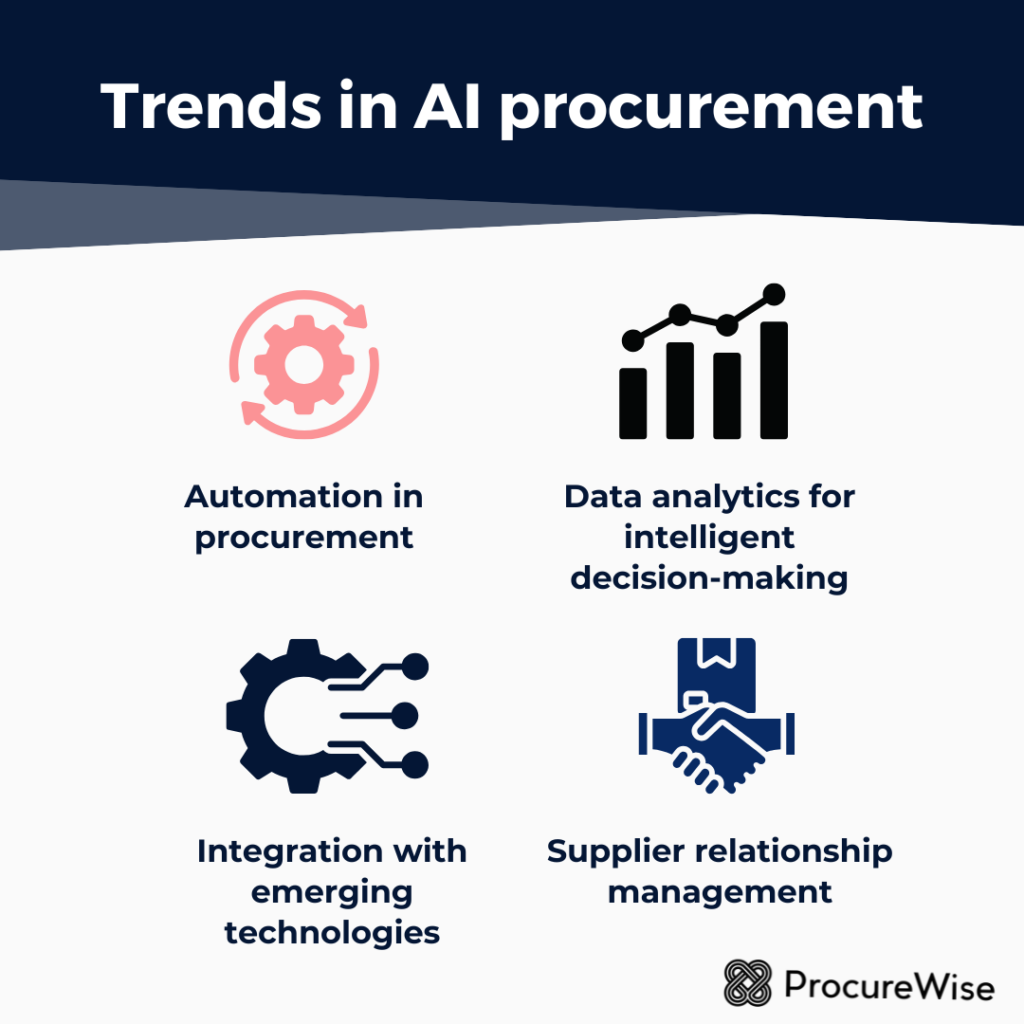
🕶️ Trends in AI procurement for 2026 🕶️
The field of artificial intelligence (AI) has shown immense growth and potential in recent years. As AI technology continues to advance, it has found wide-ranging applications in various industries, including procurement. The traditional methods of procurement are gradually being replaced by AI-based solutions, which offer numerous advantages such as enhanced efficiency, cost reduction, and improved decision-making. Looking ahead to 2026, this article will explore the emerging trends in AI procurement, focusing on key areas such as automation, data analytics, supplier relationship management, and the integration of AI with emerging technologies.
1️⃣ Automation in procurement 🖥️
Automation is set to play a pivotal role in reshaping the procurement landscape in the coming years. Organizations are increasingly leveraging AI-powered automation tools to streamline their procurement processes, minimize manual intervention, and foster operational efficiency.
The automation of routine and repetitive tasks, such as purchase order processing, invoice matching, and contract management, not only reduces human error but also saves time and frees up procurement professionals to focus on strategic activities. In the procurement domain, AI-driven automation can lead to higher productivity, improved accuracy, and cost savings, ultimately resulting in better outcomes for organizations.
2️⃣ Data analytics for intelligent decision-making 💡
Data analytics is another significant trend that will drive the evolution of AI procurement. With the vast amount of data generated throughout the procurement lifecycle, organizations can harness the power of AI to analyze this data and extract valuable insights. AI-powered analytics tools can help identify patterns, predict demand, optimize inventory levels, and evaluate supplier performance, among many other strategic tasks.
By analyzing both structured and unstructured data, organizations can make data-driven decisions, improve forecasting accuracy, enhance supplier selection processes, and identify potential risks and opportunities. The integration of AI with data analytics enables procurement professionals to leverage actionable intelligence for driving strategic value and gaining a competitive edge.
3️⃣ Integration with emerging technologies 🔌
AI’s intersection with emerging technologies is expected to shape the future of procurement. One such technology is robotic process automation (RPA), which involves the use of software robots to automate repetitive tasks. Integration of AI with RPA can revolutionize procurement processes by streamlining activities like purchase requisitions, order placements, invoice processing, and supplier onboarding. The synergy between AI and machine learning can enable systems to learn, adapt, and make increasingly accurate predictions, leading to proactive decision-making in procurement.
Furthermore, the integration of AI with blockchain technology holds significant promise in enhancing transparency, traceability, and integrity in supply chain management. By leveraging these emerging technologies, organizations can optimize procurement processes, reduce costs, and ensure compliance with regulatory requirements.
The future of AI procurement appears to be promising, with automation, data analytics, supplier relationship management, and integration with emerging technologies emerging as the key trends for 2026 and beyond. These trends provide organizations with the opportunity to drive operational efficiency, make intelligent decisions, strengthen supplier relationships, and leverage emerging technologies for better procurement outcomes. As organizations embrace AI procurement solutions, they must also address challenges such as data privacy, ethics, and change management to fully unlock the potential of AI and reap its benefits in the field of procurement.
4️⃣ Supplier relationship management 🤝
Effective supplier relationship management is a critical factor in successful procurement operations. As AI continues to evolve, it will revolutionize how organizations manage their relationships with suppliers. AI-powered supplier relationship management (SRM) solutions facilitate the monitoring, evaluation, and communication with suppliers, enabling organizations to optimize supplier performance, mitigate risks, and enhance collaboration.
AI algorithms can analyze supplier data, previous interactions, and market trends to provide valuable insights on supplier reliability, financial stability, and overall performance. By leveraging AI in SRM, organizations can improve supplier selection, negotiation strategies, and contract management, leading to stronger partnerships and improved procurement outcomes.