

As we look toward 2026, the landscape of procurement and inventory management is poised for a significant transformation, largely driven by advancements in artificial intelligence. With AI technologies becoming more sophisticated, businesses are expected to leverage them to enhance efficiency, accuracy, and decision-making in their supply chain processes.
AI is set to revolutionize procurement by automating routine tasks such as order processing and supplier assessment, thereby reducing human error and freeing up teams to focus on strategic activities. Predictive analytics powered by AI will enable businesses to forecast demand with greater precision, leading to optimized inventory levels and minimized waste.
Moreover, AI’s ability to process vast amounts of data rapidly will facilitate better supplier relationship management, cost negotiations, and risk assessment, ultimately driving more profitable procurement strategies. By 2026, organizations that successfully integrate AI into their procurement and inventory management operations will likely enjoy a competitive edge, characterized by smoother operations, reduced costs, and enhanced agility in responding to market changes.
In this forward-looking guide, we’ll explore the anticipated trends in AI for procurement and inventory management and showcase the potential benefits and challenges businesses might face on this journey.
🔮 Forecasts for 2026: How AI Will Change Procurement & Inventory Management 🔮
The Evolving Procurement Landscape 🤝
By 2026, procurement operates in an environment of constant volatility. Geopolitical shifts, supply chain disruptions, and rising market pressure require organizations to build resilience, agility, and smarter decision-making. Within this context, AI emerges as a critical enabler, enhancing human capability and transforming how companies navigate supplier networks, risks, and costs.
The Transformative Power of AI 🤖
AI in procurement goes far beyond automation. In 2026, intelligent systems deliver predictive insights, analyze vast datasets, and support proactive actions across sourcing, risk management, and inventory optimization. AI becomes less of a tool and more of a strategic advisor, helping teams work faster and with higher precision.
Setting the Vision for 2030 ➡️
The trajectory is clear: by 2030, procurement becomes cognitive and autonomous. AI anticipates needs, manages risk continuously, and supports supplier innovation. Humans remain central — but their role shifts toward strategic thinking, relationship building, and value creation, while AI handles routine execution.
The Current State: AI as the Foundation ⚙️
In 2026, organizations focus on establishing strong digital and data foundations. AI is already driving value through:
- automated procure-to-pay processes,
- cleaner and more integrated data,
- faster analytics and reporting,
- improved supplier identification and evaluation. This stage sets the momentum for deeper transformation in the coming years.
🚀 AI Breakthroughs Reshaping Procurement & Inventory by 2026 🚀
Foundational AI Applications Today 📌
By 2026, AI-driven tools are already delivering tangible, measurable impact. Organizations increasingly rely on AI to streamline core procurement and inventory processes, including:
- automation of invoice processing and PO management,
- smarter spend analytics that uncover savings opportunities,
- AI-supported sourcing, helping identify reliable and compliant suppliers faster.
These early wins prove AI’s business value by reducing manual effort, boosting accuracy, and improving data visibility.
The Rise of Generative AI ✨
Generative AI marks a major shift. In 2026, procurement teams use GenAI to:
- draft contracts and RFx documents,
- summarize complex market intelligence,
- generate category strategies and negotiation briefs in seconds.
GenAI becomes a productivity multiplier, accelerating workflows and enabling more strategic focus.
Data Quality & Digital Infrastructure Matter Most 🏗️
The strength of AI depends entirely on the quality of data it learns from. That’s why organizations in 2026 prioritize:
- modernizing ERP and S2P platforms,
- establishing strong data governance,
- integrating procurement and inventory data into unified systems.
Clean, structured, connected data becomes the fuel for intelligent procurement.
🤖 The 2030 Outlook: Toward Cognitive, Predictive & Autonomous Procurement 🤖
Beyond Automation: Autonomous Operations ⚡
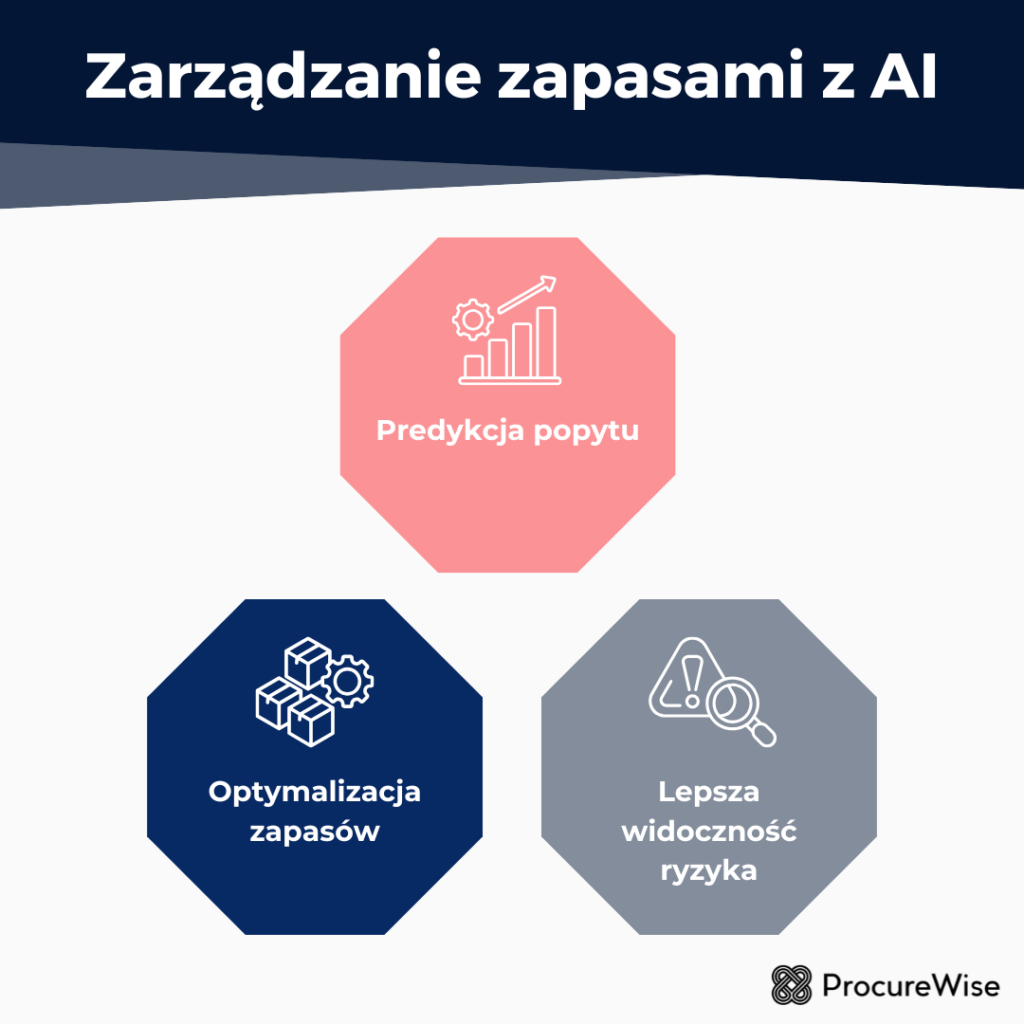
By 2030, AI evolves from assisting to fully executing many transactional procurement and inventory workflows. Systems will:
- autonomously handle requisition-to-payment for standard goods,
- choose optimal suppliers using real-time performance & risk data,
- predict future demand with high accuracy,
- optimize inventory levels to prevent shortages or overstock.
Procurement shifts from reactive processes to predictive, self-correcting operations.
Hyper-Personalized Supplier Ecosystems 🌐
AI continuously monitors supplier performance, compliance, and risk, enabling:
- real-time collaboration,
- personalized feedback loops,
- faster innovation cycles,
- stronger, more resilient supplier partnerships.
The supplier experience becomes dynamic and insight-driven, elevating ecosystem value.
Procurement as a Strategic Value Creator 💡
With routine execution automated, procurement professionals focus on:
- strategic sourcing,
- high-impact supplier negotiations,
- cross-functional advisory roles,
- innovation and risk intelligence.
AI-generated insights enhance decision-making, making procurement a central driver of business competitiveness.
Real-Time Spend Visibility & Intelligent Sourcing 📊
AI delivers a living, real-time view of global spend, modeling future outcomes rather than simply reporting the past. The system continuously recommends optimal sourcing strategies, aligning every purchase with goals for cost, risk, sustainability, and resilience.
🌟 Skills, Roadmap & Success Factors: Preparing for AI-Driven Procurement 🌟
The Augmented Procurement Professional 🧠
AI doesn’t replace procurement teams — it elevates them. By 2030, roles evolve from transactional to strategic, shifting toward:
- Category Strategists focused on long-term value,
- Relationship Builders managing innovation across the supply base,
- Data-Literate Advisors interpreting AI-driven insights.
Soft skills like creativity, negotiation, and strategic thinking become essential.
Future Skills & Talent Development 📚
Organizations will prioritize continuous learning, ensuring teams can:
- understand and question AI-generated insights,
- collaborate effectively with AI agents (“co-pilots”),
- manage complex sourcing scenarios,
- drive innovation and change.
A culture of adaptability and curiosity becomes a competitive differentiator.
Strategic Roadmap to 2030 🗺️
A phased transformation helps organizations scale AI responsibly:
Phase 1 (Today–2025):
- Cleanse and centralize procurement data
- Standardize processes
- Implement foundational AI in P2P and spend analytics
Phase 2 (2025–2027):
- Expand AI into sourcing and CLM
- Adopt early GenAI for content and analysis
- Augment decision-making with intelligent tools
Phase 3 (2027–2030):
- Deploy autonomous procurement agents
- Integrate predictive risk and demand forecasting
- Connect procurement intelligence to enterprise-wide planning
Critical Success Factors 🔑
Winning organizations will excel in:
- Visionary leadership that drives the transformation,
- Robust data governance ensuring reliable AI inputs,
- Talent and skill development, empowering teams to partner with AI.
Those who invest early and deliberately will shape procurement’s future — not just react to it.