

In today’s interconnected world, geographical pricing has emerged as a crucial strategy for businesses aiming to expand their reach across global markets. Understanding the diverse economic landscapes, consumer behaviors, and competitive environments of different regions can help you tailor your pricing strategy more effectively. But what does this really entail?
Geographical pricing involves adjusting your prices based on the location of your customers, taking into account factors such as local demand, cost of living, currency fluctuations, and regional market trends. This strategy not only maximizes your sales potential but also enhances your competitiveness in various markets.
As you step into the realm of geographical pricing, it’s essential to consider various elements that influence your pricing decisions, such as legal regulations, import/export tariffs, and cultural differences. By carefully analyzing these aspects and implementing targeted pricing strategies, you can drive revenue growth while maintaining customer satisfaction.
In this guide, we will explore the fundamentals of geographical pricing, outline effective strategies for implementation, and provide real-world examples to help you adapt your pricing model for global success. Ready to unlock the potential of your pricing strategy? Let’s dive in!
🌍 Definition of Geographical Pricing 🌍
Geographical pricing, also known as location-based or zone pricing, is a strategic approach used by businesses to set different prices for the same product or service depending on the customer’s geographical location. This pricing strategy takes into account various factors that influence costs and customer behavior in different regions, such as local market demand, purchasing power, currency exchange rates, and logistical expenses like transportation and taxes. By tailoring prices to specific locations, companies can optimize their competitiveness and profitability while catering to the unique economic conditions of each market.
📋 Key Strategies in Geographical Pricing 📋
Implementing geographical pricing requires a comprehensive understanding of the varying factors that influence consumer purchasing decisions in different locales. By strategically adjusting prices according to these regional differences, businesses can enhance their market presence and maximize profitability while satisfying local consumers.
✏️ Zone Pricing: Zone pricing is a strategy that establishes different price levels for a product based on geographical areas or “zones.” Each zone is defined by the associated shipping costs and market conditions. For instance, a company might charge less for a product in a nearby zone where shipping costs are minimal, while higher prices would apply to distant regions. This pricing model simplifies the seller’s pricing structure, allowing them to compete more effectively in diverse markets while also ensuring that transportation costs are factored into the final price.
✏️ Basing Point Pricing: Basing point pricing involves selecting a specific geographic location as a reference point for pricing products, regardless of where the shipment is ultimately delivered. Prices are set from this “basing point,” and transportation costs are added based on distance from that location. This approach can streamline pricing for companies with multiple distribution points and helps maintain consistent pricing across different regions while accounting for varying shipping expenses.
✏️ Freight-Absorption Pricing: Freight-absorption pricing is a strategy where the seller takes on all or part of the shipping costs, essentially absorbing these expenses to offer a more attractive price to buyers. This approach is often used as a promotional tactic to encourage sales, particularly in competitive markets. By minimizing shipping costs for customers, businesses can enhance their appeal and stimulate demand, making it a powerful tool for market expansion.
🌟 Factors Influencing Geographical Pricing 🌟
Geographical pricing is shaped by various interrelated factors that businesses must consider to optimize their pricing strategies across different regions. Understanding these factors can help companies effectively tailor their offerings and maximize profitability.
➡️ Demand: The level of demand for a product or service greatly influences pricing. In regions with high demand, businesses may set higher prices, capitalizing on customers’ willingness to pay. Conversely, in areas where demand is low, lower prices may be necessary to attract customers and maintain market share.
➡️ Competition: The intensity of competition in a specific market impacts pricing strategies. In highly competitive regions, companies may need to lower prices to draw in customers, while in less competitive markets, businesses might have more leeway to charge higher prices.
➡️ Cost of Production and Transportation: Variations in production and transportation costs across regions play a crucial role in setting prices. Higher operational costs, whether due to raw material expenses or logistics, typically lead to increased prices in those areas.
➡️ Economic Conditions: Local economic factors such as income levels, inflation rates, and overall purchasing power directly affect how much consumers are willing to spend. Businesses often adjust their prices to align with the economic realities of their target markets.
➡️ Regulations: Different regions have unique pricing regulations, taxes, and tariffs that can complicate pricing strategies. Compliance with local laws is essential to avoid legal issues and optimize pricing.
➡️ Currency Exchange Rates: For businesses operating internationally, fluctuations in exchange rates can significantly impact pricing. Companies must consider these variations to maintain profitability while remaining competitive in foreign markets.
By thoroughly analyzing these factors, businesses can develop effective geographical pricing strategies that cater to the distinct needs and behaviors of customers in different regions, ultimately driving sales and enhancing market presence.
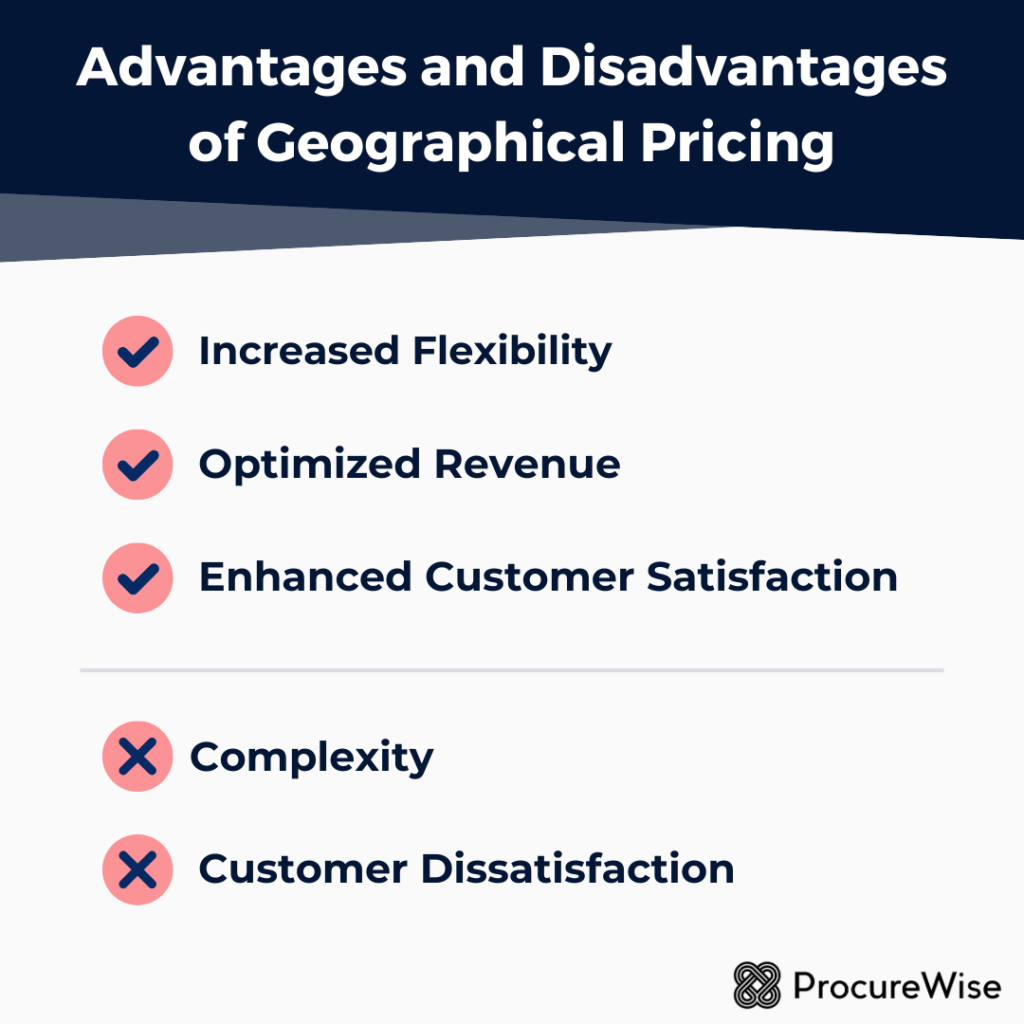
✅ Advantages of Geographical Pricing ✅
Geographical pricing strategies offer several notable advantages for businesses looking to optimize their pricing structures based on regional factors.
✔️ Increased Flexibility: One of the primary benefits of geographical pricing is the flexibility it provides. Businesses can tailor their prices to reflect local market conditions, customer preferences, and competitor pricing. This adaptability allows companies to respond quickly to changes within specific regions without affecting their overall pricing strategy.
✔️ Optimized Revenue: Geographical pricing helps businesses maximize revenue by aligning prices with regional demand and cost structures. For instance, companies may set higher prices in areas with high demand and limited supply, while offering lower prices in competitive markets. By considering local transport costs and resource availability, businesses can fine-tune their pricing to enhance profitability.
✔️ Enhanced Customer Satisfaction: When companies implement geographical pricing strategies, they create a perception of fairness in pricing among customers. By reflecting local economic conditions and consumer purchasing power, businesses can foster trust and loyalty, ultimately leading to increased customer satisfaction.
In summary, geographical pricing not only allows for tailored pricing strategies that address specific market needs but also contributes to enhanced revenue and stronger customer relationships.
❌ Disadvantages of Geographical Pricing ❌
While geographical pricing offers several advantages, it also comes with notable drawbacks that businesses must consider before implementation.
✖️ Complexity: One significant challenge is the complexity involved in establishing and maintaining a geographical pricing strategy. Companies must conduct detailed research and data analysis for each region, taking into account local laws and regulations. This ongoing requirement for monitoring and adjusting prices can increase operational costs and strain resources, potentially impacting overall profitability.
✖️ Customer Dissatisfaction: Another concern is the risk of customer dissatisfaction. If not managed effectively, consumers may become aware of price disparities across regions and feel unfairly treated based on their geographic location. This perception can lead to a loss of trust and loyalty, ultimately harming the brand’s reputation and customer relationships.
In summary, while geographical pricing can enhance market responsiveness, the complexities and potential for customer dissatisfaction necessitate careful consideration and management to ensure its success.
💼 Case Studies: Implementing Geographical Pricing in Various Industries 💼
Geographical pricing strategies have been successfully implemented across multiple industries, demonstrating their versatility and effectiveness in optimizing revenue and enhancing customer satisfaction. Here, we explore a few case studies showcasing how different sectors leverage this approach.
👉 Airlines: Airlines are pioneers in geographical pricing, often adjusting fares based on the traveler’s location and booking patterns. For instance, a European airline may charge significantly higher prices for flights from Europe to the United States compared to intra-European flights. This pricing strategy reflects the varying costs associated with longer routes, demand fluctuations, and competitive dynamics in different markets. By employing geographical pricing, airlines maximize revenues while catering to region-specific demand.
👉 E-commerce Retailers: E-commerce giants like Amazon utilize geographical pricing to account for shipping costs, taxes, and local purchasing power. For example, a product priced at $50 in the United States may be priced at $40 in a country with lower shipping fees and taxes, while it could be priced at $60 in a region with higher costs. This approach not only enhances competitiveness but also ensures that pricing aligns with local customer expectations, thereby improving conversion rates.
👉 Software Companies: Software companies often adopt geographical pricing based on regional economic conditions and consumer willingness to pay. For instance, a SaaS provider may charge $100 per month for its software in North America but only $40 in Southeast Asia, reflecting the different economic environments and purchasing power. This strategy allows companies to penetrate diverse markets while maintaining profitability, making their products more accessible to various customer segments.
👉 Agricultural Products: In the agricultural sector, geographical pricing is influenced by local supply and demand dynamics. A farmer selling produce in a metropolitan area might charge higher prices compared to rural locations due to increased demand and higher transportation costs. By tailoring prices based on geographic regions, farmers can optimize their revenue streams while ensuring that their products remain competitive in each market.
👉 Telecommunications: Telecom companies frequently implement geographical pricing to offer competitive packages tailored to different regions. For instance, a mobile provider may introduce lower data plans in rural areas with less competition compared to urban centers. This strategy not only helps retain customers but also attracts new ones by addressing specific regional needs and competitive pressures.
These case studies illustrate the effectiveness of geographical pricing in adjusting to local market conditions, enhancing competitive advantage, and ensuring customer satisfaction across various industries. By understanding and implementing this strategy, businesses can successfully navigate the complexities of global markets.
🏆 Practical Tips for Effective Geographical Pricing 🏆
Implementing a successful geographical pricing strategy requires a thoughtful approach. Here are some practical tips to enhance your pricing effectiveness:
🏅 Conduct Market Research: Understand the local demand, purchasing power, and consumer behavior in each region. This information will help you set competitive prices that align with market expectations.
🏅 Utilize Data Analytics: Leverage data analytics tools to monitor market trends and fluctuations in demand. Real-time data can guide pricing adjustments and help you respond quickly to changes.
🏅 Evaluate Shipping Costs: Factor in logistical expenses, including shipping and tariffs, when setting prices. Consider using freight-absorption pricing to mitigate shipping costs and remain competitive.
🏅 Consider Currency Fluctuations: Regularly review currency exchange rates and adapt your pricing accordingly. This ensures that your prices remain consistent in value across different markets.
🏅 Test Pricing Models: Experiment with various pricing models, such as zone pricing or basing point pricing, to determine which approach resonates best with your target audience in different regions.
🏅 Communicate Value Clearly: Ensure that the perceived value of your product justifies the price point. Use marketing strategies to convey quality and uniqueness, particularly in regions where you charge a premium.
🏅 Stay Compliant with Local Regulations: Be aware of and adhere to local pricing regulations to avoid legal issues. This includes understanding taxation and consumer protection laws in different markets.
🏅 Monitor Competitors: Keep an eye on competitor pricing strategies within each region. Adjust your prices strategically to maintain competitiveness while ensuring profitability.
🏅 Gather Customer Feedback: Encourage feedback from customers in different regions to gauge their perception of pricing. This can provide insights into whether your pricing strategy is effective or requires adjustments.
🏅 Regularly Review and Adjust: Continually evaluate your geographical pricing strategy and make adjustments based on market changes, consumer behavior, and business goals to optimize profitability and customer satisfaction.
By applying these practical tips, businesses can navigate the complexities of geographical pricing and maximize their potential in diverse markets.

🛠️ Tools and Resources for Geographical Pricing Analysis 🛠️
To effectively implement a geographical pricing strategy, businesses can leverage a variety of tools and resources that facilitate data analysis, pricing adjustments, and market insights. Here are some essential tools for geographical pricing analysis:
📌 Pricing Software: Dedicated pricing tools like Pricefx or Zilliant allow businesses to analyze market trends, competitor pricing, and local demand. These platforms often provide advanced analytics and machine learning capabilities to optimize pricing strategies based on geographical data.
📌 Market Research Platforms: Utilizing platforms such as Statista or Nielsen can provide valuable insights into regional economic conditions, consumer behavior, and purchasing power. This data is crucial for understanding how to price products effectively in different locations.
📌 CRM Systems: CRM tools like Salesforce or HubSpot can track customer interactions and preferences across various regions. This information helps tailor pricing strategies to align with local customer expectations and purchasing habits.
📌 Geographic Information Systems (GIS): GIS tools such as ArcGIS enable businesses to visualize and analyze geographical data. By mapping customer demographics, economic activity, and competitive landscapes, companies can make informed pricing decisions based on regional characteristics.
📌 E-commerce Analytics: Tools like Google Analytics and Shopify Analytics provide insights into sales performance by region, helping businesses to identify trends and optimize pricing. These platforms can track visitor behavior and conversion rates, enabling a more nuanced understanding of geographical pricing effectiveness.
📌 Regulatory Compliance Resources: Staying informed about local laws and regulations is crucial. Resources such as LexisNexis or local government websites can help ensure compliance with pricing regulations in different regions.
By integrating these tools into their pricing strategy, businesses can enhance their geographical pricing analysis, ensuring they remain competitive while effectively managing costs and maximizing profitability.
🥊 Challenges in Geographical Pricing Implementation 🥊
Implementing a geographical pricing strategy presents several challenges that businesses must navigate to ensure effectiveness and compliance.
💥 Complexity of Local Regulations: Each region may have unique laws and regulations governing pricing, taxation, and consumer rights. Businesses must remain compliant with these local rules, as failure to do so can lead to legal ramifications, including fines and penalties. This complexity can be particularly daunting for small businesses with limited resources.
💥 Logistical and Distribution Issues: Efficient distribution is crucial for successful geographical pricing. Variations in transportation costs, lead times, and distribution channels can complicate pricing strategies. Companies must optimize their supply chains and consider regional warehousing solutions to minimize costs and streamline order fulfillment.
💥Currency Variability: Different currencies in various regions can complicate bookkeeping and pricing consistency. Fluctuations in exchange rates may lead to discrepancies that can confuse customers and impact profitability.
💥 Market Sensitivity: Understanding local market dynamics is key. Businesses must avoid appearing indifferent to consumers’ unique pricing sensitivities and perceptions. A misstep in pricing can result in reputational damage or lost sales, particularly if consumers feel exploited or undervalued.
💥 Channel Conflicts: Balancing pricing across various distribution channels can be tricky. Offering different prices in overlapping markets may create tensions among channel partners, potentially leading to conflicts or channel cannibalization where sales shift from one distributor to another.
💥 Dynamic Pricing Adjustments: Regularly updating pricing strategies in response to market changes, local economic conditions, and consumer behavior is necessary but can be resource-intensive. Companies must invest in data analytics and market research to adapt effectively.
Navigating these challenges requires a comprehensive approach, combining local market insights with robust logistical strategies to implement an effective geographical pricing model.
🚀 Future Trends in Geographical Pricing 🚀
As globalization continues to reshape markets, geographical pricing is set to evolve significantly, driven by technological advancements and shifting consumer behaviors. Here are some key trends to watch:
▶️ Dynamic Pricing Algorithms: The rise of artificial intelligence and machine learning will enable businesses to implement more sophisticated dynamic pricing models. These algorithms can analyze real-time data, including local demand fluctuations, competitor pricing, and economic indicators, allowing for quick adjustments that maximize revenue and market competitiveness.
▶️ Personalization and Targeting: Future geographical pricing strategies will leverage consumer data to create personalized pricing models. By understanding individual purchasing behaviors and preferences, businesses can tailor prices to specific customer segments within different regions, enhancing customer satisfaction while optimizing profitability.
▶️ Increased Transparency: As consumers become more aware of pricing disparities, there will be a push for greater transparency in geographical pricing. Brands that openly communicate their pricing rationale and offer explanations for regional variations are likely to build stronger trust and loyalty among consumers.
▶️ Sustainability Considerations: Environmental awareness is rising, and companies may start incorporating sustainability into their geographical pricing strategies. Pricing may reflect not only local market conditions but also the environmental impact of production and logistics in different regions, appealing to eco-conscious consumers.
▶️ Integration with E-commerce Platforms: With the continual growth of e-commerce, geographical pricing will increasingly be integrated into online retail platforms. This evolution will allow businesses to seamlessly adjust prices based on a customer’s location and the associated logistics costs, enhancing the overall shopping experience.
By staying ahead of these trends, businesses can leverage geographical pricing to navigate complex market landscapes and optimize their revenue while catering to the diverse needs of consumers worldwide.