

So you’ve decided to start a successful blog – congrats! But now comes the hard part: actually writing the content. Writing a blog can be a daunting task, especially if you’re new to the world of content creation. But fear not, because we’ve got you covered with this complete guide on how to write a blog.
From picking the right topic and doing keyword research to structuring your post and optimizing it for SEO, this guide will walk you through every step of the writing process. Whether you’re a seasoned blogger looking to improve your skills or a newbie just starting out, this guide has everything you need to create engaging and informative blog posts that will keep your readers coming back for more. So grab your laptop, fire up your creativity, and let’s get writing! Read more Why you should promote your company on social media?
❔What is a blog post❔
A blog post is a fundamental component of a blog that serves as a single piece of written content. It is published on a blog platform and is intended to provide insights, information, or entertainment to the readers. A blog post encompasses various topics and themes, ranging from personal experiences to professional guidance, and can be written in a conversational or formal tone, depending on the blogger’s style.
The purpose of a blog post is to engage with the audience and deliver valuable content that resonates with their interests or queries. It can be educational, offering informative content on a specific subject, or entertaining, engaging the readers with captivating stories or amusing anecdotes. Ultimately, a blog post is a powerful medium that allows bloggers to share their thoughts, experiences, and expertise with a wide range of readers, opening up opportunities for interaction and discussion on various topics.
Take advantage of our content marketing services now!
📄 Starting a blog from scratch 📄
Starting a blog can be an exciting venture, but it’s important to understand the key steps to ensure a successful launch.
1️⃣ Understanding your audience: Researching your target demographic will help you tailor your blog content to their interests and needs.
2️⃣ Check out the competition: Look at other blogs in your niche to see what topics they cover and how they engage with their audience. This will help you identify gaps in the market and find a unique angle for your blog.
3️⃣ Name your blog: Choose a blog title that is catchy, relevant, and easy to remember.
4️⃣ Create a blog domain: Registering a domain will give your blog a unique web address.
5️⃣ Choose a CMS (Content Management System): It is crucial step, it builds and manages your blog. Popular options include WordPress, Blogger, and Squarespace.
6️⃣ Customize your blog’s appearance: Make it visually appealing and reflective of your brand.
7️⃣ Write your first blog post: Make sure to provide valuable and engaging content to your audience.
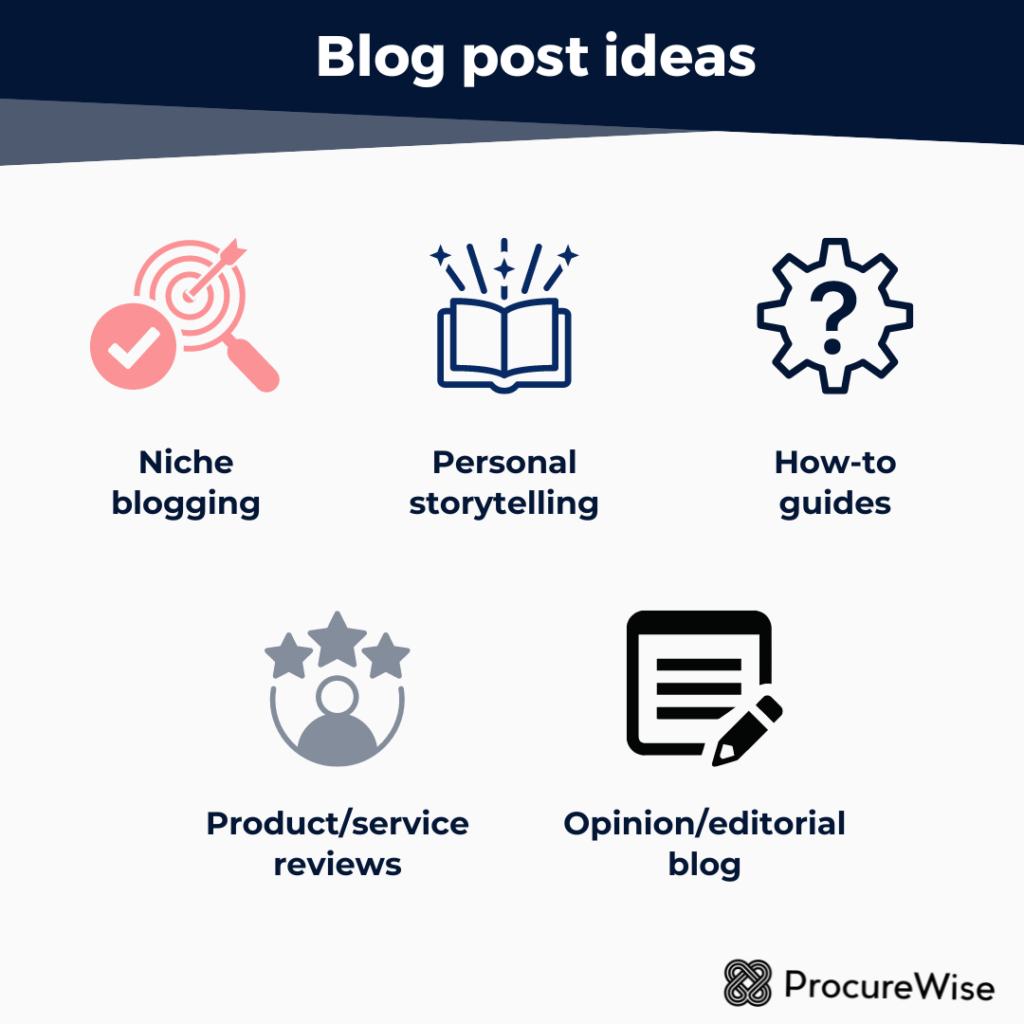
💡 What to blog about? Blog post ideas 💡
When it comes to deciding what to blog about, there are a multitude of models and topic ideas to consider. The level of difficulty varies, so it’s important to choose a topic that aligns with your interests and passions. Here are a few models to consider:
👉 Niche blogging: Focus on a specific area of interest – niche topics, such as fashion, travel, or food. This allows you to become an expert in that particular field and easily connect with like-minded individuals.
👉 Personal storytelling: Share your own experiences and adventures. This model allows you to express yourself creatively and connect with readers on a deeper level.
👉 How-to guides: Provide step-by-step tutorials or guides on topics you excel in. This model is particularly useful if you have expertise in a specific area and want to help others learn.
👉 Product/service reviews: Share your insights and opinions on various products or services. This model allows you to experiment with different products and spark the curiosity of your readers.
👉 Opinion/editorial blog: Express your thoughts and viewpoints on current events, social issues, or other blog topics that you feel strongly about. This model encourages experimentation and debates with your readers.
Remember, the most important factor in blogging is to choose a topic that interests and excites you. Your passion will shine through in your writing, sparking the imagination of your readers and making your blog a success.
✏️ How to write a blog post ✏️
Writing blog posts involves a series of steps that ensure you create a well-crafted and engaging article. These steps include refining the topic through keyword research, creating an organized outline, crafting an irresistible headline, selecting a blog domain name, implementing calls-to-action, editing and publishing the post, and promoting the final article.
- Refine the Topic: Begin by conducting keyword research to identify popular and relevant terms related to your subject matter. This helps optimize your content for search engines.
- Create an Outline: Organize your ideas into an outline that provides a logical flow for your blog post. This ensures that you cover all the necessary points and maintain coherence.
- Craft an Irresistible Headline: The headline should capture readers’ attention and provide a sneak peek of what they can expect from the post. Incorporate keywords to improve visibility.
- Select a Blog Domain Name: Choose a domain name that reflects your blog’s purpose and is easy to remember and pronounce.
- Implement Calls-to-Action: Include prompts that encourage readers to take specific actions, such as subscribing to your newsletter or sharing the post on social media.
- Write an Engaging Introduction: Hook your readers with a compelling introduction that provides an overview of what the blog post will cover.
- Develop the Body: Provide valuable content, supporting your main points with credible sources and examples. Divide the content into sections and use subheadings to enhance readability.
- Edit for Clarity and Grammar: Eliminate errors and ensure your blog post is clear, concise, and free of grammatical mistakes. Proofread carefully before proceeding to the next step.
- Format and Optimize: Use bullet points, numbered lists, and relevant images to enhance visual appeal. Optimize your blog post for search engines by including relevant keywords throughout the content. Use keyword research tools.
- Insert Links: Include external links and internal links to provide additional information and support your claims. This helps improve the credibility and authority of your blog post.
- Add a Conclusion: Summarize your main points and provide a call to action. Encourage readers to engage with your content further.
- Publish and Promote: Upload your blog post to your chosen blogging platform and make it accessible to your audience. Promote the post through various channels, such as social media, email newsletters, and guest blogging, to increase visibility.
- Monitor and Measure: Track the performance of your blog post using analytics tools. Analyze metrics like page views, bounce rate, and engagement to adapt your blogging strategy.
By following this step-by-step guide, you can write a blog post that is refined, well-structured, engaging, and effectively promoted, resulting in increased blog traffic and reader engagement.

📆 Consistency is the key 📆
Consistency is critical for effective blogging. It refers to maintaining a regular and predictable schedule in terms of both posting frequency and subject matter. Consistency plays a significant role in building a loyal audience and establishing a strong online presence.
➡️ By regularly publishing new content, bloggers can keep their audience engaged and interested. When readers know when to expect new posts, they are more likely to revisit the blog and stay connected. Moreover, search engines prioritize websites that consistently update and publish fresh content, resulting in higher rankings and increased visibility.
➡️ Helps to define the blog’s core target audience and create a brand identity. Bloggers who consistently cover specific topics or themes tend to attract a dedicated readership. By consistently providing valuable and relevant content within a specific niche, bloggers can position themselves as authorities and build credibility within their industry.
➡️ Requires commitment and focus. It is crucial to set realistic goals and create a content schedule that is sustainable and manageable. Bloggers must prioritize quality over quantity and ensure that each post adds value to their audience.
In conclusion, consistency is a crucial element of effective blogging. By maintaining a regular posting frequency and focusing on relevant subject matter, bloggers can build a loyal audience, improve search engine rankings, create a strong brand identity, and gain credibility within their industry. To achieve this, commitment and focus are necessary.