

So you’ve been pu tting in the work to create content for your marketing efforts, but how do you know if it’s actually making an impact? Enter content marketing metrics.
Tracking the right metrics can help you understand the effectiveness of your content strategy, identify areas for improvement, and demonstrate the ROI of your efforts to key stakeholders.
But with so many metrics to choose from, which ones should you prioritize? In this guide, we’ll break down the key metrics for content marketing you should be tracking to measure the success of your content initiatives. From website traffic and engagement metrics to lead generation and conversion metrics, we’ll cover it all. Let’s dive in and start measuring the impact of your content marketing efforts. Read more What are content marketing trends in 2024?
❓What are content marketing metrics❓
Content marketing metrics are measurements used by businesses to track and analyze the effectiveness of their content marketing strategies. These metrics include audience engagement, lead generation, website traffic, and conversion rate.
Audience engagement measures the level of interest and interaction content generates, while lead generation tracks the number of leads generated. Website traffic metrics provide insight into content reach and visibility, and conversion rate measures the percentage of visitors taking desired actions. Overall, these metrics help businesses make data-driven decisions to improve their content marketing efforts.
📊 Conversion metrics 📊
Conversion metrics are essential for measuring the effectiveness of content marketing efforts in driving sales and conversions. By tracking these metrics, businesses can gain insights into how well their content is performing and make data-driven decisions to optimize their marketing strategies.
👉 Conversion rate, which measures the percentage of website visitors who take a desired action, such as making a purchase or filling out a lead form by your piece of content. This metric is crucial for assessing the overall success of content marketing efforts in generating sales and conversions in your sales funnel. By monitoring the conversion rate, businesses can identify areas of improvement and optimize their content to drive more conversions.
👉 Average order value (AOV), which measures the average amount spent by customers per transaction. Tracking the AOV allows businesses to understand the value they are generating from their content marketing efforts and identify opportunities to increase sales. By analyzing the AOV, businesses can make strategic decisions on pricing, promotions, and product bundling to improve their overall revenue.
👉 Cost per click: This metric calculates the cost incurred to generate a single conversion and provides valuable insights into the efficiency of content marketing efforts. By comparing the cost per conversion against the value generated, businesses can optimize their marketing spend and allocate resources to the most effective channels and content marketing campaigns.
👉 Lead conversion rate is essential for businesses that rely on lead generation through their content marketing efforts. This metric measures the percentage of qualified leads that ultimately convert into paying customers. By monitoring the lead conversion rate, businesses can identify any gaps in their lead nurturing process and make the necessary adjustments to improve conversions.
👉 Customer lifetime value (CLV) is crucial for measuring the long-term impact of content marketing efforts on sales and conversions. CLV measures the total value a customer brings to a business over their entire relationship. By analyzing the CLV, businesses can identify high-value customers and tailor their quality content and marketing efforts to retain and maximize revenue from these customers.
👉 Social shares refer to the act of users sharing content on social media platforms. It is an engagement metric that measures the number of times a piece of content is shared across various social networks. Social shares indicate the popularity, reach, and potential virality of the content among the target audience.
Tracking conversion metrics is vital for measuring the effectiveness of content marketing efforts in driving sales and conversions. By monitoring metrics such as conversion rate, average order value, cost per conversion, lead conversion rate, customer lifetime value, customer acquisition cost, and traffic sources, businesses can gain valuable insights and make data-driven decisions to optimize their content marketing strategies and maximize revenue.

🔎 SEO metrics 🔎
SEO metrics play a crucial role in measuring website rankings and driving organic traffic. These metrics are essential for understanding the performance of a website or online platform in search engines. By analyzing SEO metrics, website owners can identify opportunities for improvement, evaluate the performance of their content, and optimize their website or social media pages.
Here are 4 key SEO metrics used to evaluate the performance of content in search engine optimization:
➡️ Keyword Rankings: This metric measures the position of a website or specific pages in search engine results for targeted keywords. It helps determine the visibility and competitiveness of content in search engine rankings. Tracking keyword rankings allows businesses to assess the effectiveness of their keyword targeting and optimize their content to improve rankings, increase organic traffic, and better understand their position relative to competitors.
➡️ Organic Search Traffic: Organic search direct traffic refers to the number of website visitors who arrive through organic (non-paid) search engine results. This metric measures the effectiveness of content in attracting organic traffic by your SEO strategy and indicates how well the website is performing in search engine rankings. Increasing organic search traffic suggests that the content is optimized for relevant keywords and generates visibility and engagement from search engine users.
➡️ Backlinks: Backlinks are links from external websites that point to a specific webpage. This metric measures the number and quality of backlinks that content receives. Backlinks are crucial for search engine rankings because they act as “votes of confidence” for the content’s credibility and relevance. Evaluating backlinks helps businesses assess the authority and popularity of the content and identify opportunities for link-building strategies to improve search engine visibility.
➡️ Organic Click-Through Rate (CTR): Organic CTR measures the percentage of search users who click on a website link in search engine results. It indicates how well the content’s title tags and meta descriptions persuade users to click through to the website. A higher CTR suggests that the content is compelling and relevant to search users. Analyzing CTR helps businesses optimize their click-worthy titles and descriptions, improve click-through rates, and enhance organic search performance.
By monitoring and analyzing these SEO metrics, businesses can evaluate the performance and impact of their content in search engine rankings, identify areas for improvement, and make data-driven decisions to enhance their organic visibility and attract more targeted traffic.
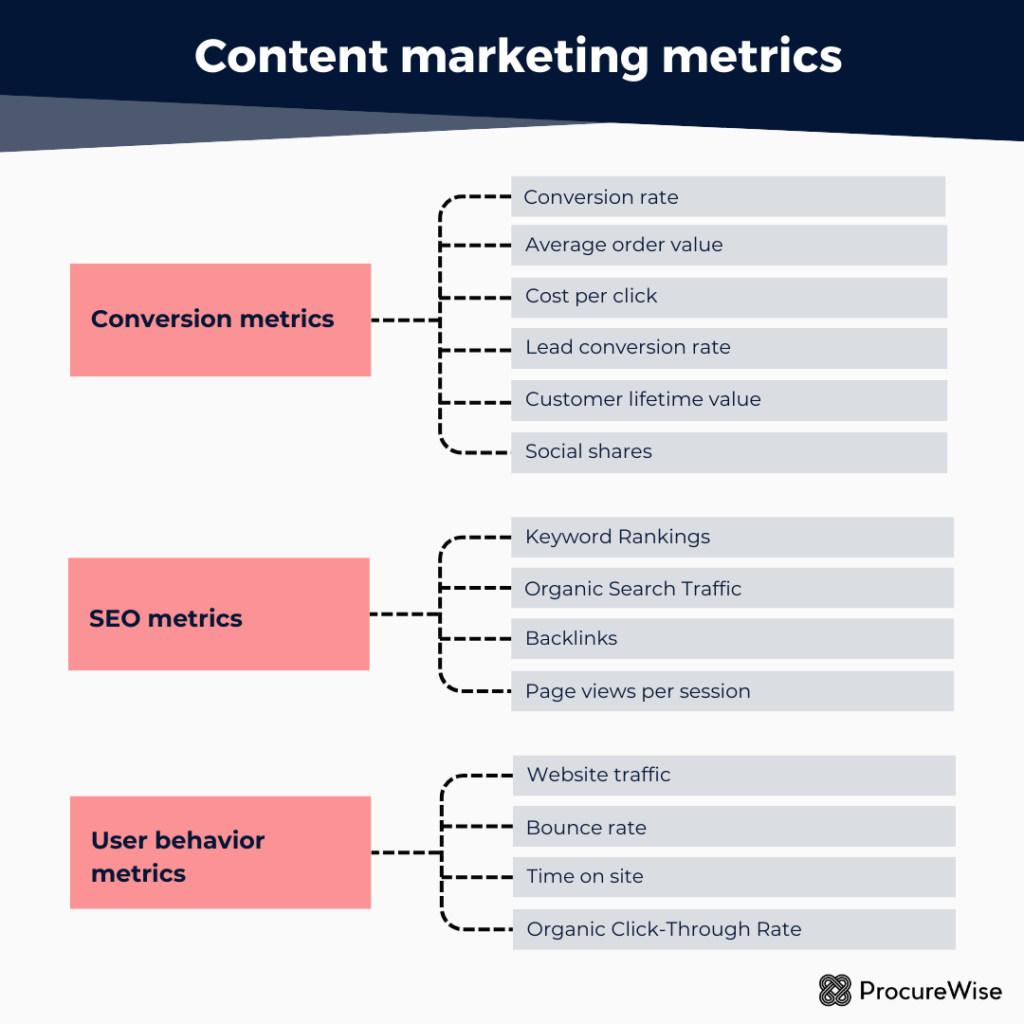
🙍♂️ User behavior metrics 🙍♂️
User behavior metrics refer to the various measurements and data points that are collected to analyze the behavior of website visitors and understand their interactions. These metrics provide valuable insights into how users engage with a website, helping businesses make informed decisions to improve user experience and optimize their online presence.
▶️ Website traffic, which measures the number of visitors to a website, including for example blog posts. This metric provides a high-level overview of the popularity and reach of a website. By tracking the number of unique visitors, businesses can gauge the effectiveness of their marketing efforts and assess the overall present and future success of their online presence.
▶️ Bounce rate, which measures the percentage of visitors who leave a website after viewing only one page. A high bounce rate usually indicates that visitors are not finding what they are looking for or that the website lacks engaging content. By analyzing the bounce rate, businesses can identify areas for improvement and make adjustments to retain more visitors.
▶️ Time on site: It measures the average time visitors spend on a website. Generally, the longer the time on site, the more engaged users are with the content. This metric can help businesses gauge the effectiveness of their website’s content and layout, as well as the overall user experience.
▶️ Page views per session is a metric that measures the average number of pages visitors view during a single session on a website. This metric provides insights into user engagement and navigation. A higher number of page views per session suggests that visitors are exploring the website and interacting with its content, while a lower number may indicate a need for improvements to increase engagement.
User behavior metrics play a crucial role in understanding website visitors and their interactions. By tracking these metrics, businesses can gain insights into user engagement, optimize their online presence, and make informed decisions to improve the overall user experience. From monitoring traffic and bounce rates to analyzing conversion rates and page views, these metrics provide valuable data for businesses to enhance their websites and meet the evolving needs of their target audience.
❔How to measure content marketing ROI❔
To measure content marketing ROI, a step-by-step process must be followed. This process involves calculating expenses, determining sales, and then calculating the ROI using the provided formula. By following this process, businesses can gain valuable insights into the effectiveness of their content marketing efforts and make data-driven decisions to optimize their return on investment.
The first step in measuring content marketing ROI is to calculate expenses related to content creation, distribution, and promotion. Next, businesses need to track metrics like lead generation and conversion rates to determine the sales generated from content marketing efforts. Specialized software and tools like Google Analytics can help in accurately attributing revenue to content marketing activities.
Once the expenses and sales have been determined, the next step is to calculate the ROI. The formula for calculating content marketing ROI is as follows:
ROI = ((Sales – Expenses) / Expenses) x 100
Measuring content marketing ROI is crucial for businesses looking to maximize their return on investment and achieve long-term content marketing success in today’s digital landscape.