

Social media has become a powerful tool for businesses to connect with their audience and promote their products or services. But with so much content vying for attention on social media platforms, how can you make sure your content stands out?
Content marketing on social media involves creating, publishing, and sharing content that engages your audience and drives them to take action. Whether you’re looking to increase brand awareness, drive traffic to your website, or generate leads, social media content marketing can help you achieve your goals.
In this guide, we’ll share tips and examples to help you create compelling social media content that resonates with your audience and drives results. From crafting eye-catching visuals to leveraging user-generated content, we’ll cover everything you need to know to elevate your social media content marketing strategy. Let’s dive in! Read more Creative content creation – best ideas and inspirations
❓What is content marketing on social media❓
Content marketing on social media refers to the strategic creation and promotion of valuable assets specifically designed for social platforms. With the explosion of social media usage in recent years, businesses and brands have recognized the need to adapt their marketing strategies. Instead of simply broadcasting promotional messages, content marketing focuses on providing valuable and relevant content that engages and resonates with target audiences.
The purpose of content marketing on social media is to build brand awareness, establish credibility, and ultimately drive customer action. By delivering high-quality and informative content and create their social media presence, businesses can position themselves as experts in their industry and build trust with their audience. This, in turn, increases the likelihood of customers choosing their products or services over competitors.
The components of social media content marketing involve creating tailored content for different audiences and platforms. This means understanding the preferences and interests of target audiences and developing content that aligns with their needs. Additionally, content must be optimized for specific social media platforms to maximize reach and engagement. This may involve using various formats, such as videos, images, or infographics, and utilizing social media tools like hashtags, tags, and mentions to increase visibility.
In summary, content marketing on social media involves the creation and promotion of valuable assets tailored for specific audiences and social platforms. By delivering high-quality content that resonates with their target audience, businesses can effectively build brand awareness, establish credibility, and drive customer action.
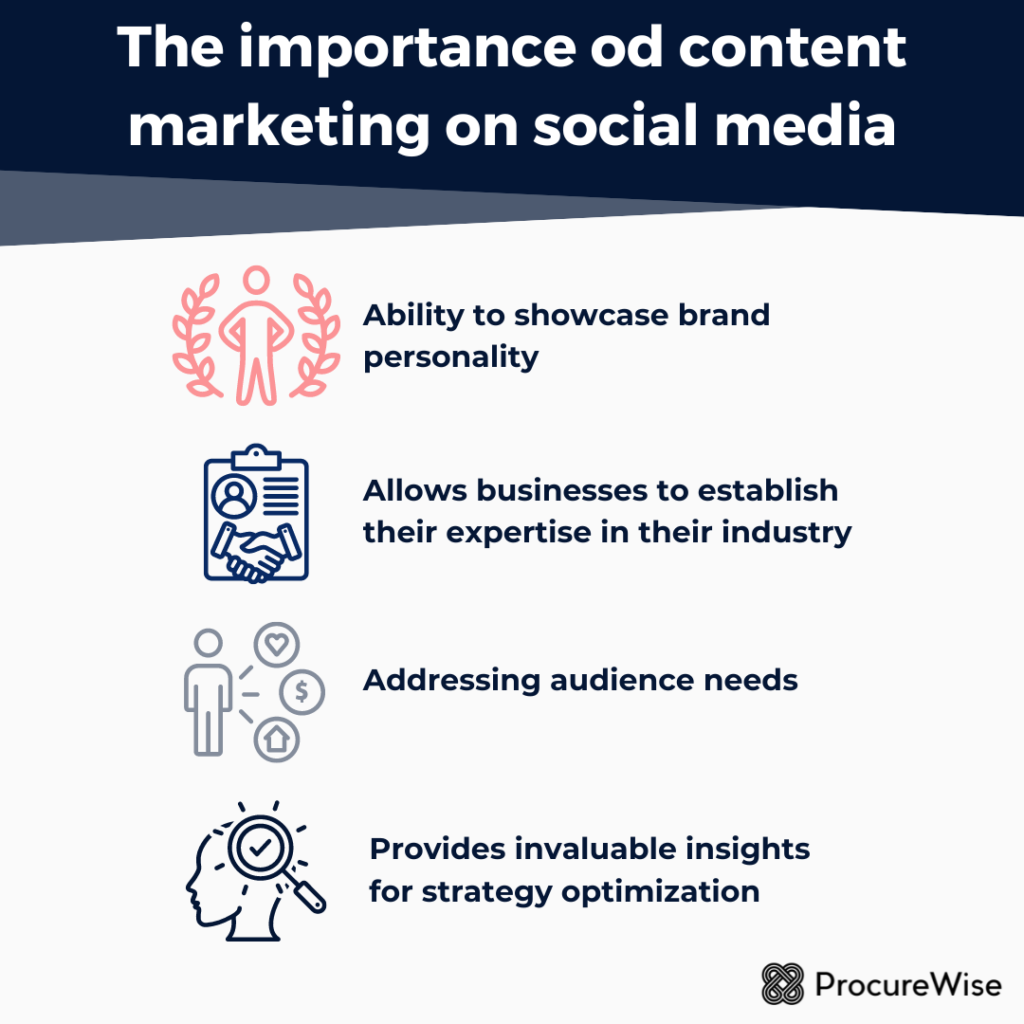
⚠️ The importance od content marketing on social media ⚠️
Social media has become an integral part of our daily lives, offering a multitude of platforms to connect and engage with others. It is no surprise that businesses have also tapped into the power of social media to reach their target audience and promote their brand. Content marketing on social media has gained immense popularity as it provides numerous benefits for brand growth and engagement.
👉 Ability to showcase brand personality: Through creative and engaging content, businesses can portray their unique values, voice, and style, making them more relatable and memorable to their audience. This helps to create a strong brand identity and differentiate themselves from their competitors.
👉Allows businesses to establish their expertise in their industry: By sharing informative and valuable content, they can position themselves as thought leaders and gain credibility. This not only helps to build trust with their audience but also attracts potential customers who are seeking specific knowledge or solutions.
👉 Addressing audience needs: By understanding the pain points and desires of their target audience, businesses can tailor their content to provide relevant and useful information. This helps to establish a deeper connection with their audience and foster engagement, leading to increased brand loyalty and customer retention.
👉 Provides invaluable insights for strategy optimization: Through analytics tools, businesses can gather data on their content performance, including reach, engagement, and conversion rates. This enables them to understand what works and what doesn’t, allowing for continuous improvement and optimization of their marketing strategies.
In conclusion, content marketing on social media is essential for brand growth and engagement. It allows businesses to showcase their brand personality, establish their expertise, address audience needs, and gather insights for strategy optimization. By leveraging the power of social media, businesses can enhance their brand visibility, attract and retain customers, and ultimately drive business growth.
📚 Examples of content marketing on social media 📚
Content marketing on social media has become a powerful strategy for businesses to engage with their audience and drive brand awareness. One popular form of content marketing is the use of infographics. These visually compelling graphics provide valuable information in a digestible format, making it easy for users to share and engage with.
➡️ Hubspot, a leading marketing software company, is known for its successful content marketing strategy on social media. They regularly share infographics on their blog and social media platforms, providing their audience with valuable insights and actionable tips. These infographics cover a range of topics, from SEO and email marketing to social media trends.
➡️ Another real-world example of content marketing on social media is Red Bull. The energy drink company uses various social media platforms to share engaging and entertaining content related to action sports, music, and lifestyle. They often create visually stunning videos and photos to captivate their audience and promote their brand.
Overall, content marketing on social media is an effective way for businesses to engage their audience and establish themselves as thought leaders. By using infographics and adopting a comprehensive content strategy like Hubspot and Red Bull, companies can effectively promote their products or services while providing value to their audience.
🎁 Free social media content strategy templates 🎁
HubSpot’s Social Media Content Calendar Template: This template provides a clear calendar layout to plan and organize your social media content. It includes sections for outlining your content goals, identifying target audiences, and tracking key metrics.
🎀 Hootsuite’s Social Media Strategy Template: Hootsuite offers a comprehensive template that takes you through the steps of creating a social media strategy. It covers everything from goal-setting to content creation and measurement.
🎀 Sprout Social’s Social Media Content Strategy Template: This template provides a framework for planning your social media content strategy. It includes sections for setting goals, identifying target audiences, and brainstorming content ideas.
🎀 Buffer’s Social Media Content Calendar Template: Buffer offers a simple and straightforward calendar template to help you plan your social media content. It includes sections for scheduling posts, tracking engagement metrics, and analyzing performance.
🎀 CoSchedule’s Social Media Strategy Template: CoSchedule provides a downloadable template that guides you through the process of creating a social media strategy. It includes sections for goal-setting, audience analysis, content planning, and measurement.
🎀 Canva’s Social Media Content Calendar Template: Canva offers a visually appealing template to help you plan and schedule your social media content. It provides ample space to outline your content ideas, schedule posts, and track engagement.
🎀 Social Media Examiner’s Social Media Content Template: This template focuses on content creation and provides a framework for brainstorming ideas, planning posts, and tracking performance. It also includes tips and examples for creating engaging content.
These templates can serve as a starting point for creating your social media content strategy. Remember to adapt them to fit your specific goals, target audience, and industry.

📢 The most engaging types of social media content in 2024 📢
In 2024, the landscape of social media will continue to evolve, resulting in new and exciting types of content that captivate audiences like never before. The most engaging types of social media content in 2024 will be highly immersive and interactive, offering users an unprecedented level of personalization and participation.
📌 Augmented reality (AR) experiences: With the increasing use of AR technology and the widespread adoption of smart devices, users will be able to seamlessly interact with virtual content overlaid on the real world. From trying on virtual outfits to exploring virtual travel destinations, AR will offer a whole new level of engagement and entertainment.
📌 Live streaming: With the rise of platforms like Twitch and the increasing popularity of live streaming on social media, this trend will only continue to grow in 2024. Audiences crave real-time experiences, and live streaming provides them with an opportunity to engage directly with content creators, ask questions, and participate in the action.
📌 Personalized and interactive storytelling: Users will expect more than just passive consumption of content; they will want to actively participate and shape their own experiences. Whether it’s through choose-your-own-adventure style videos or interactive polls and quizzes, content that allows users to be part of the narrative will resonate the most.
📌 Short-form videos: With the success of platforms like TikTok and Instagram Reels, users have shown a preference for bite-sized, visually appealing videos that can be consumed quickly. Brands and content creators will continue to leverage this format to capture their audience’s attention and deliver entertaining and shareable content.
In conclusion, the most engaging types of social media content in 2024 will be immersive and interactive experiences like augmented reality, live streaming, personalized storytelling, and short-form videos. Audiences will expect to be active participants in the content they consume, and the successful creators will be those who can deliver highly engaging and personalized experiences.
🏆 How to create a social media marketing strategy?🏆
Creating a social media marketing strategy involves several important steps that can help businesses effectively utilize social media platforms to achieve their goals and objectives. The following are nine key steps to create a successful social media marketing strategy.
1️⃣ Set Clear Goals and Objectives: Determine what you want to achieve through social media marketing. Set specific, measurable, achievable, relevant, and time-bound (SMART) goals to guide your strategy.
2️⃣ Identify Your Target Audience: Understand your target audience’s demographics, preferences, and behaviors. This knowledge will help you tailor your content and select the appropriate social media platforms.
3️⃣ Choose the Right Social Media Channels: Select the social channels that align with your target audience and business goals. Consider platforms such as Facebook, Instagram, Twitter, LinkedIn, and YouTube.
4️⃣ Create Engaging Content: Develop high-quality and relevant content that resonates with your target audience. Use a mix of engaging text, images, videos, and links to capture their attention.
5️⃣ Establish a Content Calendar: Plan and schedule your content in advance using a content calendar. This ensures consistency and keeps your social media efforts organized.
6️⃣ Engage with Your Audience: Actively interact and respond to your audience’s comments, queries, and feedback. This fosters a sense of community and builds brand loyalty.
7️⃣ Monitor and Measure Success: Regularly monitor your social media metrics, such as reach, engagement, and conversions, to measure the success of your strategy. Use analytics tools to gain insights and adjust your approach accordingly.
8️⃣ Adapt and Improve: Continuously evaluate your strategy’s performance and adapt it based on the findings. Experiment with different content formats, posting times, and targeting strategies to optimize your results.
9️⃣ Track ROI: Measure the return on investment (ROI) of your social media efforts by assessing how they contribute to revenue generation, lead generation, customer acquisition, and brand awareness.
By following these nine steps, businesses can create an effective social media marketing strategy that helps them achieve their goals and measure their success and ROI.