
The fast-moving consumer goods (FMCG) sector is one of the most dynamic and competitive industries out there. Constantly evolving consumer preferences, emerging technologies, and shifting economic landscapes present both challenges and opportunities. For businesses in this space, staying ahead of the curve is not just advantageous—it’s essential.
In 2025, understanding the latest insights and market trends within the FMCG sector is crucial for developing successful strategies and making informed decisions. Whether you’re a seasoned professional or new to the industry, having a firm grasp on what’s happening in the market can help you identify growth areas, optimize your product offerings, and tailor your marketing efforts effectively.
From the rise of sustainable products to the growing importance of digital transformation in retail, this guide will unpack key trends shaping the FMCG landscape. We’ll explore consumer behavior shifts, the influence of technology on shopping habits, and strategies that businesses are adopting to enhance their competitiveness. Join us as we navigate the essential insights that will help you thrive in the ever-evolving FMCG sector in 2023 and beyond.
🛒 FMCG Market Insights 🛒
The Fast-Moving Consumer Goods (FMCG) market is experiencing significant growth. This surge is largely driven by evolving consumer preferences, particularly a shift towards convenience, quality, and variety, alongside the rapid expansion of e-commerce, which facilitates easier access to these products.
Urbanization and population growth play crucial roles in shaping the demand for FMCG products. As more people migrate to urban areas, disposable incomes generally increase, leading to greater consumption patterns and a heightened demand for everyday goods. The larger urban population also fosters a faster-paced lifestyle, further propelling the need for quick and accessible shopping options.
Moreover, sustainability and health consciousness are increasingly influencing consumer choices within the FMCG market. Shoppers are now prioritizing products that align with eco-friendly practices and provide health benefits, marking a significant shift in priorities. Companies are responding to this trend, adapting their offerings to meet the demand for sustainability and healthier products. This shift not only reflects changing consumer behavior but also shapes the future trajectory of the FMCG market.
Take advantage of our procurement process review services now!

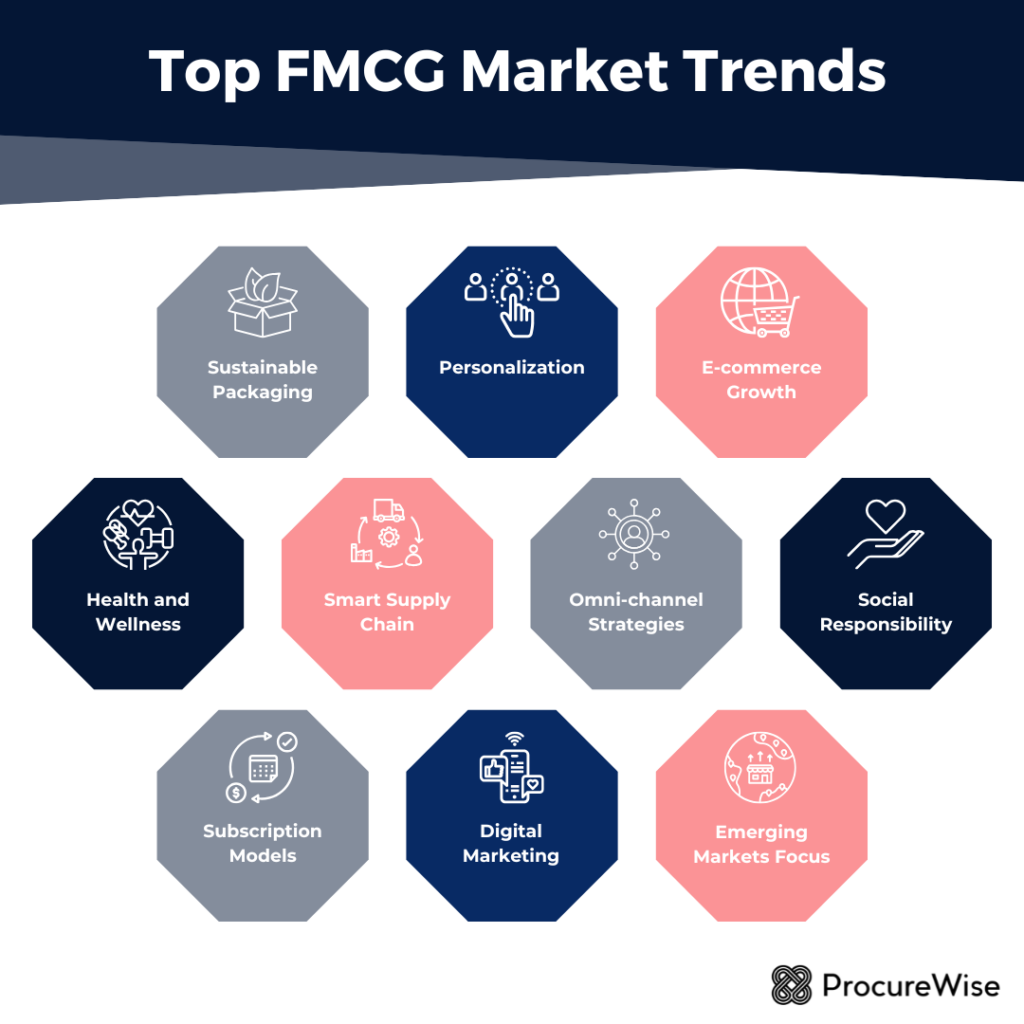
🏆 Top 10 FMCG Market Trends in 2025 🏆
As we look towards 2025, the fast-moving consumer goods (FMCG) industry is set to be transformed by several key trends that prioritize sustainability, digitalization, and enhancing customer experience. Here are the top 10 FMCG trends :
Sustainable Packaging ♻️
The sustainable packaging trends within the FMCG market are rapidly evolving as brands respond to increasing consumer demand for eco-friendly practices. With approximately 70% of consumers identifying as environmentally aware, companies are prioritizing the adoption of sustainable packaging solutions. This shift is prominently characterized by efforts to reduce plastic usage, and many brands are exploring alternatives that include biodegradable materials.
In particular, biodegradable packaging helps address the growing concern over plastic waste, offering a viable solution that meets both ecological needs and consumer expectations. Brands are now investing in innovative materials and processes that not only minimize environmental impact but also enhance brand loyalty and alignment with consumer values.
➡️ As a result, the FMCG sector is witnessing a significant transformation, with an increasing number of products transitioning to sustainable packaging. This movement not only reflects a commitment to environmental responsibility, but also caters to the shifting preferences of modern consumers who are demanding more from the products they choose. The future of sustainable packaging in the FMCG market looks promising, driven by the collective effort of brands to meet eco-conscious consumer demands.
Personalization 🎨
Emerging personalization trends in the FMCG market are reshaping the consumer landscape, especially as brands leverage AI and machine learning. By analyzing consumer behavior and preferences, companies can develop tailored marketing strategies that resonate on an individual level. This personalization enhances product recommendations, ensuring that consumers receive suggestions aligned with their unique tastes and needs.
In e-commerce, individualized experiences are gaining significance, particularly in health and wellness sectors. Consumers increasingly favor brands that cater to their specific preferences, leading to better engagement and loyalty. AI algorithms enable brands to assess buying patterns, allowing for real-time adjustments in marketing tactics and product offerings.
➡️ As a result, the focus on personalization not only drives sales but also fosters deeper connections between brands and consumers. In a market where choices abound, those brands that effectively utilize AI for personalized experiences are emerging as leaders, demonstrating that understanding consumer behavior is essential for success in today’s competitive FMCG landscape.
E-commerce Growth 📈
The rapid growth of e-commerce has significantly transformed the Fast-Moving Consumer Goods (FMCG) market, leading to a noticeable shift from traditional brick-and-mortar stores to online channels. Consumers increasingly prefer the convenience of online shopping and home delivery services, reshaping retail dynamics. This transition is fueled by an expanding internet base and mobile accessibility, making it easier for consumers to shop from the comfort of their homes.
Furthermore, the rising demand for healthier and more sustainable products is influencing FMCG brands to adapt their packaging and product development strategies. Brands are focusing on eco-friendly materials and sustainable sourcing practices to meet consumer expectations, enhancing brand loyalty in the process.
➡️ Digital transformation plays a crucial role in this landscape, with data analytics enhancing the online shopping experience. By leveraging consumer insights, FMCG brands can personalize offerings and optimize inventory, improving efficiency across supply chains. Together, these trends reflect a shifting paradigm in the FMCG market characterized by e-commerce expansion, sustainability, and digital innovation.
Health and Wellness 🍎
The Health and Wellness FMCG market is experiencing a significant transformation driven by shifting consumer preferences towards healthier and more sustainable products. Increasing awareness of health issues and environmental concerns has led consumers to seek products that prioritize wellness, organic ingredients, and eco-friendly solutions.
➡️ As a result, FMCG companies are reformulating their offerings to reduce sugar, salt, and artificial ingredients while expanding their ranges to include natural and organic alternatives. This adaptation not only aligns with consumer demands for health but also addresses the critical need for sustainability in product development. Eco-friendly packaging is becoming a key focus, with brands striving to minimize their environmental impact.
Through these initiatives, companies are responding to the dual challenge of promoting individual well-being and supporting the health of our planet, reinforcing the vital link between health, wellness, and sustainability in the modern marketplace.
Smart Supply Chain 📦
In the fast-moving consumer goods (FMCG) sector, smart supply chains are being revolutionized by artificial intelligence (AI) and machine learning. These technologies are enhancing operational efficiency and demand forecasting by analyzing vast datasets, enabling real-time decision-making and predictive analytics. As the FMCG market faces increasing pressures from e-commerce, digital transformation is optimizing delivery processes, ensuring faster and more reliable service to consumers.
👉 Moreover, these advancements align closely with the rising consumer demand for health, wellness, and sustainability. Brands are leveraging smart supply chains not just to improve profitability, but also to ensure eco-friendly practices and transparency in sourcing. By integrating sustainable practices through AI-driven insights, companies can align their operations with the growing consumer preference for environmentally conscious products. Ultimately, the convergence of AI, digital transformation, and sustainability is reshaping the FMCG landscape, creating a resilient and responsive supply chain that meets today’s consumer expectations.
Omni-channel Strategies 🛜
In the fast-moving consumer goods (FMCG) market, omni-channel strategies have emerged as a vital approach to enhancing integrated customer experiences across various touchpoints. Companies are increasingly focusing on harmonizing e-commerce platforms, grocery stores, and social networks to create seamless interactions. This shift emphasizes the need for a consistent consumer experience that resonates across all channels.
Advancements in digital marketing and consumer insights play a crucial role in driving the adoption of these omni-channel strategies. Brands are leveraging data analytics and targeted advertising to engage customers effectively and enhance brand consistency, thereby fostering deeper connections. Social media, in particular, serves as a powerful tool for interaction and brand storytelling, further amplifying customer engagement.
👉 Moreover, the significance of supply chain resilience and adaptability cannot be overstated in supporting these trends. A robust supply chain allows FMCG companies to respond swiftly to changing consumer demands and market dynamics, ensuring that they can maintain effective omni-channel strategies. In conclusion, as the FMCG market continues to evolve, integrating these elements will be essential for meeting consumer expectations and achieving sustained growth.
Social Responsibility 👥
The fast-moving consumer goods (FMCG) market is witnessing a significant shift towards social responsibility, driven by evolving consumer values that prioritize sustainability, health, and wellness. Brands are increasingly responding to these demands by reformulating products to eliminate harmful ingredients and enhance nutritional profiles. This strategic pivot not only meets the growing consumer expectation for healthier options but also aligns with a broader commitment to social and environmental values.
👉 Furthermore, eco-friendly packaging has become a crucial element in this transformation. Companies are investing in innovative materials and design practices that minimize environmental impact, reflecting a conscientious approach to product lifecycle management. By embracing sustainable practices, these brands not only foster consumer loyalty but also position themselves as leaders in a competitive market increasingly defined by social responsibility. As consumers seek out products that resonate with their values, the FMCG sector is evolving to ensure a healthier planet and populace.
Subscription Models 📚
The rise of subscription models in the FMCG market reflects a significant shift in consumer behavior, driven by demands for convenience and personalization. As shoppers increasingly favor seamless purchasing experiences, businesses are adapting by offering subscription services that allow for regular delivery of essential products, catering to individual preferences. This trend not only enhances customer loyalty but also provides companies with predictable revenue streams.
The integration of AI and data analytics plays a crucial role in optimizing these subscription services. By analyzing consumer data, brands can gain insights into purchasing habits, enabling them to create tailored offerings that resonate with individual needs, further enhancing the customer experience.
👉 Moreover, subscription models are becoming integral to the digital transformation strategy within the FMCG sector. By embracing technology and leveraging consumer insights, companies can streamline operations, improve customer engagement, and stay competitive in an increasingly digital marketplace. As the FMCG industry evolves, subscription models emerge as a vital tool to meet changing consumer demands and drive growth.
Digital Marketing 📢
In recent years, the FMCG market has experienced significant shifts in digital marketing, primarily driven by the rising emphasis on e-commerce and digital transformation. Companies in this sector have rapidly adapted to enhance their online presence, leveraging data analytics to gain valuable consumer insights. This evolution is not just a response to changing consumer behavior but a necessity for survival in an increasingly digital landscape.
The COVID-19 pandemic accelerated these trends, forcing both consumers and brands to pivot towards online shopping. In regions like North America and Asia Pacific, this shift has been particularly pronounced, as consumers seek convenience and accessibility. FMCG companies are now prioritizing their digital strategies, utilizing e-commerce platforms to reach a wider audience and implementing data-driven marketing strategies to better understand and engage with their evolving consumer base. As the digital marketing landscape continues to transform, the integration of advanced analytics and e-commerce capabilities will remain crucial for thriving in the competitive FMCG market.
Emerging Markets Focus ⚠️
The FMCG market in emerging markets is undergoing a paradigm shift driven by key trends such as the rise of e-commerce and digital transformation. These factors are revolutionizing consumer engagement and accessibility, allowing brands to connect with a broader audience and provide personalized shopping experiences. With increased internet penetration and mobile device usage, consumers are turning to online platforms for their everyday needs, prompting retailers to invest heavily in digital channels.
👉 Furthermore, health and wellness have become central to product offerings, aligning with consumers’ growing values around sustainability and healthy living. Brands that prioritize clean labels, organic ingredients, and eco-friendly packaging are resonating well with health-conscious consumers.
In this landscape, big data and AI play a crucial role in understanding and anticipating consumer preferences. By analyzing shopping behaviors and feedback, companies can tailor their product offerings to meet the diverse needs of consumers in these dynamic markets, ensuring relevance and driving growth. Together, these trends are reshaping the FMCG sector in emerging markets, creating opportunities for innovation and enhanced customer loyalty.