

In today’s competitive landscape, efficient procurement can drive your organization’s success. Procurement strategies form the core of supply chain management, affecting cost efficiency and supplier relationships. An effective strategy goes beyond purchasing; it aligns with business goals. It necessitates understanding objectives, market conditions, and risk management.
Many overlook key aspects like technology and supplier metrics, hindering operations and decision-making. Problems may arise from lack of stakeholder engagement or failure to adapt to market changes. This guide offers a roadmap for creating a strong procurement strategy, focusing on cost reduction, supplier optimization, and continuous improvement, equipping you to enhance your procurement approach and ensure organizational success. Read more What is a marketing plan? Tips and examples
📄 Understand the Purpose of a Procurement Strategy 📄
Understanding the purpose of a procurement strategy is crucial for any organization. A well-crafted procurement strategy serves as a roadmap, guiding the procurement function in acquiring goods and services efficiently and sustainably. It aligns with a company’s mission and business objectives, ensuring that procurement activities support broader business goals.
Here are key factors that define an effective procurement strategy:
1️⃣ Cost Reduction and Savings: A good strategy focuses on minimizing costs while maintaining quality. This provides a competitive advantage in the market.
2️⃣ Supplier Relationship Management: Building strong relationships with suppliers enhances supplier performance and reliability, which are vital for strategic sourcing.
3️⃣ Ethical and Environmental Considerations: Incorporating these into procurement practices ensures sustainability and aligns with industry-specific needs.
4️⃣ Performance Measurement: Clear objectives allow procurement teams to track progress and drive continuous improvement.
5️⃣ Alignment with Market Conditions: Adapting to market conditions helps an organization remain competitive and responsive.
A robust procurement strategy is essential for reducing the total cost of ownership, improving the purchasing process, and achieving business goals. By focusing on these key factors, an organization can ensure its procurement activities align with its long-term vision.
Take advantage of our content marketing services now!
📝 Define Clear Procurement Objectives 📝
Defining clear procurement objectives is essential for aligning with business goals. These objectives should be SMART: Specific, Measurable, Achievable, Relevant, and Timely. By doing this, you can guide the procurement function effectively.
Key procurement objectives include:
✏️ Cost Savings: Identifying ways to reduce costs without compromising quality.
✏️ Risk Management: Minimizing risks associated with suppliers and the supply chain.
✏️ Supplier Relationship Management: Developing strong, long-term relationships with suppliers.
✏️ Sustainability: Considering environmental and social impacts in procurement decisions.
A clear procurement strategy framework is based on defined objectives, enabling the team to align activities with business goals. These objectives facilitate the review and adjustment of practices to support vendor selection, contract management, and compliance.
They also help the procurement department manage resources, achieve cost savings, and adapt to market changes, ensuring competitiveness and resilience against supply chain disruptions.

🔎 Conduct a Procurement Audit 🔎
Conducting a procurement audit is vital for refining your strategy. Start by analyzing data on what you buy, who you buy from, and your spending. This reveals high spending areas and potential savings. A thorough audit also uncovers maverick spending or unauthorized purchases, essential for shaping an effective strategy. Identify spending patterns to tailor your approach to specific issues.
Understanding your current spending habits is the first step in developing an effective procurement strategy. Here’s a simple list to guide your audit:
▶️ Review Current Procurement Policies: Examine existing rules and procedures.
▶️ Analyze Spending Data: Identify high-cost areas and unauthorized purchases.
▶️ Identify Cost-Saving Opportunities: Find potential areas to reduce costs.
▶️ Assess Supplier Relationships: Evaluate supplier performance and relationships.
▶️ Align with Business Goals: Ensure procurement aligns with overall business strategy.
Conducting a procurement audit provides actionable insights into your procurement function, helping you achieve cost savings and a competitive advantage. Use these insights to adjust your procurement policies and strengthen the procurement department’s efforts in achieving strategic sourcing goals.
🏪 Assess Current Market Conditions 🏪
To create an effective procurement strategy, analyze current market trends, including price changes and new technologies that affect procurement needs. Review the supplier landscape for potential consolidation or diversification to strengthen relationships. Keep an eye on regulatory changes impacting practices to ensure compliance. Being aware of external factors helps organizations adapt their strategies. Utilize tools like Porter’s Five Forces and SCOPE analysis for valuable insights into supply markets.
Key Factors to Consider:
📌 Market Trends: Price changes, emerging technologies
📌 Supplier Landscape: Key players, consolidation opportunities
📌 Regulatory Changes: Legal requirements, compliance
📌 Analytical Tools: Porter’s Five Forces, SCOPE analysis
By focusing on these areas, procurement teams can align their strategies with current market conditions, gaining a competitive advantage.
📚 Identify Various Procurement Types 📚
Effective procurement strategy is vital for any organization aiming for success. There are several common types of procurement strategies that cater to different business needs:
- Cost Reduction: Focuses on minimizing expenses while keeping product quality intact. This type is crucial for improving the bottom line.
- Risk Management: Aims to identify potential risks in the procurement process and develop plans to address them, ensuring a steady supply chain.
- Supplier Management and Optimization: Involves building robust relationships with suppliers to boost efficiency and procurement function.
- Green Purchasing: Encourages sustainable and eco-friendly procurement practices, aligning with corporate social responsibility goals.
- Global Sourcing: Seeks the best suppliers worldwide, providing access to a wide pool of options and competitive pricing.
- Total Quality Management: Ensures that all procurement activities align with the highest quality standards.
Organizations can tailor their procurement strategy by focusing on one or several types, depending on business objectives. For instance, a company aiming for cost savings may prioritize cost reduction, while one focused on sustainability might invest in green purchasing. With a strong procurement strategy, businesses can enhance their competitive advantage and align their procurement process with broader business goals.
💵 Focus on Cost Reduction Strategies 📉
Focusing on cost reduction strategies is crucial for effective procurement. These strategies aim to cut costs related to acquiring products and services while keeping quality and efficiency high. This approach is a top priority for Chief Procurement Officers (CPOs), with 78% marking it as their primary procurement strategy.
Effective procurement strategies achieve cost savings through strategic sourcing and optimizing purchasing. Here are some key practices:
👉 Strategic Sourcing: Identify and collaborate with the best suppliers.
👉 Volume Purchases: Buy in bulk to get lower per-item prices.
👉 Performance Metrics: Continuously analyze strategies to find new savings opportunities.
Adapting and refining these strategies ensures businesses stay competitive and aligned with their financial goals. Emphasizing cost reduction can give organizations a significant competitive advantage in the market.
⚠️ Prioritize Risk Management Techniques ⚠️
A well-implemented risk management strategy is key to a strong procurement process. Organizations must identify potential risks and develop responses to mitigate impacts on the supply chain. Prioritizing these risks based on their impact helps focus resources on the most significant threats.
Key Techniques:
▶️ Monitor Red Flags: Continuous monitoring ensures quick reactions to disruptions, maintaining business continuity.
▶️ Collaborate with Suppliers: Work with multiple reliable suppliers to reduce dependency on a single source. This minimizes vulnerability to supply chain disruptions.
▶️ Learn from Past Crises: Previous experiences highlight the importance of proactive risk management. It’s a top priority for 97% of Chief Procurement Officers (CPOs) to safeguard supply chain continuity.
Effective risk management not only ensures a smooth procurement process but also aligns with business objectives and enhances competitive advantage.
📦 Optimize Supplier Selection Processes 📦
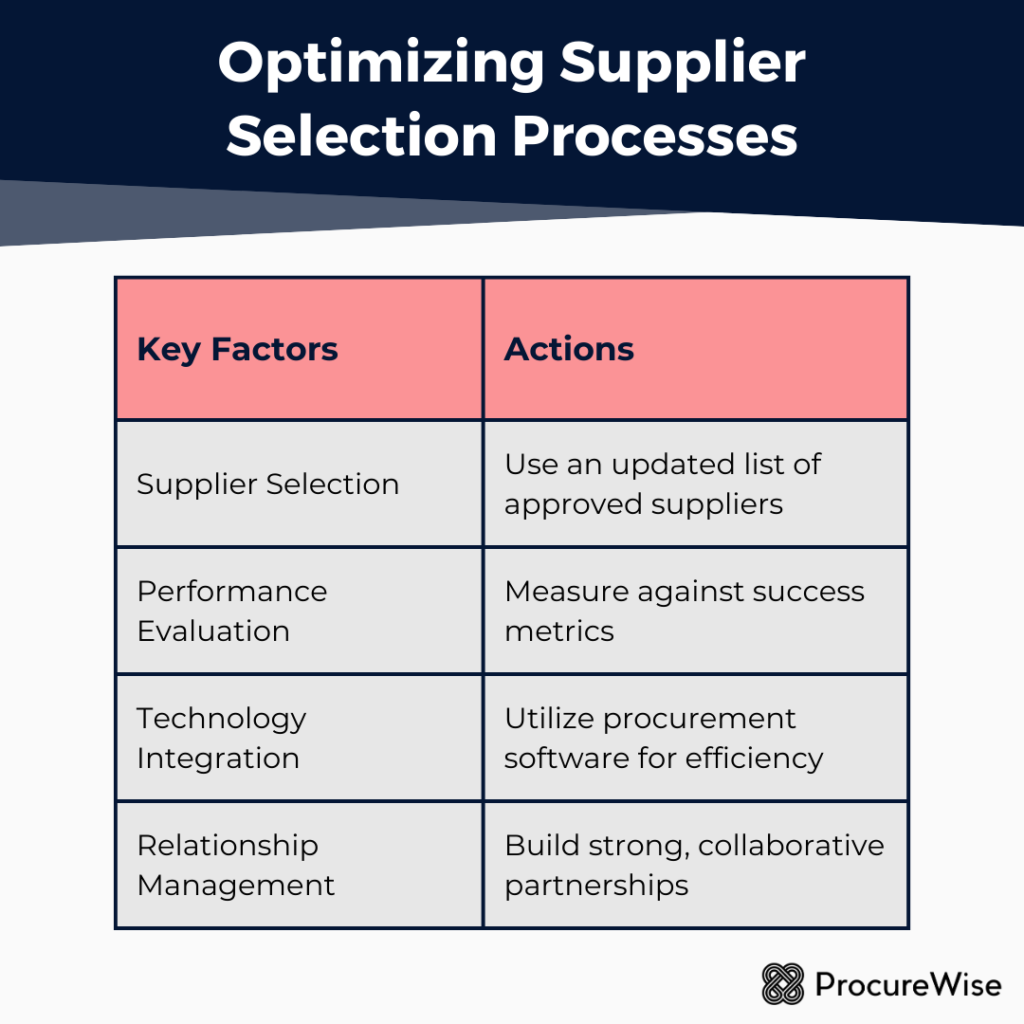
Strong supplier management practices include:To optimize supplier selection, organizations should adopt a structured approach. Begin by maintaining an updated list of approved suppliers for quality and reliability. Evaluating supplier performance is crucial for meeting business goals and fostering a strong supplier base. Utilizing procurement software and e-procurement platforms boosts efficiency and collaboration, offering real-time data essential for supplier management.
✏️ Selecting the right suppliers
✏️ Negotiating favorable contracts
✏️ Continuously monitoring performance
Regular measurement of supplier performance against success metrics is essential. This can identify areas for improvement and refine the supplier selection strategy. Implementing these strategies helps with better risk management and cost savings.
🖥️ Implement Technology in Procurement 🖥️
Implementing technology in procurement can greatly enhance efficiency and effectiveness. E-procurement platforms digitize traditional processes. This centralization not only streamlines workflows but also boosts efficiency in buyer-supplier relationships.
Benefits of Technology in Procurement:
🦾 Streamlined Workflows: Automate tasks like approvals and data entry to free team members for strategic activities.
🦾 Improved Supplier Management: Manage requisitions, purchase orders, and supplier relationships electronically.
🦾 Data Analytics: Gain actionable insights from internal and external data for informed decision-making and cost reduction.
Utilizing procurement software cuts down on manual errors and gathers a wealth of data for analysis. This contributes to sharper sourcing strategies and elevates procurement to a strategic business function. Additionally, workflow automation allows teams to focus on core activities such as supplier relationship management and market research.
Incorporating technology into procurement processes aligns procurement activities with broader business objectives, supporting cost savings and competitive advantage.
⏱️ Establish Performance Metrics ⏱️
Establishing performance metrics is vital for the success of procurement strategies. By selecting the right metrics and objectives, procurement teams can gauge the effectiveness of their initiatives. Here are key metrics to consider:
📌 Spend Under Management: Understanding the total cost of ownership helps identify financial efficiency.
📌 Return on Investment (ROI): Evaluates the value gained from procurement activities.
📌 Vendor or Contract Compliance: Assesses supplier performance and adherence to agreements.
Other essential indicators include cycle times and cost savings. These metrics reveal how effective and efficient the procurement processes are. Regularly measuring strategy performance against these success metrics ensures continuous improvement.
Procurement strategies must be adaptable. Continuous monitoring allows procurement departments to respond to changing market conditions and emerging challenges. This responsiveness supports business goals and aligns procurement functions with broader business objectives. Adapting the strategy based on actionable insights further strengthens supplier relationships and ensures strategic sourcing offers competitive advantages.
🌟 Monitor and Evaluate Procurement Strategies 🌟
An effective procurement strategy offers several benefits: consistent quality, budget adherence, balanced inventories, and reduced total cost of ownership. To ensure these benefits, organizations must monitor and evaluate their procurement strategies.
Key Steps for Monitoring:
1️⃣ Assess Consistency: Regularly check if goods and services meet the set expectations.
2️⃣ Evaluate Budget Use: Confirm the efficient use of allocated funds.
3️⃣ Track Supplier Performance: Monitor supplier activities and their adherence to agreements.
Evaluation Indicators:
👉 Consistency in order quality
👉 Financial adherence and savings
👉 Supplier reliability and effectiveness
Performance Metrics: Develop performance metrics to gauge the effectiveness of the procurement process. This helps in spotting inefficiencies and areas for improvement.
Continuous Improvement:
- Encourage adaptability in sourcing.
- Minimize risks by regularly reviewing strategies.
- Focus on creating value through innovation.
By following these guidelines, a robust procurement strategy can align with business goals and adapt to market conditions, ensuring continued success.
📊 Understand the Role of Data Analytics 📊
To understand the role of data analytics in procurement strategy, consider its significant impact on supplier relationships and cost efficiency. Implementing an e-procurement system uses data analytics to enhance processes, streamline administrative tasks, and foster efficient supplier management. The analysis of data provides actionable insights that help organizations refine their procurement activities and reduce overall costs.
Key Benefits of Data Analytics in Procurement:
▶️ Supplier Relationship Management: Improves supplier performance and strengthens relationships with suppliers.
▶️ Cost Reductions: Analyzes both internal and external data for insights into reducing the cost of ownership.
▶️ Effective Procurement Strategy Development: Uses historical data to identify demand trends and align with business goals.
▶️ Materials Management Optimization: Guides efficient warehousing through data-driven insights.
▶️ Competitive Advantage: Leverages predictive analytics and artificial intelligence to optimize decision-making processes.
By adopting these data-driven practices, procurement functions gain a competitive advantage. The strategic sourcing insights from data analytics lead to cost savings and an enhanced procurement process. This robust procurement strategy aligns with business objectives amidst fluctuating market conditions and potential supply chain disruptions.
👥 Engage Stakeholders in the Procurement Process 👥
Engaging stakeholders in the procurement process is vital for a robust procurement strategy. Collaborate with internal departments, suppliers, and all parties involved to gather diverse insights and manage expectations. Here’s how to effectively engage stakeholders:
1️⃣ Identify Stakeholders: Know who impacts and is impacted by your procurement activities. This includes Procurement Teams, departments, and suppliers.
2️⃣ Communicate Regularly: Keep stakeholders informed about procurement strategies and goals. Regular updates foster collaboration and ensure everyone aligns with the broad business objectives.
3️⃣ Foster Collaboration: Use feedback from stakeholders to refine strategies. This ensures the procurement function meets business goals and market conditions effectively.
4️⃣ Clarify Roles: Make sure everyone understands their contribution toward the procurement strategy. Clear expectations lead to productive participation.
5️⃣ Value Stakeholder Insights: Consider stakeholder feedback to enhance supplier relationship management and strategic sourcing. This can create customer value and establish procurement as a key business function.
By following these steps, procurement strategies can not only achieve cost savings and competitive advantage but also foster a perception of procurement as a vital, collaborative force within the company.
⚖️ Manage Compliance and Regulatory Factors ⚖️
A robust procurement strategy is crucial for managing compliance and regulatory factors. It begins with an internal audit of company processes and a review of external market influences. These steps ensure that procurement activities align with both business objectives and compliance standards.
Key Factors for Compliance in Procurement Strategy:
✔️ Clear Policies: Establish procurement policies and procedures that support organizational goals and compliance.
✔️ Legal Demands: Stay updated with legal requirements affecting procurement functions.
✔️ Market and Risk Assessment: Evaluate market conditions and risks to adhere to regulatory frameworks.
Engaging in practices like cooperative purchasing can further enhance compliance. This involves using shared agreements and regulations among organizations to ensure all procurement processes are compliant.
Compliance Checklist:
- Conduct internal audits
- Update policies and procedures
- Monitor legal and market changes
- Use cooperative purchasing agreements
Using this approach helps procurement teams navigate the complex landscape of compliance, reducing the risk of regulatory breaches while promoting strategic sourcing and cost savings.
📙 Develop Training Programs for Procurement Teams 📙
Effective training for procurement teams is essential for enhancing functions. Emphasizing both hard skills (software mastery, vendor management) and soft skills (negotiation, communication) is crucial. Ongoing support through tutorials and webinars ensures a robust strategy and promotes continuous improvement. Training should align with the organization’s unique needs to facilitate informed decision-making. A successful program leads to more effective procurement, cost savings, and a competitive edge.
Consider including the following elements in your training program:
📌 Software Training: Learn specific tools and vendor management systems.
📌 Negotiation Workshops: Enhance soft skills for better supplier relationships.
📌 Webinars: Keep teams updated with the latest trends.
📌 Help Desks: Provide constant support and solutions for procurement challenges.
📌Feedback Opportunities: Encourage continuous improvement and adaptation.
By addressing these key factors, you can ensure your procurement team is well-prepared for the administrative tasks and strategic sourcing essential to achieving business goals.
💰 Set a Procurement Budget 💰
Setting a procurement budget involves analyzing the organization’s spend culture. This analysis provides insights crucial for budget development. Tools like Total Cost of Ownership (TCO) can identify hidden costs beyond the initial purchase price. Including these costs leads to a more accurate budget.
A well-defined procurement budget aligns with strategic objectives. It helps manage resources effectively and achieve fiscal goals. Cost reduction strategies are essential for influencing the procurement budget.
These strategies include:
- Negotiating with suppliers.
- Minimizing excessive purchases.
Implementing a structured procurement strategy is also vital. It fosters better pricing through systematic data collection and analysis. This approach supports a more precise procurement budget.
Steps to Set a Procurement Budget:
1️⃣ Analyze Spend Culture: Understand current spending patterns.
2️⃣ Use TCO Tools: Identify all costs, not just initial purchases.
3️⃣ Align with Strategic Objectives: Ensure budget supports business goals.
4️⃣ Implement Cost Reduction Strategies: Focus on negotiations and avoiding excess.
5️⃣ Adopt a Structured Approach: Use data to influence and refine the budget.
Creating a procurement budget is not just about cutting costs. It’s about aligning with business objectives and using strategic sourcing for better financial health.
🗣️ Utilize Supplier Feedback 🗣️
A successful procurement strategy relies heavily on effective supplier management. This involves selecting the right suppliers and collaborating with them to understand their capabilities and weaknesses. Establishing strong relationships with suppliers not only ensures better risk management but also enhances quality control.
Key Benefits of Supplier Feedback:
☑️ Improved Product Development: Honest feedback helps both parties refine products and services.
☑️ Better Risk Management: By understanding supplier challenges, companies can create effective risk management plans.
☑️ Informed Strategy Adjustments: Monitoring supplier performance allows for timely and informed adjustments in procurement strategies.
Engaging in mutual partnerships fosters an exchange of constructive feedback. This collaborative approach can significantly enhance procurement efficiency and contribute to achieving business objectives, even amid market conditions and supply chain disruptions. Moreover, it supports cost savings and delivering competitive advantage.