

In an era of rapid technological advancement, procurement processes are undergoing a significant transformation. Gone are the days of manual paperwork and fragmented communication; today, digital solutions are paving the way for innovative procurement practices that enhance efficiency and drive strategic value. Embracing these digital tools is not just a trend; it’s a necessity for organizations aiming to remain competitive in a fast-paced marketplace.
This evolution in procurement involves the integration of advanced technologies such as artificial intelligence, machine learning, and data analytics, which are revolutionizing how businesses source goods and services. By automating routine tasks, organizations can free up valuable time for strategic decision-making and enhance supplier relationships. These digital solutions also provide valuable insights that enable procurement teams to make informed choices, ultimately leading to cost savings and improved performance.
However, transitioning to digital solutions requires careful planning and execution. It’s essential to assess your current procurement processes and identify areas for improvement. With the right strategies in place, you can effectively leverage technology to streamline operations, enhance transparency, and foster collaboration across your supply chain.
Join us as we explore the evolution of procurement, the benefits of digital solutions, and actionable strategies to successfully navigate this transformative journey. Discover how embracing technology can elevate your procurement function and contribute to rganizational success.
💡 Understanding Digital Procurement 💡
Digital procurement refers to the integration of technology into the procurement process to enhance efficiency, transparency, and effectiveness. By leveraging online systems and automation tools, businesses can streamline activities from requisition to payment, reducing reliance on traditional methods such as spreadsheets and email.
At its core, digital procurement involves using software to consolidate and manage procurement data, allowing for real-time insights and data-driven decision-making. This shift diminishes manual errors, enhances supplier management, and fosters competitive bidding, ultimately leading to faster procurement cycles and improved compliance with policies.
The adoption of digital procurement platforms empowers organizations to optimize their procurement strategies, achieve significant time and cost savings, and shift the focus of procurement professionals to more strategic initiatives. As businesses increasingly recognize the benefits of a digital approach, they position themselves for greater operational efficiency and competitive advantage in an ever-evolving marketplace.
Take advantage of our procurement process review services now!
✅ Key Benefits of Digital Procurement ✅
In today’s fast-paced business world, organizations are increasingly adopting digital procurement solutions to enhance purchasing efficiency. Transitioning from manual methods to digital platforms offers numerous benefits that can transform procurement functions. Here are the key advantages of embracing digital procurement:
✔️ Boosted Efficiency: Digital procurement platforms use automation to streamline the process, reducing manual tasks like data entry. This shift allows procurement teams to focus on strategic initiatives, increasing productivity and shortening processing times.
✔️ Improved Accuracy: Automated data entry reduces human errors, ensuring reliable, up-to-date procurement data. Accurate information enhances decision-making and operational efficiency.
✔️ Enhanced Transparency: Digital platforms offer real-time visibility into spending data, providing insights for effective analysis and budget tracking. This transparency aids in timely decisions and compliance management.
✔️ Accelerated Processes: These systems centralize procurement activities, improving communication with suppliers and reducing delays. This integration streamlines the purchasing cycle.
✔️ Increased Control: Real-time insights into spending and supplier performance enhance oversight, enabling better compliance and strategic savings opportunities for organizations.
✔️ Standardized Workflows: Digital platforms enforce consistent approval processes for purchases, reducing the risk of unauthorized transactions and improving accountability.
In conclusion, transitioning to digital procurement revolutionizes purchasing management while offering vital benefits like efficiency, accuracy, and enhanced control—positioning businesses for sustainable growth in a competitive market.
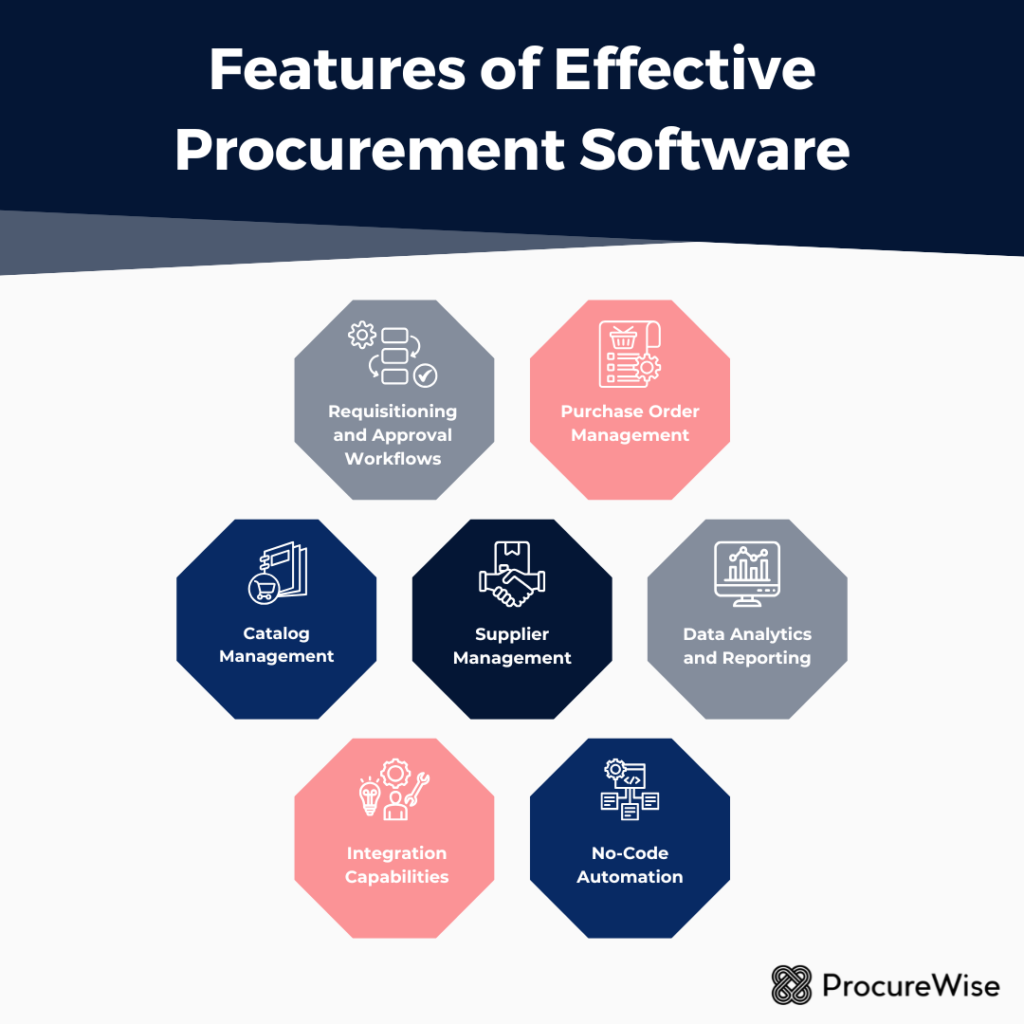
🌟 Features of Effective Procurement Software 🌟
To maximize the benefits of digital procurement, it is essential to select a platform that encompasses a robust set of features. Here are some key attributes of effective procurement software:
➡️ Requisitioning and Approval Workflows: Effective procurement software automates the requisition and approval processes. This includes customizable workflows that enable teams to set up notifications and approval hierarchies according to their specific needs, reducing delays and streamlining operations.
➡️ Purchase Order Management: A proficient platform allows users to create, manage, and track purchase orders with ease. Automated order processing can help eliminate manual errors, ensure compliance, and provide real-time visibility into order status, which is crucial for managing inventory and supplier relationships.
➡️ Catalog Management: A comprehensive procurement tool should include catalog management capabilities that allow businesses to create and maintain electronic catalogs of goods and services. This feature not only simplifies the purchasing process but also ensures that users have access to accurate pricing and product information.
➡️ Supplier Management: Effective procurement software should provide tools for managing supplier relationships, including performance tracking against key performance indicators (KPIs), and streamlined communication channels. This helps organizations build strong partnerships and negotiate better terms.
➡️ Data Analytics and Reporting: Advanced analytics tools are vital for monitoring procurement activities, analyzing spending patterns, and identifying opportunities for cost savings. Dashboards and reporting features enable procurement teams to make data-driven decisions and enhance overall procurement strategies.
➡️ Integration Capabilities: A good procurement platform should seamlessly integrate with existing enterprise resource planning (ERP) systems and other business applications. This ensures that data flows smoothly between systems, minimizing discrepancies and enhancing operational efficiency.
➡️ No-Code Automation: As the demand for automation grows, effective procurement platforms provide no-code automation tools that enable users to design workflows without needing extensive technical expertise. This feature empowers teams to adapt and refine processes as their needs evolve.
By leveraging these features, organizations can transition from fragmented, manual procurement processes to a unified, digital approach that drives efficiency, reduces costs, and enhances strategic sourcing efforts in today’s dynamic market landscape.
📋 Core Strategies for Digital Procurement 📋
In today’s rapidly evolving business landscape, organizations must adopt core strategies for digital procurement to maintain competitive advantage and drive operational efficiency. Here are several key strategies to consider:
👉 Centralized Digital Platforms: Implementing a centralized digital procurement platform allows for streamlined management of procurement activities. This not only facilitates better communication and collaboration with suppliers but also ensures that all procurement processes, from sourcing to payment, are integrated and efficient.
👉 Automation of Workflows: Automating procurement workflows reduces manual errors and accelerates processes. By utilizing technology to enforce standard approval workflows and automate routine tasks, organizations can free up valuable resources, enabling teams to focus on strategic activities.
👉 Enhanced Data Analytics: Leveraging data analytics provides real-time insights into spending patterns, supplier performance, and compliance. This information is crucial for making data-driven decisions, identifying cost-saving opportunities, and enhancing overall procurement strategies.
👉 Supplier Collaboration Tools: Implementing advanced supplier collaboration tools fosters stronger relationships with suppliers. These tools enable transparent communication, better manage expectations, and drive innovation through co-creation, ultimately leading to improved supply chain resilience.
👉 Continuous Learning and Adaptation: Digital procurement is an ongoing journey. Organizations should cultivate a culture of continuous learning and adaptation, staying abreast of emerging technologies, evolving market conditions, and best practices. This approach ensures that procurement strategies remain relevant and effective in a dynamic environment.
By embracing these core strategies, organizations can successfully navigate the transition to digital procurement, unlocking new efficiencies and achieving sustainable competitive advantages.
🔌 Implementation of E-Procurement Systems 🔌
Implementing an e-procurement system can significantly enhance procurement efficiency and effectiveness. Here’s a step-by-step guide to streamline the process:
1️⃣ Assess Current Procurement Processes: Begin by evaluating your existing procurement workflows. Identify inefficiencies, bottlenecks, and areas where technology can enhance performance. This analysis will serve as the foundation for your e-procurement strategy.
2️⃣ Define Objectives and Requirements: Clearly outline what you aim to achieve with the new system. Whether it’s improving spend visibility, enhancing supplier collaboration, or automating routine tasks, establishing specific objectives will guide your selection process.
3️⃣ Choose the Right E-Procurement Solution: Research and select an e-procurement platform that aligns with your business needs. Consider factors such as scalability, integration capabilities with existing systems (like ERP), user-friendliness, and mobile access for remote operations.
4️⃣ Engage Stakeholders: Involve key stakeholders from various departments, including finance, IT, and procurement teams. Their insights will be crucial in ensuring that the system meets the diverse needs of the organization.
5️⃣ Develop a Change Management Plan: Prepare for the transition by developing a change management strategy. This should include training programs for staff, communication plans to keep everyone informed, and strategies to manage resistance to change.
6️⃣ Implement the System: Begin the implementation phase by configuring the e-procurement system according to your defined requirements. Ensure data migration from legacy systems is thorough to maintain consistency.
7️⃣ Test and Optimize: Before full deployment, conduct a pilot test of the system. Gather feedback from users and make necessary adjustments to optimize functionality and user experience.
8️⃣ Launch and Monitor: Once the system is fully implemented, launch it across the organization. Monitor its performance closely, tracking metrics such as time savings, supplier engagement, and compliance rates to evaluate success.
9️⃣ Continuous Improvement: Regularly review and refine your e-procurement processes. Utilize analytics provided by the system to make informed decisions and enhance procurement strategies over time.
By following these steps, businesses can successfully implement e-procurement systems that drive operational efficiency, improve supplier management, and ultimately contribute to better financial performance.

🥊 Challenges and Solutions in Digital Procurement 🥊
The shift to digital procurement brings a host of challenges that organizations must address to fully realize its benefits. Here are some key challenges and their corresponding solutions:
💥 Security Risks
- Challenge: Digital procurement systems are vulnerable to cyberattacks, data breaches, and unauthorized access, which can compromise sensitive information.
- Solution: Implement robust cybersecurity measures, including encryption and multi-factor authentication. Regularly update software and conduct security audits to identify and mitigate potential vulnerabilities.
💥 Infrastructure Costs
- Challenge: Transitioning to digital procurement may require significant investment in technology and infrastructure, which can deter organizations from making the shift.
- Solution: Opt for scalable cloud-based procurement solutions that minimize upfront costs. Additionally, explore subscription models that allow for lower initial investment while providing access to advanced tools and technologies.
💥 Resistance to Change
- Challenge: Employees accustomed to manual processes may resist adopting new digital systems, fearing the loss of job security or a steep learning curve.
- Solution: Foster a culture of change by providing comprehensive training and support for employees. Highlight the benefits of digital procurement, such as reduced workload and improved efficiency, to encourage adoption.
💥 Lack of Digital Literacy
- Challenge: Not all employees may possess the necessary skills to effectively utilize new digital procurement tools.
- Solution: Invest in continuous learning and development programs that focus on digital literacy. This can include workshops, online courses, and mentorship programs to enhance employees’ skills and confidence.
💥 Integration Issues
- Challenge: Integrating new digital procurement systems with existing legacy systems can be complex and time-consuming.
- Solution: Choose procurement solutions that offer seamless integration capabilities with existing software. Collaborating with IT professionals during the implementation phase can also help ensure smooth integration.
💥 Data Management Challenges
- Challenge: The transition to digital procurement generates vast amounts of data, making it difficult to manage and derive actionable insights.
- Solution: Utilize advanced data analytics tools that can automate data collection and analysis, providing real-time insights that support informed decision-making.
By proactively addressing these challenges with targeted solutions, organizations can successfully navigate the digital transformation of their procurement processes, ultimately leading to greater efficiency, transparency, and competitive advantage.