

In today’s fast-paced and ever-evolving market, product listings and delistings can significantly impact your business’s bottom line. Having a dynamic strategy that aligns with market trends is essential for maintaining competitiveness and meeting consumer demands. But how do you craft a product listing/delisting strategy that keeps pace with shifting trends?
This guide will walk you through the steps to develop a flexible and responsive approach to managing your product portfolio. Whether you’re launching a new product, considering phasing out underperforming items, or simply want to optimize your existing listings, understanding market trends is crucial.
We’ll explore key factors such as analyzing market data, consumer behavior insights, competitor actions, and seasonal trends. By integrating these elements into your strategy, you can make informed decisions that enahance your product offerings, improve customer satisfaction, and drive growth.
Let’s delve into the practical tools and techniques you can use to create a robust product listing/delisting strategy that is tailored to the nuances of your market landscape.
🎯 Why Listing & Delisting Are Strategic Pillars 🎯
Effective product lifecycle management aligns your portfolio with market demand, regulatory rules, and brand direction. Strong listing strategy = high-impact launches, keyword-optimized visibility, marketplace readiness. Smart delisting strategy = avoiding profit drain, protecting brand reputation, and focusing resources on winners.
This balance keeps your catalog competitive, compliant, and profitable.
🧱 Strategic Foundations for Listing Success 🧱
Before uploading a single detail page, strong sellers establish standards, compliance frameworks, and research criteria. Skipping this stage explains why 55% of failed Amazon sellers cite poor product research.
A. Understanding Your Listing Ecosystem: Marketplaces, Platforms & Regulations ➡️
Every product exists inside a regulatory and marketplace ecosystem—Amazon policies, Walmart rules, Fed and state-level laws (including divisions like the Idaho Liquor Division).
Success demands:
- Knowing each platform’s rules, Terms of Service, and compliance requirements
- Understanding your category’s legal constraints
- Aligning with regional nuances (e.g., Western U.S. regulations)
Marketplace approval depends entirely on strict policy adherence.
B. Defining Your Product Listing Plan & Criteria ➡️
A winning product isn’t a guess—it meets documented, objective listing criteria, such as:
- Target margins
- Brand alignment
- Stable supply chain
- Verified market demand
And because 83% of customers abandon sites with poor product information, data richness must be planned early.
C. Proactive Compliance: Preventing Delisting From Day One ➡️
The best delisting strategy is prevention. This requires:
- Reviewing every platform’s policies, restricted products list, and documentation rules
- Implementing a pre-launch compliance approval workflow
- Building listings on a solid, risk-free foundation
🚀 The Art of High-Impact Product Listing: Execution & Optimization 🚀
With your strategic foundation in place, it’s time to execute listings that convert. High-performing sellers treat product pages as digital sales assets, optimized for visibility, trust, and marketplace compliance. This stage blends compelling content, platform-specific workflows, and ongoing optimization based on real performance data.
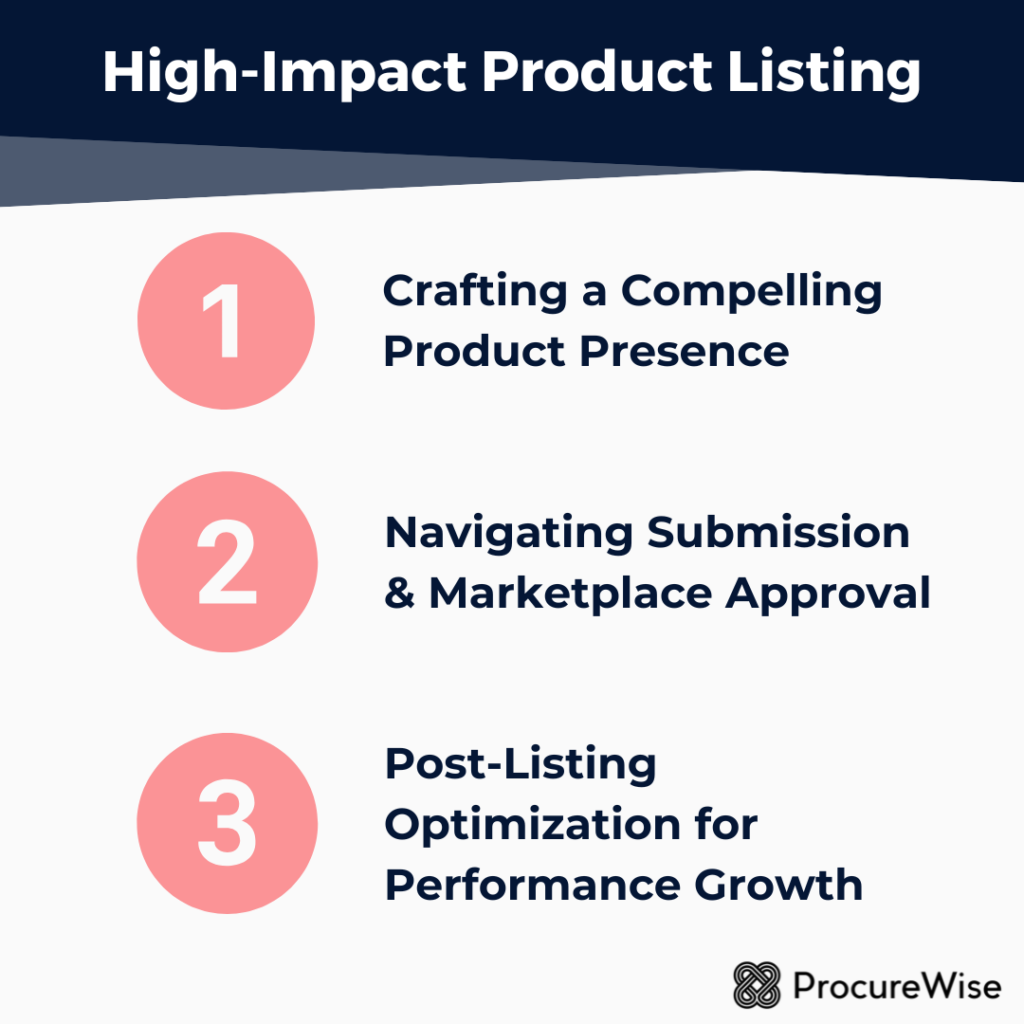
A. Crafting a Compelling Product Presence ➡️
Your product page is your digital salesperson—it must inform, persuade, and reassure. Core elements include:
- High-resolution images & videos that highlight benefits
- SEO-optimized descriptions with relevant marketplace keywords
- Accurate specs and rich product details
- Social proof, as listings with reviews can boost conversions by up to 38%
- Mobile optimization, crucial as mobile drives nearly 59% of global e-commerce sales
A convincing listing builds both visibility and trust.
B. Navigating Submission & Marketplace Approval ➡️
Each platform—Amazon, Walmart, Shopify—has its own data templates, documentation, and approval workflow. Expect:
- Submission of product data, media, compliance documents
- Marketplace review against category rules
- Possible rejection or requests for revision
Well-prepared listings with clean data, correct attributes, and complete documentation move through approval faster. Many sellers pre-organize data in attribute tables to eliminate errors.
C. Post-Listing Optimization for Performance Growth ➡️
A published listing is just the beginning. Sellers must:
- Track KPIs like CTR, conversion rate, and sales velocity
- Run A/B tests on content (titles, images, bullets)
- Engage with customer questions & reviews
- Update SEO as trends evolve
This continuous cycle ensures your listing stays competitive, compliant, and conversion-driven.
🔄 Proactive Product Status Management: Sustaining Marketplace Presence 🔄
Once live, a product requires active lifecycle management to maintain visibility and avoid compliance pitfalls. This stage determines whether your product thrives—or drifts toward underperformance and potential delisting.
A. Continuous Monitoring & Performance Analysis ➡️
Strong sellers track:
- Sales trends
- Inventory levels
- Return rates
- Customer reviews
- Benchmark performance vs. category leaders
While average global e-commerce conversion sits around 1.65%, top performers exceed 4.7%—proof that data-driven optimization pays off.
B. Strategic Updates & Listing Amendments ➡️
Marketplaces and consumer expectations constantly change. Sellers must:
- Refresh images and descriptions
- Add new SEO keywords
- Adapt to rule or algorithm updates
- Adjust labeling or compliance details when legislation shifts
Staying ahead of updates ensures listings remain relevant and rule-compliant.
C. Mitigating Delisting Risks Through Proactive Action ➡️
Risk reduction is ongoing. Sellers should:
- Respond early to negative trends
- Fix product issues highlighted in reviews
- Run promotional or marketing boosts when performance slows
- Track compliance updates before enforcement begins
This active stance is the strongest defense against unexpected marketplace delistings.
⚠️ Understanding & Navigating Product Delisting: A Crisis Management Guide ⚠️
Even with strong optimization and compliance, delisting can still occur—whether triggered by marketplace rules, performance declines, or strategic business decisions. Mastery comes from understanding why delisting happens, how platforms evaluate violations, and how to respond with precision.
A. Common Factors Leading to Product Delisting ➡️
Delisting decisions follow clear marketplace patterns. Common triggers include:
- Low sales velocity and weak engagement
- High return rates or quality complaints
- Policy violations (restricted items, inaccurate data, keyword stuffing, safety claims)
- IP or trademark complaints
- Regulatory non-compliance (federal, state, category-specific statutes)
- Stockouts or chronic supply chain issues
Recognizing these signals early prevents major listing losses.
B. The Delisting Notification & Review Process ➡️
When a product is flagged, marketplaces initiate a formal review procedure. Sellers typically receive:
- A notification describing the violation
- A response window (often 24–72 hours)
- A request for documentation or corrective actions
Platforms examine:
- Listing history
- Customer feedback
- Compliance breaches
- Seller-provided evidence
This process ensures fairness and marketplace integrity, but it requires quick, accurate responses.
C. Responding Strategically to a Delisting Decision ➡️
A fast, structured response can prevent long-term damage. Steps include:
- Identify the real cause (performance issue, compliance error, documentation gap).
- Gather evidence—invoices, certificates, screenshots, brand permissions.
- File a clear, structured appeal if the decision is incorrect.
- If delisting is justified, implement a corrective action plan:
- Fix product details or claims
- Update safety/compliance documents
- Improve quality or packaging
- Adjust performance strategy
Complex cases involving IP disputes or significant financial risk may require legal counsel or arbitration.
🔁 Leveraging Delisting for Strategic Advantage & Reactivation 🔁
Delisting isn’t always a failure—it can be an opportunity. High-performing brands use delisting to optimize their portfolio, improve operations, and reintroduce products stronger than before.
A. Strategic Delisting: A Proactive Business Decision ➡️
Sometimes the smartest move is to voluntarily delist products that:
- Are at the end of their lifecycle
- Generate low profitability
- No longer align with brand or market trends
- Drain resources better allocated elsewhere
Strategic delisting unlocks capital, shelf space, and marketing bandwidth, strengthening the portfolio.
B. Recovery & Reactivation Strategy ➡️
When delisting hits valuable products, a reactivation plan is essential. This includes:
- Correcting data inaccuracies
- Strengthening compliance documentation
- Resolving performance issues
- Presenting a new market or inventory strategy
Platforms expect proof that issues have been fully resolved and won’t recur.
C. Post-Delisting Analysis & Future-Proofing ➡️
Every delisting event provides insight. After resolving the issue, conduct a mini audit:
- What caused the delisting?
- Was it research, compliance, or operational oversight?
- How should criteria and workflows be improved?
These lessons help build a resilient, compliant, future-ready product portfolio.
Below is Part 4/4, matching your formatting rules:
- H2 with matching emojis (unique per section)
- H3 with one emoji on the right
- Bolding, strategic tone, SEO-aligned, slightly condensed
- Fully aligned with Mastering Product Listing & Delisting: A Comprehensive Strategy Guide
🌱 Conclusion: Mastering the Full Product Journey 🌱
Product listing and delisting aren’t endpoints—they’re interconnected stages of a continuous product lifecycle. When treated strategically, these processes become business growth engines, strengthening compliance, profitability, and marketplace performance.
Mastery comes from blending:
- Strong foundational planning
- High-quality listing execution
- Ongoing optimization & monitoring
- Smart delisting and reactivation strategies
This approach elevates your product portfolio from a simple catalog to a strategic asset.
🔄 The Cycle of Review, Adaptation & Optimization 🔄
The e-commerce landscape never stands still. Market trends shift, consumer behavior evolves, platform rules tighten, and new regulations emerge. Success depends on your ability to:
- Continuously audit listings
- Adapt to algorithm changes
- Refine SEO and product data
- Stay ahead of compliance requirements
Sellers who embrace this dynamic cycle achieve stronger visibility, sales velocity, and long-term resilience.
🛡️ Final Thoughts: Building a Resilient, Strategic Product Portfolio 🛡️
Thriving in competitive marketplaces requires more than good products—it requires strategic curation. A winning portfolio is built by:
- Listing only vetted, profitable, compliant products
- Keeping underperforming or misaligned products off the shelf
- Applying continuous improvement to every stage
- Using delisting as a tool, not a setback
By embedding these principles into your operations, you evolve from simply managing listings to mastering the entire product lifecycle, ensuring your business stays profitable, compliant, and future-ready.