

Managing a successful product range is a dynamic process. Over time, you’ll find that some products consistently perform well while others may not generate the expected sales. It’s important to periodically review your product lineup and make informed decisions about which products to retain and which to phase out. Non-rotating products, or those that aren’t selling well, can drain resources and obscure the focus from your best-performing items.
To maximize profitability and ensure a streamlined, efficient inventory, it’s crucial to adopt effective strategies for removing non-rotating products. Here’s a comprehensive guide with 25 best practices to help you strategically streamline your offerings, enhance operational efficiency, and ultimately boost your business’s bottom line. Whether you’re a seasoned retailer or just starting, these practices are essential steps toward optimizing your product range and ensuring your business thrives.
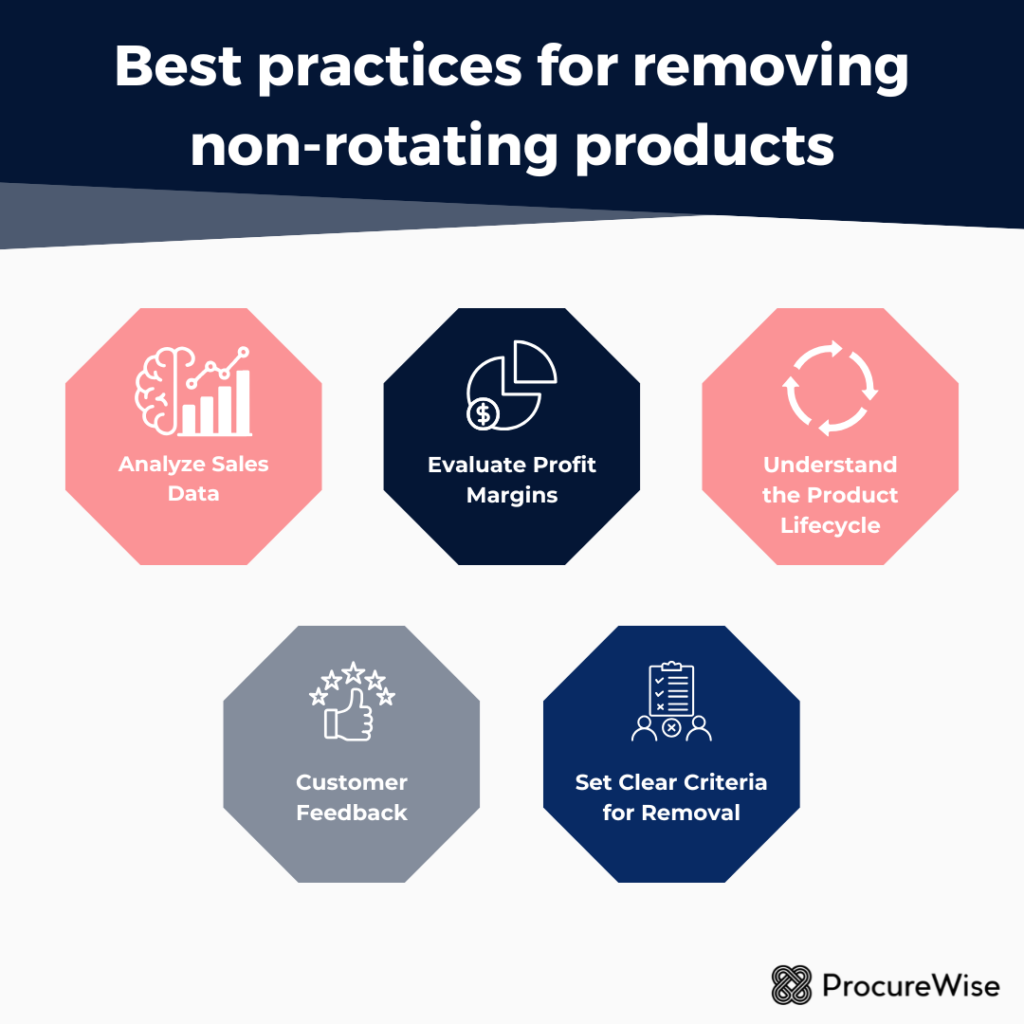
1. Analyze Sales Data 📊
Refine your product range by thoroughly analyzing sales data. Start by reviewing historical sales figures to spot trends, focusing on key indicators like sales volume and revenue. Identify consistently underperforming products with low sales or diminishing revenue trends. Assess inventory turnover rates to gauge product resonance and customer feedback to understand potential issues like pricing or quality.
Compare non-rotating products with successful ones using benchmarks such as demographics, strategies, and pricing. This analysis aids decisions on modifying, remarketing, or removing products, ensuring focus on items with growth potential, boosting profitability and market competitiveness.
2. Evaluate Profit Margins 💰
Effectively managing a product range requires focusing on profit margins to identify and remove non-rotating items. Profit margins reveal financial health by showing the difference between costs and selling prices. Regularly assessing these margins helps spot underperforming items. Analyze sales data and costs; products with small or negative margins and low sales are candidates for removal.
They consume resources and hinder profitability. Evaluating margins allows for reallocating resources to more profitable items, optimizing inventory and aligning with consumer demand, ensuring the product range meets strategic goals and supports growth.
3. Consider Carrying Costs 💸
Evaluating carrying costs in inventory management is vital as they increase with non-rotating products, affecting profit margins and storage. Regular audits help identify stagnant items and their financial impact. Calculate costs for each product, considering storage, insurance, depreciation, and opportunities lost. Use data analytics to track product performance and identify slow sellers.
Regularly review products based on data, not sentiment, while considering seasonality, trends, and customer preferences. Removing non-rotating items reduces costs and enhances operations, leading to a focused product range and improved customer satisfaction. Maintaining a lean inventory by eliminating high-cost items boosts profitability and streamlines the supply chain.
4. Review Market Trends 📈
In today’s dynamic market, regularly reviewing trends is essential for businesses to keep their product range competitive. This is crucial for phasing out non-rotating products—those with inconsistent sales or misaligned with consumer preferences. Analyze sales data to pinpoint declining products and compare against trends. Use market research, consumer surveys, and competitive analysis to identify obsolete products and growth opportunities.
Understanding seasonal and economic factors can contextualize performance shifts. Streamlining your product range reduces costs and focuses resources on market-driven products, enhancing customer satisfaction and profitability. Regular product reviews maintain an agile portfolio, ensuring long-term success amidst competition.
5. Customer Feedback 🗣️
Customer feedback is crucial for deciding which non-rotating products to remove. By gathering and analyzing input through surveys, reviews, and direct communication, businesses can understand why certain items aren’t performing well and if they meet customer needs. Look for common issues like quality, price, or disinterest.
Use social media to gauge customer sentiments and trends, revealing product relevance. Feedback can suggest improvements or reconfiguration, sometimes reviving interest, while other times indicating removal. By prioritizing customer input, businesses refine their product range to meet market demands, optimizing inventory and boosting satisfaction and loyalty.
6. Conduct a SWOT Analysis ⚖️
Conducting a SWOT analysis is crucial for strategic planning, helping businesses assess their Strengths, Weaknesses, Opportunities, and Threats. This tool not only diagnoses issues but also aids in strategy development.
Understanding the Components:
👉 Strengths: Internal capabilities such as strong branding or efficient processes that offer competitive advantages.
👉 Weaknesses: Internal limitations like lack of expertise or narrow product lines that need improvement.
👉 Opportunities: External favorable factors like market growth or technological advancements to capitalize on.
👉 Threats: External challenges like competition or economic shifts that require contingency plans.
Steps for Conducting a SWOT Analysis:
- Gather Data: Collect diverse insights from reports, market research, and customer feedback.
- Brainstorm with Stakeholders: Engage various departments for a comprehensive view.
- Categorize Observations: Classify findings into strengths, weaknesses, opportunities, and threats.
- Analyze and Match: Identify connections between categories to inform strategy.
- Develop Strategic Objectives: Create goals that leverage strengths, address weaknesses, exploit opportunities, and mitigate threats.
- Monitor and Review: Regularly update the SWOT analysis to maintain relevance and effectiveness.
A thorough SWOT analysis provides essential insights into a business’s environment, guiding informed decisions and fostering sustainable growth.
7. Understand Product Lifecycle 🔄
Understanding the product lifecycle is essential for a balanced product range, ensuring offerings match customer needs and trends. Products typically move through introduction, growth, maturity, and decline stages. Monitoring each product’s stage helps decide when to update or remove non-rotating items. Products in decline show less sales and profits, suggesting discontinuation.
Removing these streamlines inventory, reallocates resources to profitable or new products, and enhances brand focus. This process clarifies choices and emphasizes quality, rejuvenating your brand and driving growth and competitive advantage. Regular sales data and feedback analysis identify lagging products for timely removal.
8. Assess Alternative Options ⚙️
When removing non-rotating products, evaluate alternatives to optimize your product mix and align with market demands for better efficiency and profit. Key strategies include:
➡️ Product Substitution: Find replacements for non-performing items that meet consumer needs and boost sales.
➡️ Bundle Offers: Pair slow movers with popular items to increase appeal and clear inventory.
➡️ Market Analysis: Research consumer trends to adjust products and meet current demands.
➡️ Supplier Collaboration: Work with suppliers on enhancements or exclusive versions to revive interest.
➡️ Trial and Experimentation: Test alternatives in small batches to assess consumer reactions before full integration.
➡️ Explore New Channels: Use online platforms or third-party retailers to increase visibility and reach new customers.
➡️ Feedback Loops: Incorporate consumer feedback to refine product selections.
By following these strategies, businesses can create a dynamic product range that enhances customer satisfaction and supports growth.
9. Examine Brand Impact 🌟
When removing non-rotating products, assess their impact on brand reputation and customer perception. They may not sell well but could support brand identity or niche needs. Here’s how to evaluate their impact:
📌 Brand Alignment: Check if these products reflect your core message. Even low-sellers can reinforce brand identity.
📌 Customer Perception: Use feedback (surveys, social media) to understand customer sentiment. Loyal customers might see these as brand staples.
📌 Brand Equity: Consider if their removal affects brand equity. Some low-profit items boost brand uniqueness and prestige.
📌 Market Differentiation: Determine if these items differentiate you from competitors. Unique aspects might vanish with their removal.
📌 Strategic Realignment: Ensure their removal aligns with an updated brand strategy.
📌 Transition Plans: Communicate discontinuation reasons and alternatives to manage expectations and maintain trust.
By analyzing the brand impact, businesses can make informed decisions about product removal, aligning with strategic goals and fulfilling customer expectations.
10. Strategic Alignments 🎯
An agile product range ensures long-term success in today’s market. Regularly assess your product portfolio to identify non-rotating items that stall growth, optimizing resources and inventory. Use sales analysis and data to find slow-moving products and distinguish underperformers from those with potential.
Consult with sales, marketing, and supply chain teams, and gather customer feedback. Once identified, develop a phase-out strategy to minimize disruption, such as clearance sales. Use insights for future product development to meet market demands. Strategic alignment should be ongoing to maintain a dynamic range.
11. Product Bundling 📚
Product bundling groups complementary products into a single offer, boosting sales, customer satisfaction, and inventory management. It helps move non-rotating items by pairing them with bestsellers, adding perceived value and clearing stagnant stock. For example, pairing a lower-demand kitchen gadget with a popular blender makes the bundle attractive, accelerating inventory turnover and optimizing capital use.
Bundling allows testing market demand and gathering customer feedback to refine product offers. It requires careful selection and awareness of value perception, enhancing customer experience and loyalty. Mastering bundling reduces waste, improves finances, and creates dynamic shopping experiences.
12. Discount Strategies 🏷️
Discount strategies are vital for inventory management, especially in removing non-rotating products. Discounts on slow-moving items reclaim shelf space and reduce financial losses. Use clearance sales or limited-time offers to create urgency. Bundling with popular items boosts perceived value. Personalized discount codes for loyal customers can drive interest and sales.
Carefully evaluate discount percentages to maintain profit margins. Post-discount reviews offer insights into customer preferences, aiding future decisions. By applying these techniques, businesses efficiently manage stock and refresh product offerings to align with market demand.
13. Develop Exit Plans 📝
An exit plan is crucial for maintaining a profitable product lineup. Keeping non-rotating products ties up resources and limits new item introductions. Start by analyzing sales data to identify low performers. Set criteria—like sales volume, margins, and demand—to decide when to remove products.
Communicate phase-outs to teams and customers, using promotional efforts and discounts to clear inventory. Reallocate resources and shift marketing to profitable items. Regularly assess and remove products to ensure a flexible lineup that adapts to market trends.
14. Communicate Transparently 📖
In retail, phasing out underperforming products is key to maintaining a lucrative inventory. Transparent communication with stakeholders—customers, employees, and suppliers—is crucial to prevent backlash. Inform internal teams early and equip them to professionally address queries.
For consumers, use newsletters, social media, and in-store signage to announce discontinuations, offering alternatives to keep them informed and valued. Discuss with suppliers to help them adjust operations smoothly. Emphasize how these changes enhance product quality and relevance, fostering trust and strong relationships.
15. Reallocate Resources 🗂️
Effectively managing your product range sustains growth and boosts profits. Assess and reallocate resources from non-rotating products—those with low sales. These items use up manufacturing time, storage, and marketing. Identifying them allows businesses to streamline operations and prioritize viable offerings. Conduct an inventory analysis to identify slow sellers using KPIs like sales velocity and inventory turnover rates.
Consider repackaging, discounting, or discontinuation for these items. Reallocating resources lets you invest in high-demand products or innovate new ones, enhancing efficiency and strengthening your product portfolio. This strategic shift can save costs, increase profitability, and capture market opportunities.
16. Rebranding Opportunities 💎
Rebranding allows businesses to refresh their product lines by eliminating non-rotating products. These stagnant items often clutter a brand’s portfolio, sapping resources and focus. Identifying and removing underperformers streamlines operations and enhances brand appeal. Analyze sales data and customer feedback to pinpoint low-performing products. Redirect resources to high-potential items and innovations.
Craft a rebranding strategy that highlights core strengths, aligning products with market demand and consumer preferences. Update marketing tactics and visual identity to explore new markets. Transparent communication with stakeholders fosters trust and loyalty, leading to a more agile, competitive brand poised for growth.
17. Cross-Functional Involvement 📢
Cross-functional involvement is crucial for streamlining a product range. This approach engages departments like marketing, sales, finance, and R&D to evaluate non-rotating products holistically. Marketing analyzes market trends and consumer preferences to identify obsolete items, while sales provide insights from customer interactions.
Financial analysts evaluate profit margins and inventory costs, and R&D suggests potential improvements. Through collaboration, departments forecast market changes and align on strategies. This ensures decisions to remove products are based on comprehensive data and expert input, optimizing the product range and aligning it with organizational goals.
18. Supplier Negotiations 🤝
In retail and manufacturing, a streamlined product range is vital for competitiveness. Effective supplier negotiations are crucial when dealing with non-rotating products—those with low sales. First, analyze your inventory to identify these items using sales data, feedback, and market trends, then categorize them by performance duration and potential improvement. Communicate transparently with suppliers about removing these products, highlighting mutual benefits.
Suppliers may renegotiate terms, like returns, discounts, or exchanges, for future partnership potential. Leverage existing successful collaborations to reinforce commitment and negotiate better terms on remaining products. Focus on long-term alignment during negotiations, enhancing inventory management and supplier relations, fostering sustainable growth.
19. Assess Aftermarket Potential 🛠️
When assessing your product range for removing non-rotating items, evaluate their aftermarket potential. The aftermarket includes markets for repairs, maintenance, and upgrades. Products with slow sales can gain traction if needed for parts or modifications. Analyze customer feedback for aftermarket needs like replacement parts and repairs. Engage with repair centers for insights on products needing aftermarket support.
Study trends and competitors to spot growing aftermarket demands. If a product shows strong aftermarket potential, consider keeping it or repositioning it as suitable for upgrades or repairs. Otherwise, discontinue items lacking sales and aftermarket viability to streamline offerings and discover new revenue opportunities.
20. Review Production Costs 🪛
Controlling production costs is vital for a lean, profitable product range. Regularly assess the financial commitment of each product to identify those not meeting ROI expectations. Analyze direct costs like materials and labor, and indirect costs such as storage and transport. Focus on non-rotating items with low sales or seasonal demand, which may be liabilities. Compare these with bestsellers to gauge cost-effectiveness. Products utilizing many resources without strong sales should be cut.
Evaluate their role in your brand, lifecycle stage, and growth potential. Consider customer loyalty and market shifts, as underperformance might result from seasonal changes or trends. Use cost management tools for insight into each product’s financial impact. Refine your range by focusing on profitable or promising items, enhancing operations, and boosting competitiveness.
21. Analyze Economic Factors 💼
Analyzing economic factors is vital when removing non-rotating products. The aim is to optimize inventory and boost profitability by evaluating the cost of goods sold. High production/storage costs without matching sales reduce margins. Assess inflation and consumer spending, as these affect demand. Consider opportunity costs—holding stagnant inventory blocks new arrivals.
Conduct break-even analysis to see if a product can be profitable or repeatedly fails. Check market trends and pricing to align with consumer preferences. This informed decision frees capital for better uses, reducing losses and boosting business agility.
22. Monitor Competitor Strategies 📋
Managing a product range effectively requires understanding market dynamics, including competitor activities. By monitoring competitor strategies, businesses can gain insights into trends affecting product performance. Competitors might change their offerings based on market research, indicating shifting demands.
Analyze competitors’ inventory changes, especially if they phase out similar products, hinting at declining interest. Study their marketing and feedback to understand product emphasis. Regular competitive analysis helps identify underperforming items and offers strategic advantages. Understanding competitors’ decisions aids in making informed choices about discontinuing or diversifying your product range, ensuring focus on profitable ventures.
23. Employee Training 👥
Effective inventory management is vital for a profitable product range. Training staff to identify and remove non-rotating products boosts business efficiency. Equip employees with tools to assess product performance, interpret sales data, and spot stagnation signs. Practical exercises in training develop decision-making skills for aligning products with strategic goals.
Training should also include strategies for minimizing disruption when phasing out products. Empowering staff with knowledge about reducing storage costs, improving cash flow, and focusing on profitable items is crucial. Cross-functional workshops enhance collaboration among teams. This thorough training ensures growth and adaptability in a changing market.
24. Sustainability Concerns ♻️
Sustainability is vital in business strategy. Removing non-rotating products, which have low sales and interest, reduces waste and costs. Analyzing sales data identifies underperformers by turnover, volume, and profit margins. Regular reviews ensure timely removal.
Strategically discontinuing, selling off, or recycling stock minimizes environmental impact and maintains customer trust. This approach allows businesses to innovate and focus on high-demand, sustainable products, aligning with market trends and enhancing competitiveness and profitability.
25. Set Clear Criteria for Removal ☑️
Set clear criteria for removing non-rotating products to maintain a streamlined, profitable inventory. Define benchmarks for sales, revenue, and turnover. Products below thresholds over time require evaluation. Consider qualitative factors, like brand alignment, customer feedback, and trends.
Regular reviews keep your range relevant and competitive. Criteria ensure objective decisions, reduce emotional bias, and promote proactive inventory management. Removing underperformers frees resources for high-potential items, boosting focus and profitability.