

Procurement function is crucial for every organization, but it often comes with many challenges. Whether it’s managing Supplier relationships, navigating complex supply chains, or optimizing costs, procurement teams encounter different obstacles every day.
In this article, we’ll analyze three common procurement-related problems that organizations face and discuss strategies to overcome them. By understanding these common challenges and implementing effective solutions, procurement professionals can streamline their processes, achieve savings, and ultimately contribute to the success of their organizations. Let’s dive in and address these common procurement challenges. Read more What is sustainable shopping and why is it important?
1️⃣ Risk mitigation 📉
Risk is an inherent element of the purchasing process that every purchasing department must deal with. Purchasing risks can result from various factors such as market volatility, risks associated with Suppliers, and regulatory compliance risks. Therefore, it’s essential to conduct effective actions to minimize risk in procurement processes.
The first step in risk minimization is identifying potential threats. Understanding the risks that can occur at various stages of the purchasing process, from identifying purchasing needs to completing transactions, is crucial. These risks can be related to product availability, price variability, regulatory compliance, or Supplier reputation.
The next step is to develop a risk minimization strategy. This involves taking actions to prevent or reduce the impact of risks, addressing both Supplier control and effective management of the entire procurement process. It is also essential to consider risk in the decision-making process to ensure that decisions are knowledge- and risk-analysis-based.
Monitoring and evaluating actions taken to manage risk are crucial aspects of risk minimization. This allows ongoing monitoring of the effectiveness of actions and adjustments to ensure that risk is minimized at every stage of the procurement process.
2️⃣ Dark purchasing 🛍️
The phenomenon of dark purchasing, also called as maverick spend, is one of the most common problems in the procurement process. It involves making unregulated purchases without the knowledge and control of the procurement department. This informal procurement process can lead to uncontrolled spending and the loss of potential savings for the company. It is also a source of risk associated with purchasing counterfeit or stolen goods.
One of the main threats of dark purchasing is the loss of control over expenses. The lack of centralization in the procurement process results in different departments or employees making purchases independently, without coordination and control. This, in turn, leads to excessive spending and the loss of negotiation opportunities for better purchasing terms.
Furthermore, dark purchases carries the risk of buying counterfeits, which can be hazardous to the company’s operations or Customers. Purchasing illegally obtained items or stolen goods can lead to serious legal and reputational consequences for the company.
To overcome this problem, it is essential to conduct an expenditure analysis to identify areas where dark purchasing occurs. After such an analysis, a procurement strategy can be developed to minimize this risk, such as implementing a procurement policy that includes only approved Suppliers. Providing appropriate training for employees to increase their awareness and understanding of the consequences of dark purchasing is also valuable.
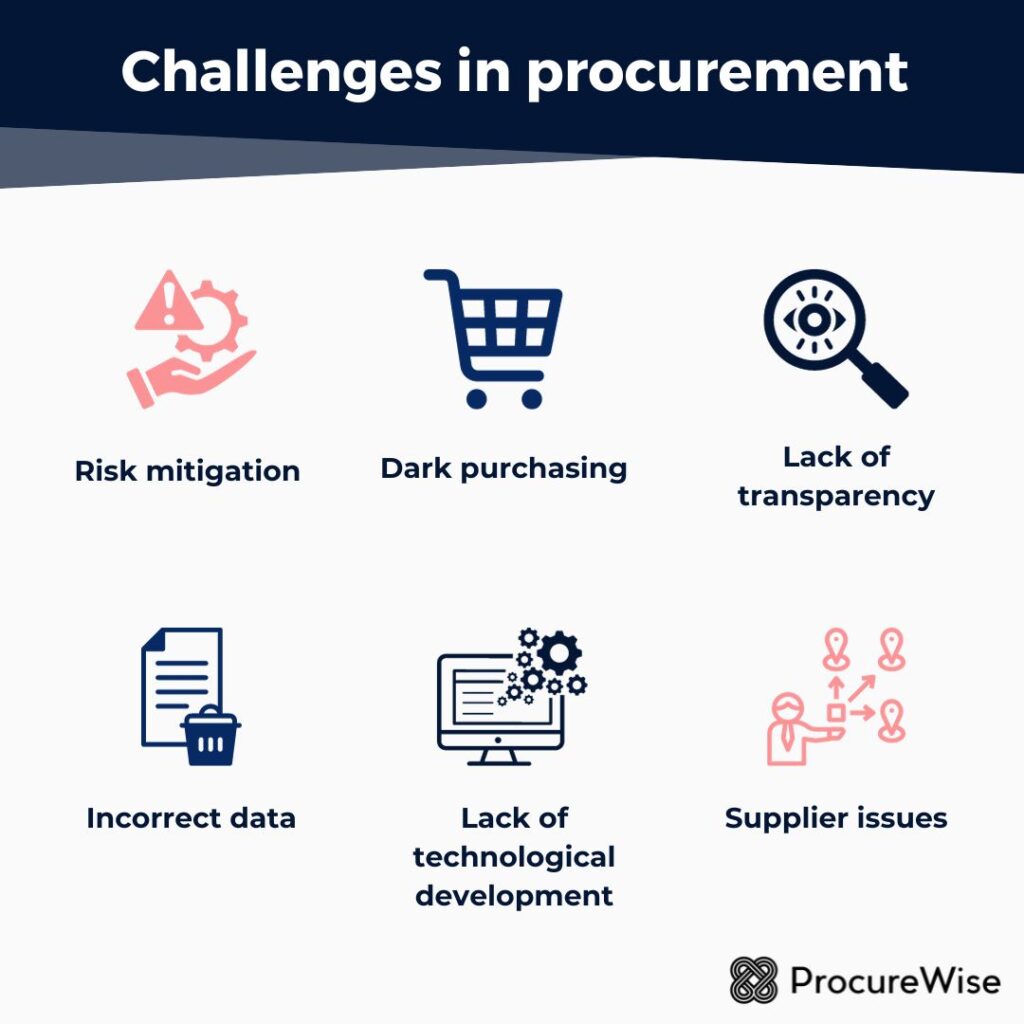
3️⃣ Lack of transparency 🔎
One of the most significant challenges in procurement is a lack of transparency. The absence of access to essential information and difficulties in tracking data pose security risks, including unauthorized access to confidential information, data theft, or exposure to hacker activities. Additionally, a lack of smooth information flow can lead to data inaccuracies, affecting decision-making quality and overall business process efficiency.
To overcome these procurement challenges, several solutions can be applied. Consider automating the procurement process to facilitate organized data collection and analysis. Furthermore, directing efforts towards building strong relationships with Suppliers, enabling the requirement of necessary details and documents from them, can enhance transparency in the procurement process. Initiatives such as eliminating manual data analysis and training employees in best practices can also contribute to increased transparency in the ordering process.
4️⃣ Incorrect data 📄
One of the most significant challenges in procurement is the issue of inaccurate data. Whether an organization has accurate and reliable information regarding product availability, inventory status, or prices can directly impact the financial results of the company.
Inaccurate data can lead to inefficient procurement decisions, resulting in both product shortages and surpluses in warehouses. If data on inventory status is imprecise, it can lead to a decline in Customer service quality, a loss of trust in the company, and missed potential profits. Similarly, incorrect information about prices or negotiated agreements can lead to unfavorable transactions and loss of savings.
Inaccuracies in the supply process can result from various causes, such as data entry errors, conflicting product descriptions, or outdated records. Issues with data accuracy can be particularly noticeable in organizations using different, unsynchronized management systems.
To address this problem, companies should focus on double-checking entered data, assessing and merging records, and relying on accurate and reliable data when making procurement decisions. It is also crucial to invest in data management systems that ensure consistency and precision of information throughout the supply process. Implementing such solutions should help companies avoid inaccurate data, minimize the risk of financial losses, and increase procurement management efficiency.
5️⃣ Lack of technological development 🖥️
The lack of technology adaptation in procurement processes can lead to various problems and challenges. One of the most critical issues is the lack of efficiency and effectiveness. Traditional procurement management methods, such as manual document processing, phone calls, or paper document exchange, are time-consuming and prone to errors. Embracing technology in supply processes allows for the automation of many routine tasks, speeding up processes, minimizing errors, and increasing the efficiency of the procurement department.
Innovative technological solutions, such as artificial intelligence and machine learning, can also assist in analyzing procurement data, identifying trends, forecasting material demand, and delivery times. This enables companies to make more data-driven procurement decisions, leading to more optimal and strategic choices.
Integrating technology into procurement processes also allows for better risk management. Supply management systems can monitor Suppliers, assess their performance and reputation, helping to identify potential threats and reduce the risk associated with delayed deliveries or unreliable Suppliers.
Ultimately, adopting technology in procurement processes contributes to cost savings. Digital systems and tools assist in identifying negotiation opportunities, analyzing overall procurement costs, and managing Suppliers. As a result, companies can build better relationships with Suppliers, secure more favorable contract terms, and negotiate lower prices. Additionally, automating procurement processes saves time and resources that can be utilized in other areas of the company.
6️⃣ Supplier issues 📦
One of the most common problems in the procurement process relates to Supplier issues. Improper Supplier management and weak relationships can lead to numerous problems that negatively impact the efficiency of procurement processes and the overall operation of the company.
The most frequent problem with Suppliers is inadequate management. Lack of clear communication channels and systems, inefficient contract management processes, and a lack of transparency can lead to delivery delays, increased costs, and negatively affect the quality and compliance of delivered goods.
Contract breaches and a Supplier’s inability to meet specified conditions can lead to the interruption of the procurement process, disruptions in the supply chain, resulting in significant disruptions to the company’s operations. Additionally, the inability to maintain stable and lasting relationships with Suppliers can lead to difficulties in choosing the best Suppliers, loss of preferred trade terms, and negotiation opportunities.
Good relationships with Suppliers can contribute to better collaboration, greater flexibility, and faster responses to changing business needs. Strong relationships also help build trust and mutual understanding, leading to increased satisfaction with services and better results. Transparent and open communication allows for effective problem-solving and quick responses to potential changes and crises. As a result, companies can achieve better performance, greater savings, and more optimal procurement outcomes.
Summary
Regardless of the causes and nature of the problems that a procurement department may encounter in a company, it is essential to act proactively and implement appropriate strategies to minimize risk and improve the efficiency of procurement processes. Effective risk management, including recognizing and preventing potential threats, is crucial for success in the procurement area.