

Implementing new Suppliers is a crucial process for any company that relies on external Suppliers. It involves integrating new Suppliers into the existing supply chain and ensuring that they meet specific requirements. Effective Supplier implementation is essential for streamlining operations, reducing costs, and maintaining strong Supplier relationships.
In this guide, we will provide tips and proven methods for effectively implementing new Suppliers. From establishing clear communication channels to conducting thorough Supplier assessments, we will discuss all necessary steps to ensure a smooth implementation process. Whether you are a procurement specialist or a business owner, this guide will provide you with knowledge and strategies to optimize Supplier implementation and achieve business success. Check out 8 Supplier Management best practices any business can implement.
❓ What is Supplier implementation ❓
Supplier implementation is the process of integrating new business partners within supply chain management. It is a crucial stage that allows ensuring the effectiveness of collaboration with Suppliers and results in strong business relationships.
During Supplier implementation, a company establishes rules and expectations for collaboration, such as delivery deadlines, product quality, return policies, payment terms, etc. Subsequently, technical connections are established between the Supplier’s system and the company’s system to enable smooth information flow and data exchange.
With established rules and connections, a company can ensure the smooth execution of business transactions with Suppliers. Through this Supplier implementation process, a company gains the ability to shorten order fulfillment time, avoid communication errors, and regain control over the supply chain.
Take advantage of our procurement process review services now!
📝 Supplier implementation checklist 📝
The Supplier implementation checklist is a crucial document that should include the most important activities necessary for effective Supplier implementation. Below are important steps that should be included in the Supplier implementation checklist.
👉 Technology and tool configuration: The first step is to ensure the proper technological infrastructure, such as access to transactional systems, customer portals, communication tools, etc. Ensure that the Supplier has full access to necessary technologies and tools to enable smooth information flow and collaboration.
👉 Integration testing: Before full Supplier implementation, conduct integration tests to ensure that the connection between the Supplier’s system and the company’s system is functioning correctly. Encourage the Supplier to perform test transactions to ensure that the data transmission process occurs without disruptions.
👉 Establishment of business rules: Specify detailed rules and requirements for collaboration with Suppliers. This includes aspects such as delivery deadlines, product quality, return policies, payment terms, etc. Ensure that the Supplier is fully informed and agrees to all business rules.
👉 Training provision: Organize appropriate training for Suppliers to help them better understand the company’s processes and expectations. Identify key areas where the Supplier may need training and provide relevant materials and support.
👉 Compliance rule establishment: Ensure that the Supplier adheres to all applicable regulations and compliance rules, such as proper licenses, certifications, data security, etc. Specify clear guidelines regarding compliance and ensure that the Supplier is aware of and adheres to these rules.
Preparing and adhering to the Supplier onboarding checklist helps ensure smooth and efficient collaboration and avoids potential issues in the future. Therefore, it is important to carefully consider and include these steps in the checklist.

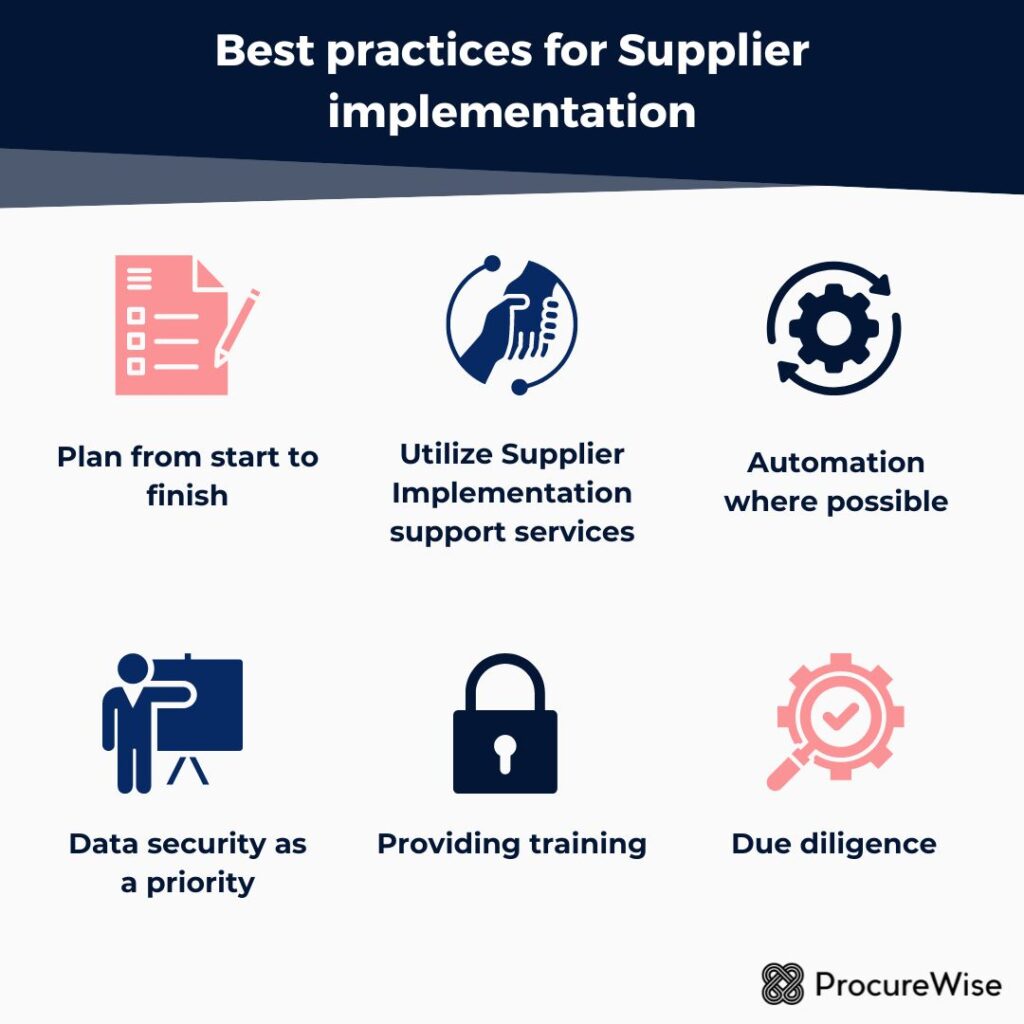
💡 Best practices for Supplier implementation 💡
Supplier implementation is a crucial process that is of great importance for effective supply chain management and business relationships. Below are best practices for Supplier implementation that will help ensure smooth and efficient collaboration processes with new business partners.
1️⃣ Plan from start to finish 📋
Planning the Supplier implementation process from start to finish is crucial to ensure its effectiveness and optimal results.
✏️ Organize and prepare for all stages of Supplier implementation, from initiating the first contact to full integration into the supply chain.
✏️ Tailor the Supplier implementation process to existing systems and procedures in the company. This ensures consistency and compliance with internal processes, facilitating future collaboration with the Supplier.
✏️ Build an internal implementation team and designate a leader responsible for coordinating and supervising the process. Such a team and leader ensure that the entire process proceeds according to plan and on schedule.
✏️ Define the stages and procedures of Supplier implementation to avoid misunderstandings and ensure that each stage is conducted according to plan. It is also important to track data and information at each stage of the process to allow for potential improvements and enhancements in the future.
Planning the Supplier implementation process from start to finish brings many benefits, such as effectiveness, consistency, timeliness, and the opportunity for continuous improvement. It is a key element of effective Supplier management and ensuring the stability of the supply chain.
2️⃣ Utilize Supplier implementation support services 🤝
When managing the Supplier implementation process, many companies use Supplier implementation support services. Such collaboration can bring many benefits to companies looking to streamline and simplify the Supplier implementation process. Below are a few ways in which Supplier implementation support services can facilitate this process:
➡️ Facilitating communication: Supplier services can provide an accessible communication platform that allows for sending messages, sharing documents, and managing Supplier data in one place. The ability to conduct all communications related to Supplier implementation in one place significantly facilitates the management of this process.
➡️ Simplifying training: The training platform provided by the service provider allows suppliers to easily initiate the training process, monitor progress, and acquire necessary knowledge. This offers suppliers a convenient and consistent platform for gaining essential skills and knowledge, significantly expediting the entire implementation process.
➡️ Compliance checking and process automation: Providers of services supporting supplier implementation also possess tools for checking compliance with requirements and automating processes. This can significantly reduce the burden on internal teams, which often have to check supplier documentation, verify their legal statuses, or conduct compliance checks. Automation, and consequently process optimization, accelerates the entire implementation process while reducing the risk of errors and easing the burden on internal teams.
3️⃣ Automation where possible 🖥️
Implementing new suppliers can be a complex and time-consuming process. To streamline this process, it’s important to automate tasks where possible. By utilizing technology and automation tools, you can reduce manual errors, save time, and improve efficiency. This may include automating the supplier implementation process, such as sending automatic email messages or configuring automatic workflow for approval and verification processes.
Additionally, consider implementing automated systems for tracking and managing supplier performance, invoicing, and payments. Through automation, you can ensure a smoother transition during the implementation of new suppliers and maximize the benefits of new partnerships.
4️⃣ Data security as a priority 🔒
Prioritizing data security during the supplier implementation process is crucial for any organization. Exposing corporate data to risks can have serious and costly consequences, so it’s important to address security aspects from the very beginning. Delaying the resolution of data security issues can lead to significant and time-consuming problems.
Unsecured data can be stolen, lost, or compromised, resulting in financial losses, loss of customer trust, and violations of data protection regulations such as the General Data Protection Regulation (GDPR). Implementing suppliers without ensuring adequate security measures can also lead to the leakage of confidential business information, which can harm the company’s reputation.
Negotiating free trial periods or money-back guarantees with foreign suppliers can help assess their credibility and service quality without risking excessive financial investment. It’s also valuable to monitor suppliers for the level of external threat, using third-party services specializing in cyber risk assessment. Developing a “playbook,” which is a set of instructions and guidelines for risk assessment for each supplier, specifying the security measures required from suppliers based on their risk assessment, is also recommended.
5️⃣ Providing training 📈
During the supplier implementation process, providing adequate training is crucial for ensuring a successful and effective start to collaboration. Training provides suppliers with the necessary knowledge about the company’s expectations, types of transactions, schedules, and requirements for electronic data interchange (EDI).
Suppliers need to understand the company’s expectations regarding product or service quality, delivery deadlines, and compliance with EDI requirements. Proper understanding of these elements is crucial for ensuring smooth information flow and minimizing the risk of errors and delays in deliveries.
6️⃣ Due diligence 👔
Conducting due diligence during the supplier implementation process is crucial for risk minimization and compliance assurance. It’s important to note that bringing in a new supplier involves potential threats such as fraud, non-compliance, or data breaches. Therefore, thorough verification is necessary before entering into collaboration.
Pay particular attention to supplier risk. The analysis of the supplier’s profile should include checking financial credibility, assessing industry risk, and examining the supplier’s trading history. All of this is aimed at verifying whether the supplier is capable of delivering the required services at the appropriate level of quality and within the specified timeframe.
Additionally, conduct a data security audit to assess potential gaps and threats related to data confidentiality and integrity. Testing supplier systems before active trading is crucial to avoid the risk of data loss or security breaches.
☑️ Simplified Supplier implementation ☑️
The best way to facilitate the supplier implementation process is to simplify the process itself. Therefore, in this publication, we will share with you some practical tips and strategies that will significantly streamline this process.
✔️ Create a uniform process that will be applied to both new and existing suppliers. This will maintain consistency and prevent confusion.
✔️ Focus on automating the supplier implementation process. Utilizing available technologies and tools will allow you to significantly streamline the entire process, providing quick processing, error elimination, and time optimization.
✔️ Clear communication and a positive approach during supplier implementation. This will help you build good relationships with suppliers and motivate them for further collaboration.
Striving to simplify the supplier implementation process brings many benefits, both for your company and for the suppliers. More efficient management of this process will speed up response time to changing market conditions and help build stronger relationships with suppliers, ultimately improving productivity and trade efficiency.
Summary
Having a robust supplier implementation process is crucial for effective supply chain management. This is important because a well-organized supplier implementation process brings many benefits. Primarily, it allows for creating positive experiences for suppliers, which form the basis for long-lasting and fruitful business relationships.