

The procurement landscape is rapidly evolving, and digital transformation is at the forefront of this change. With advancements in technology, procurement teams have the opportunity to streamline processes, improve efficiency, and drive cost savings like never before.
Digital transformation in procurement involves leveraging digital tools and technologies to automate manual processes, enhance data analytics, and improve collaboration with suppliers. By embracing digital transformation, organizations can create a more agile and responsive procurement function that can better meet the demands of today’s fast-paced business environment.
In this guide, we will explore the key components of digital transformation in procurement, strategies for implementation, and real-world examples of organizations that have successfully transformed their procurement function through digital initiatives. If you’re looking to future-proof your procurement operations and drive value for your organization, read on to learn more about digital transformation in procurement. Read more Procurement fraud AI solutions – how it works?
❓What Is Digital Procurement Transformation❓
Digital procurement transformation refers to the process of using digital technologies to drive significant improvements in procurement outcomes. This concept involves leveraging various digital tools and systems to streamline procurement processes, enhance supply chain visibility, and optimize supplier relationships. By leveraging these digital technologies, organizations can achieve greater efficiency, cost savings, and strategic advantages in their procurement operations.
📌 The potential for procurement to become a strategic asset and innovation catalyst within the organization lies in its ability to embrace and lead digital transformation. By adopting digital procurement strategies, organizations can transform their procurement function from a transactional process to a strategic enabler. For example, digital procurement technologies can enable organizations to automate routine tasks, such as procurement planning, supplier onboarding, and invoice processing. This automation frees up procurement professionals to focus on more strategic activities, such as sourcing innovative suppliers, negotiating better contracts, and driving supplier collaboration.
📌 Furthermore, digital procurement transformation allows organizations to leverage data analytics and artificial intelligence (AI) capabilities to gain valuable insights and make data-driven decisions. By analyzing procurement data, organizations can identify cost-saving opportunities, mitigate risks, and optimize their supply chains. Additionally, AI-powered tools can provide real-time market intelligence, enabling procurement professionals to make more informed decisions and keep abreast of changing market conditions.
📌 Embracing digital procurement transformation also enables organizations to foster innovation and collaboration with their suppliers. By implementing digital collaboration platforms and tools, procurement teams can engage with suppliers throughout the procurement process, from supplier selection to post-contract relationship management. This collaboration allows for joint problem solving, co-creation of innovative solutions, and continuous improvement in the procurement process.
Digital procurement transformation involves using digital technologies to drive significant improvements in procurement outcomes. By embracing and leading digital transformation, procurement can become a strategic asset and innovation catalyst within the organization. Through the adoption of digital procurement strategies, organizations can achieve greater efficiency, cost savings, and strategic advantages in their procurement operations.
Take advantage of our procurement process review services now!
🌍 Main Areas of Digital Transformation in Procurement 🌍
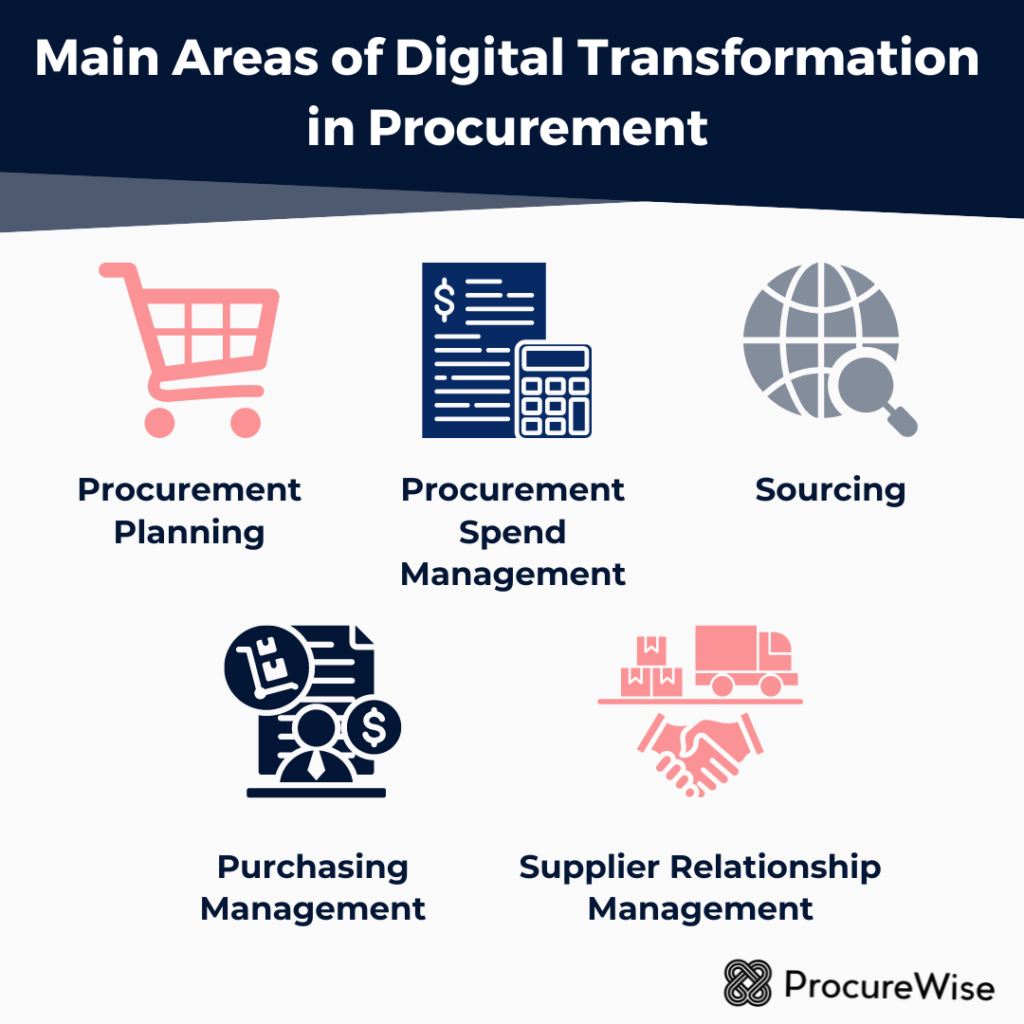
Procurement is one of the critical functions within an organization that involves the acquisition of goods and services to support its operations. With the advancements in technology, digital transformation has become an essential aspect of procurement to improve efficiency, reduce costs, and enhance supplier relationships. The main areas of digital transformation in procurement are as follows:
➡️ Procurement Planning: Digital transformation enables organizations to enhance their procurement planning capabilities. By utilizing data analytics, organizations can gain insights into historical purchase patterns, identify trends, and forecast future demand. This helps in optimizing procurement strategies, leveraging economies of scale, and reducing costs.
➡️ Sourcing: Digital transformation has revolutionized the sourcing process by introducing e-sourcing tools and platforms. These tools enable organizations to streamline the sourcing process, automate supplier evaluations, and implement e-auctions. By leveraging these technologies, organizations can identify the best suppliers, negotiate better contracts, and reduce sourcing cycle times.
➡️ Procurement Spend Management: The digitization of procurement processes has significantly improved procurement spend management. Organizations can now track and analyze their procurement spend in real-time through digital platforms. This allows them to identify cost-saving opportunities, negotiate better deals with suppliers, and manage budgets effectively.
➡️ Purchasing Management: Digital transformation has also transformed purchasing management. Organizations can now automate their purchasing processes, implement e-procurement systems, and enable self-service portals for employees. This reduces manual intervention, improves purchasing cycle times, and enhances overall efficiency.
➡️ Supplier Relationship Management: Digital technologies have revolutionized supplier relationship management. Organizations can now leverage digital platforms to streamline supplier onboarding, track supplier performance, and facilitate communication. This helps in building stronger relationships with suppliers, enhancing collaboration, and ensuring timely delivery of goods and services.
Digital transformation has revolutionized the procurement function by introducing various technologies and tools. The main areas of digital transformation in procurement include procurement planning, sourcing, procurement spend management, purchasing management, and supplier relationship management. By embracing these digital advancements, organizations can achieve significant improvements in operational efficiency, cost reduction, and supplier collaboration.
🕶️ Digital Transformation Trends in Procurement 🕶️
Digital transformation is revolutionizing the procurement process, bringing about significant changes in the way businesses manage their procurement functions. With the advent of new technologies, organizations are witnessing a disruptive shift in how they approach procurement, leading to improved efficiency, cost savings, and enhanced decision-making capabilities.
👉 One of the key trends in digital transformation in procurement is the utilization of advanced technologies, such as artificial intelligence (AI) and robotic process automation (RPA). These technologies enable businesses to automate and streamline various procurement tasks, reducing the manual effort and time required. AI-enabled software and RPA can handle repetitive tasks, such as supplier identification, request for proposal (RFP) generation, and invoice processing, allowing procurement professionals to focus on strategic activities.
👉 By embracing digital transformation, organizations can significantly cut costs associated with procurement. Automation eliminates the need for extensive manpower, reduces human errors, and minimizes the risk of fraud. Moreover, the utilization of data analytics and predictive algorithms helps organizations make informed decisions, leading to better negotiation outcomes and supplier selection.
👉 Another trend in digital transformation in procurement is the shift towards a smaller, centralized procurement function. Traditionally, businesses had distributed procurement teams spread across multiple locations, resulting in fragmented processes and inconsistent practices. However, advancements in technology have enabled organizations to centralize their procurement functions, resulting in better control and standardization. With the help of AI-enabled software, businesses can centralize data management, streamline workflows, and ensure compliance with regulations and policies.
Digital transformation trends in procurement are transforming the way businesses manage their procurement functions. The utilization of advanced technologies like AI and RPA is disrupting the procurement process, enabling organizations to cut costs, save time, and make better decisions. Additionally, the shift towards a smaller, centralized procurement function is streamlining processes and improving control. Embracing digital transformation in procurement is crucial for organizations looking to stay competitive in today’s rapidly evolving business landscape.
🤖 Leveraging AI in Digital Procurement Transformation 🤖
Artificial Intelligence (AI) is revolutionizing business processes across industries, and digital procurement is no exception. Leveraging AI in digital procurement transformation can bring numerous benefits, ranging from automating various aspects of the sourcing process to analyzing procurement data to identify patterns and anticipate disruptions. By automating time-intensive tasks such as supplier performance analysis, AI can help procurement teams become more efficient and effective.
🦾 One of the main ways AI can be leveraged in digital procurement transformation is through the automation of the sourcing process. Traditionally, sourcing involved a manual and time-consuming process of searching for potential suppliers, evaluating their capabilities, and negotiating contracts. AI can automate these tasks by using algorithms to identify and evaluate potential suppliers based on predefined criteria. This not only saves time but also ensures a more objective and consistent evaluation process.
🦾 Another area where AI can make a significant impact is in the analysis of procurement data. With the proliferation of data in the digital era, organizations are inundated with vast amounts of information. AI can be used to analyze this data and identify patterns and trends that can help procurement teams make more informed decisions. For example, AI can analyze historical purchasing data to identify cost-saving opportunities or to predict future demand, enabling organizations to optimize their procurement strategies.
🦾 Furthermore, AI can enable procurement teams to anticipate disruptions in the supply chain. By analyzing external factors such as weather patterns, geopolitical events, and market trends, AI algorithms can identify potential risks and enable organizations to take proactive measures to mitigate them. This can help avoid supply chain disruptions, reduce costs associated with late deliveries or stockouts, and improve overall operational efficiency.
🦾 Lastly, AI can automate time-intensive tasks such as supplier performance analysis. Traditionally, evaluating and monitoring supplier performance required manual data collection and analysis. AI can automate this process by collecting and analyzing data on supplier performance metrics such as on-time delivery, quality compliance, and customer satisfaction. By doing so, AI can enable procurement teams to identify underperforming suppliers more efficiently and take corrective actions to ensure supplier performance aligns with organizational goals.
Leveraging AI in digital procurement transformation can bring significant benefits to organizations. By automating various aspects of the sourcing process, analyzing procurement data to identify patterns and anticipate disruptions, and automating time-intensive tasks such as supplier performance analysis, AI can help procurement teams become more efficient, make better-informed decisions, and improve overall operational efficiency. As AI continues to evolve, its potential in transforming digital procurement will only continue to grow.
