

In today’s competitive digital marketing landscape, successful marketing campaigns rely on more than creativity. They depend on data analysis, customer insights, and intelligent strategy. Businesses that leverage market data, Google Analytics insights, audience segments, and predictive analytics gain a powerful advantage when designing promotional campaigns.
Modern consumers expect personalized experiences, relevant messaging, and meaningful engagement. This means brands must move beyond intuition and instead use data integration, artificial intelligence, and campaign performance analytics to guide decisions.
Using real customer behavior data, marketers can create high-impact promotional campaigns that improve customer engagement, increase conversions, and drive long-term revenue growth.
🌐 The Evolution of Data-Driven Marketing 🌐
From Mass Marketing to Data-Driven Customer Engagement 📈
Traditional marketing relied heavily on broad messaging and large audiences. Today, the shift toward data-driven marketing strategies allows companies to target users with precision.
Modern platforms provide valuable insight into:
- Customer behavior
- Audience segments
- Campaign performance
- Social media engagement
- Search and website analytics
With tools like Google Analytics, marketers can understand how users interact with content, ads, and websites. These insights allow marketing teams to design campaigns that match customer preferences and real user needs.
Instead of broadcasting messages to everyone, brands can now focus on highly targeted promotional campaigns tailored to specific customer groups.
Why Market Data Is the Blueprint for Successful Campaigns 📊
Market data functions as the strategic foundation of effective marketing campaigns.
It answers essential questions:
- Who is your target customer?
- Where do they spend time online?
- What content attracts their attention?
- Which marketing channels drive conversions?
Using data analysis and predictive analytics, companies can optimize every stage of their campaigns — from content creation and audience targeting to advertising placement and performance measurement.
This approach turns marketing from guesswork into a measurable and scalable process.
🧩 Building a Strong Marketing Data Ecosystem 🧩
Defining Campaign Goals and Data Needs 🎯
Before collecting data, marketers must define clear objectives for their promotional campaigns.
Typical goals include:
- Increasing brand awareness
- Improving customer engagement
- Generating qualified leads
- Boosting sales conversions
- Strengthening customer relationships (CRM)
Each goal requires different types of marketing data. For example, a lead-generation campaign may focus on user behavior and website analytics, while a customer retention campaign may rely more on CRM data and purchase history.
Clear goals ensure that data analysis supports real marketing outcomes.
Key Sources of Marketing Data 📊
A strong marketing strategy depends on multiple data sources that provide insight into customer behavior and market trends.
1. First-party data
Data collected directly from your audience:
- Website analytics from Google Analytics
- CRM systems
- Social media engagement
- Customer purchase history
- Email marketing performance
This data is the most reliable because it reflects direct interactions with your brand.
2. Second-party data
Data shared through business partnerships, allowing brands to access additional audience insights.
3. Third-party data
Aggregated market data that helps identify:
- Market trends
- Demographic segments
- Industry benchmarks
Together, these sources provide a 360-degree view of the customer journey.
Data Integration and Data Quality Management 🔗
Collecting data is only useful if it is accurate, integrated, and accessible.
Successful marketing teams focus on:
Data quality
Ensuring marketing data is:
- accurate
- up-to-date
- complete
Data integration
Combining information from multiple platforms such as:
- Google Ads
- CRM platforms
- social media platforms
- analytics tools
Integrated data allows marketers to analyze campaign performance across channels.
Data management
Strong data governance ensures:
- secure data storage
- compliance with privacy regulations
- responsible data use
When managed correctly, a well-structured data ecosystem becomes the backbone of effective marketing campaigns.
🔎 Turning Market Data into Actionable Marketing Insights 🔎
Data alone does not improve marketing performance — insight does. The real value of market data appears when businesses transform raw numbers into actionable insights about customer behavior, audience segments, and campaign performance.
Through data analysis, machine learning, and predictive analytics, marketers can uncover patterns that reveal what customers want, how they behave, and which marketing strategies generate the best results.
The Power of Data Analysis in Understanding Customer Behavior 📊
Effective data analysis allows marketers to identify patterns hidden inside large datasets.
By analyzing sources such as:
- Google Analytics website data
- social media analytics
- CRM platforms
- search and advertising performance
- customer engagement metrics
marketing teams can better understand customer preferences and behavioral trends.
Key insights often include:
- which pages users visit most
- where customers drop off in the conversion funnel
- what content drives engagement
- which marketing channels deliver the highest ROI
Understanding customer behavior enables businesses to design more relevant marketing campaigns, increase engagement, and improve the overall customer experience.
🎯 Audience Segmentation for Precision Targeting 🎯
Building Smart Audience Segments with Data 📊
One of the most powerful outcomes of data analysis is the ability to create precise audience segments.
Rather than targeting broad demographics, businesses can segment audiences based on:
- customer behavior
- purchase history
- content engagement
- interests and preferences
- interaction with ads and platforms
These audience segments allow marketers to tailor promotional campaigns to specific groups of users.
For example:
- new visitors may receive brand awareness campaigns
- returning customers may see loyalty promotions
- high-value users may receive personalized offers
This approach significantly improves campaign performance and customer engagement.
Hyper-Targeting Across Marketing Platforms 📣
With detailed segmentation, businesses can deliver hyper-targeted advertising across multiple digital platforms.
Common channels include:
- Google Ads campaigns
- social media platforms
- content marketing channels
- video platforms
- programmatic advertising networks
Using audience insights ensures that promotional campaigns reach potential customers who are most likely to convert.
Better targeting means:
- lower advertising costs
- higher conversion rates
- improved campaign efficiency
🤖 Predictive Analytics and Artificial Intelligence in Marketing 🤖
Using Predictive Analytics to Anticipate Customer Needs 🔮
Modern marketing increasingly relies on predictive analytics to forecast customer behavior and market trends.
By analyzing historical data, predictive models can estimate:
- which users are likely to convert
- which customers may stop purchasing
- which products will become popular
- which marketing channels will perform best
Predictive analytics helps marketers plan smarter campaigns before problems occur.
This proactive approach allows businesses to stay ahead of competitors and continuously improve marketing campaign performance.
Machine Learning for Smarter Campaign Optimization ⚙️
Machine learning algorithms enhance marketing analytics by automatically identifying patterns within large datasets.
These technologies support:
- campaign performance analysis
- audience segmentation
- customer behavior prediction
- content optimization
- advertising automation
Machine learning is widely used in platforms such as:
- Google Ads
- marketing automation platforms
- CRM systems
- customer engagement tools
By combining artificial intelligence and marketing data, companies can optimize campaigns in real time and maximize return on advertising spend.
📈 Campaign Performance Insights for Continuous Improvement 📈
Measuring What Matters in Marketing Campaigns 📊
Every promotional campaign should be monitored using clear marketing performance metrics.
Common KPIs include:
- click-through rate (CTR)
- conversion rate
- cost per acquisition (CPA)
- return on ad spend (ROAS)
- customer engagement levels
Tools like Google Analytics and marketing analytics platforms provide detailed insights into campaign performance and user behavior.
These insights help marketers determine:
- which ads work best
- which channels drive the most traffic
- which audience segments convert
Turning Campaign Data into Strategic Decisions 📉
Analyzing performance data allows businesses to continuously refine marketing campaigns.
Teams can:
- adjust targeting strategies
- improve ad creative and messaging
- optimize landing pages
- reallocate advertising budgets
This iterative approach ensures that campaigns improve over time, delivering stronger results and more efficient marketing investments.
✍️ Designing Data-Driven Content and Promotional Campaign Strategies ✍️
Turning marketing insights into effective campaigns requires combining data analysis, SEO optimization, content marketing, and audience targeting. Once businesses understand customer behavior, audience segments, and campaign performance, they can build marketing strategies that resonate with real users.
Data-driven strategies help marketers create content that matches customer preferences, distribute it across the right marketing platforms, and optimize every stage of the customer journey.
Data-Informed Content Creation for Better Campaign Results 📝
Content creation should always be guided by data insights rather than assumptions.
By analyzing information from tools like Google Analytics, CRM platforms, and social media analytics, marketers can identify:
- what type of content performs best
- which topics attract potential customers
- what keywords drive organic traffic
- which formats increase customer engagement
This allows brands to design content marketing strategies that align with real user interests.
Examples of data-driven content include:
- blog posts optimized for Google Search
- social media campaigns tailored to audience segments
- educational resources based on customer preferences
- personalized product recommendations
When content creation is supported by marketing data, campaigns become more relevant and impactful.
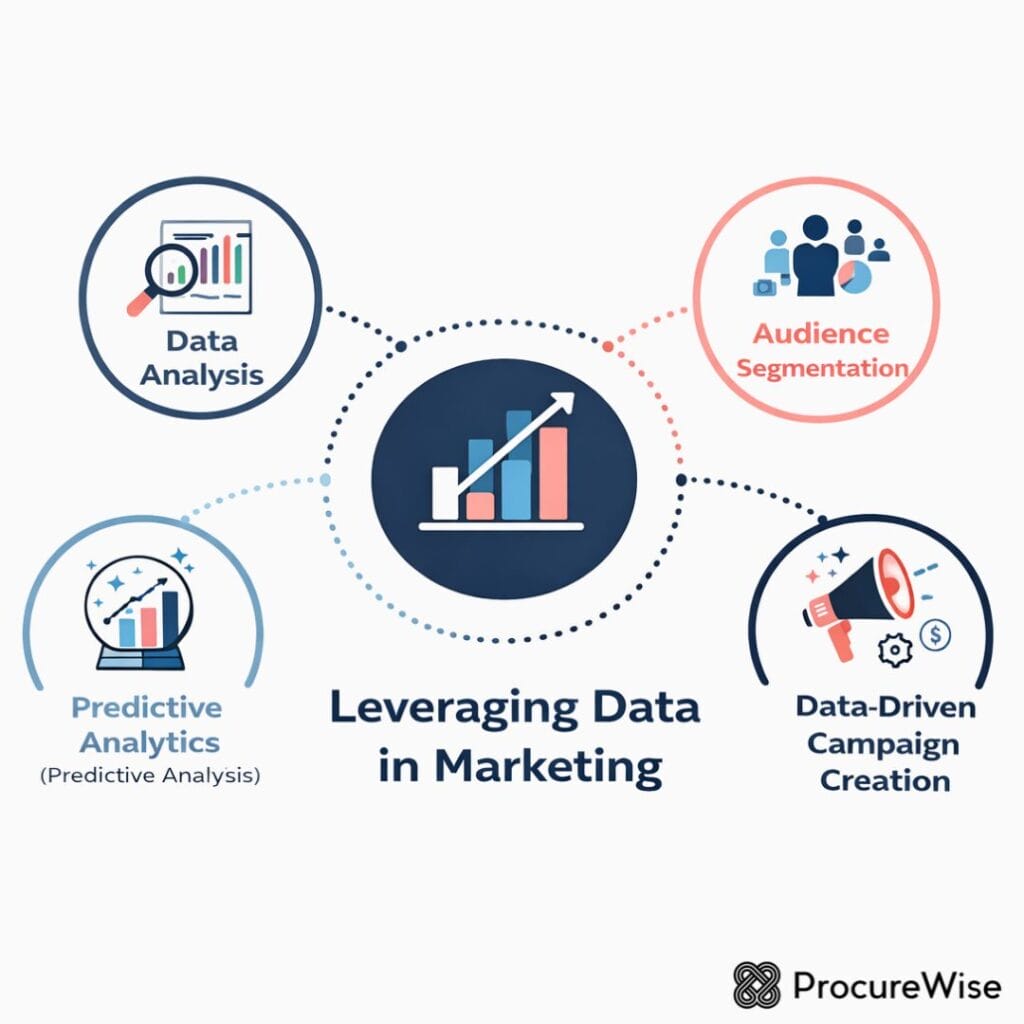
🔍 SEO and Search Insights for Campaign Visibility 🔍
Using Search Data to Improve SEO Optimization 📊
Search behavior provides valuable insights into what customers want and how they look for solutions online.
By analyzing Google Search trends, keyword performance, and website analytics, businesses can improve their SEO optimization strategies.
Important SEO data sources include:
- Google Analytics
- Google Search insights
- keyword performance metrics
- content engagement statistics
These insights help marketers optimize:
- content strategy
- landing pages
- marketing messages
- blog articles and guides
Better SEO ensures that promotional campaigns reach customers actively searching for relevant products or services.
Aligning Content Strategy with Search Intent 🎯
A successful content strategy focuses on matching marketing messages with user search intent.
Search intent generally falls into three categories:
- Informational searches – users looking for knowledge
- Comparative searches – users evaluating solutions
- Transactional searches – users ready to purchase
By analyzing search behavior and customer journey data, marketers can create content that supports every stage of the decision process.
This approach strengthens organic visibility, lead generation, and customer acquisition.
📣 Using Marketing Platforms for Data-Driven Campaign Distribution 📣
Social Media Platforms and Customer Engagement 📱
Modern promotional campaigns rely heavily on social media platforms to connect with audiences.
Platforms provide valuable analytics about:
- user engagement
- content performance
- audience demographics
- campaign reach
These insights allow brands to refine social media marketing strategies and tailor messaging to different audiences.
Examples of social media campaign optimization include:
- targeting specific audience segments
- adjusting posting schedules based on engagement data
- testing different content formats and visuals
This ensures that marketing campaigns remain relevant, personalized, and engaging.
Advertising Platforms and Programmatic Marketing 💻
Digital advertising platforms use data and artificial intelligence to optimize campaigns automatically.
Key advertising technologies include:
- Google Ads
- programmatic advertising
- marketing automation platforms
- customer data platforms
These tools analyze large volumes of marketing data to optimize:
- ad placement
- audience targeting
- bidding strategies
- campaign performance
This automation allows businesses to deliver personalized advertising at scale, improving both reach and efficiency.
🤝 Personalization and Customer Engagement Strategies 🤝
Delivering Personalized Customer Experiences 🎯
Modern customers expect personalized marketing experiences.
Using customer data, machine learning, and CRM insights, brands can tailor:
- email campaigns
- product recommendations
- website content
- advertising messages
Personalization increases customer engagement, loyalty, and conversions because users feel understood and valued.
Building Strong Customer Relationships with Data 💡
Marketing data also helps businesses strengthen Customer Relationship Management (CRM).
By analyzing customer history and behavior, brands can:
- identify loyal customers
- detect potential churn risks
- recommend relevant products
- design targeted retention campaigns
Strong customer relationships lead to:
- higher lifetime value
- increased brand loyalty
- stronger long-term revenue growth
When marketing strategies combine data analysis, AI technologies, and human creativity, companies can create high-impact promotional campaigns that truly connect with customers.
🚀 Executing and Optimizing Data-Driven Promotional Campaigns 🚀
Once insights from data analysis, audience segments, and customer behavior are identified, the next step is execution. Effective promotional campaigns combine marketing strategy, campaign performance monitoring, and continuous optimization to maximize results.
Data-driven execution ensures that marketing campaigns are not static. Instead, they evolve through analytics, testing, and optimization, allowing brands to improve performance and increase customer engagement and revenue.
Launching Data-Powered Marketing Campaigns 📢
Launching a successful promotional campaign requires aligning data insights, marketing platforms, and campaign objectives.
Key steps include:
- defining audience segments and targeting criteria
- selecting the right marketing platforms (social media platforms, search, advertising networks)
- creating data-informed content and advertising messages
- implementing analytics tracking with tools like Google Analytics
When campaigns launch with clear data integration and analytics tracking, marketing teams can quickly analyze customer interactions and campaign performance.
This ensures that every marketing activity contributes to measurable business outcomes.
📊 Measuring Campaign Performance and Marketing ROI 📊
Key Marketing Analytics Metrics 📈
To evaluate campaign success, marketers rely on specific performance indicators.
Common metrics include:
- Click-Through Rate (CTR) – measures ad engagement
- Conversion Rate – percentage of users completing desired actions
- Cost per Acquisition (CPA) – cost of acquiring a new customer
- Return on Ad Spend (ROAS) – revenue generated from advertising investment
- Customer engagement metrics – interactions with content and campaigns
Platforms like Google Analytics, advertising dashboards, and CRM systems provide real-time data about user activity and marketing effectiveness.
Monitoring these metrics helps businesses understand which campaigns drive results and which need optimization.
Attribution Models and Customer Journey Analysis 🔍
Marketing attribution models help businesses identify which touchpoints contribute most to conversions.
For example, marketers can analyze:
- search interactions
- social media engagement
- email marketing responses
- advertising clicks
- website interactions
Understanding the full customer journey allows teams to allocate budgets more effectively and optimize their marketing strategies across channels.
🧪 A/B Testing and Continuous Campaign Optimization 🧪
Testing Marketing Elements for Better Results ⚙️
A/B testing is one of the most powerful techniques in data-driven marketing.
It involves testing different variations of campaign elements such as:
- advertising headlines
- call-to-action messages
- landing page layouts
- images and creative content
- email subject lines
By comparing performance results, marketers can identify which version generates higher engagement and conversions.
Iterative Improvement Through Marketing Analytics 🔄
Successful marketing campaigns rely on continuous improvement.
Using marketing analytics, teams can:
- refine audience targeting
- improve messaging
- optimize content formats
- adjust advertising budgets
This iterative optimization process ensures campaigns remain effective even as customer preferences and market trends evolve.
🔐 Ethical Data Use, Privacy, and Responsible Marketing 🔐
Protecting Customer Data and Building Trust 🛡️
As organizations collect more marketing data, protecting customer privacy becomes essential.
Responsible marketing requires:
- transparent data collection practices
- secure data storage
- compliance with privacy regulations
- ethical use of customer insights
Trust is a key factor in customer relationships and brand loyalty. Companies that prioritize privacy and transparency strengthen their reputation and improve long-term customer engagement.
Overcoming Challenges in Data-Driven Marketing ⚠️
While data-driven marketing offers major advantages, businesses often face challenges such as:
- data silos between marketing platforms
- inconsistent data quality
- limited analytics expertise
- integration difficulties across tools
Addressing these issues requires strong data management strategies, skilled marketing teams, and integrated analytics platforms.
🤖 The Future of Promotional Campaigns: AI-Driven Marketing 🤖
Artificial Intelligence and Machine Learning in Marketing 📊
Artificial intelligence and machine learning are transforming the way marketing campaigns operate.
AI technologies enable marketers to:
- analyze massive datasets faster
- automate advertising optimization
- predict customer behavior
- personalize marketing experiences
AI-powered tools support advanced predictive analytics, allowing businesses to anticipate trends and respond quickly to market changes.
Generative AI and Automated Content Creation ✨
Another major innovation is generative AI, which supports faster and more personalized content creation.
These tools can assist marketing teams with:
- generating advertising copy
- creating campaign ideas
- producing personalized email messages
- optimizing content for different audience segments
When combined with data analytics and marketing insights, generative AI enables companies to scale personalized promotional campaigns more efficiently.
📈 Conclusion: Market Data as the Blueprint for Better Campaigns 📈
In modern digital marketing, market data is the foundation of successful promotional campaigns.
Through data analysis, audience segmentation, predictive analytics, and artificial intelligence, businesses can understand customers more deeply and design marketing strategies that truly resonate.
Organizations that embrace data-driven marketing can:
- improve campaign performance
- increase customer engagement
- optimize marketing investments
- build stronger customer relationships
Ultimately, the future of marketing belongs to brands that successfully combine data insights, advanced analytics, and creative strategy to deliver high-impact promotional campaigns that drive sustainable growth.