

In today’s rapidly evolving business landscape, the role of the Chief Procurement Officer (CPO) has transcended traditional purchasing responsibilities to become a pivotal force in shaping business strategy. As organizations increasingly recognize the strategic importance of procurement, the CPO emerges as a key player in driving innovation, enhancing operational efficiency, and fostering sustainable practices.
But what exactly does this transformation entail? The CPO is no longer just a gatekeeper of goods and services; they are now a strategic partner who aligns procurement goals with overarching business objectives. This involves not only leveraging data analytics to inform purchasing decisions but also collaborating with cross-functional teams to ensure that supply chain practices are both nimble and resilient.
In this article, we will explore the transformative impact of the Chief Procurement Officer on business strategy. We will delve into the skills and qualities that define an effective CPO, examine case studies of companies that have successfully integrated procurement into their strategic framework, and discuss the future of procurement in the context of emerging trends such as digitalization and sustainability initiatives. Join us as we uncover how the CPO can help steer your organization towards long-term success and adaptability in a competitive market.
💼 The Role of the Chief Procurement Officer in Business Strategy 💼
The Chief Procurement Officer (CPO) plays a pivotal role in shaping and executing a company’s business strategy through effective procurement and supplier management. As a strategic partner, the CPO aligns procurement objectives with overall business goals, ensuring that the procurement function not only focuses on cost savings but also on driving innovation and enhancing value from the supply base.
The CPO’s role transcends traditional procurement functions, positioning them as a vital contributor to the company’s strategic direction and long-term viability. Through effective management of procurement processes and supplier relationships, the CPO helps to unlock value, mitigate risks, and support the overarching business strategy.
Take advantage of our procurement process review services now!
📋 Key Responsibilities of a Chief Procurement Officer 📋
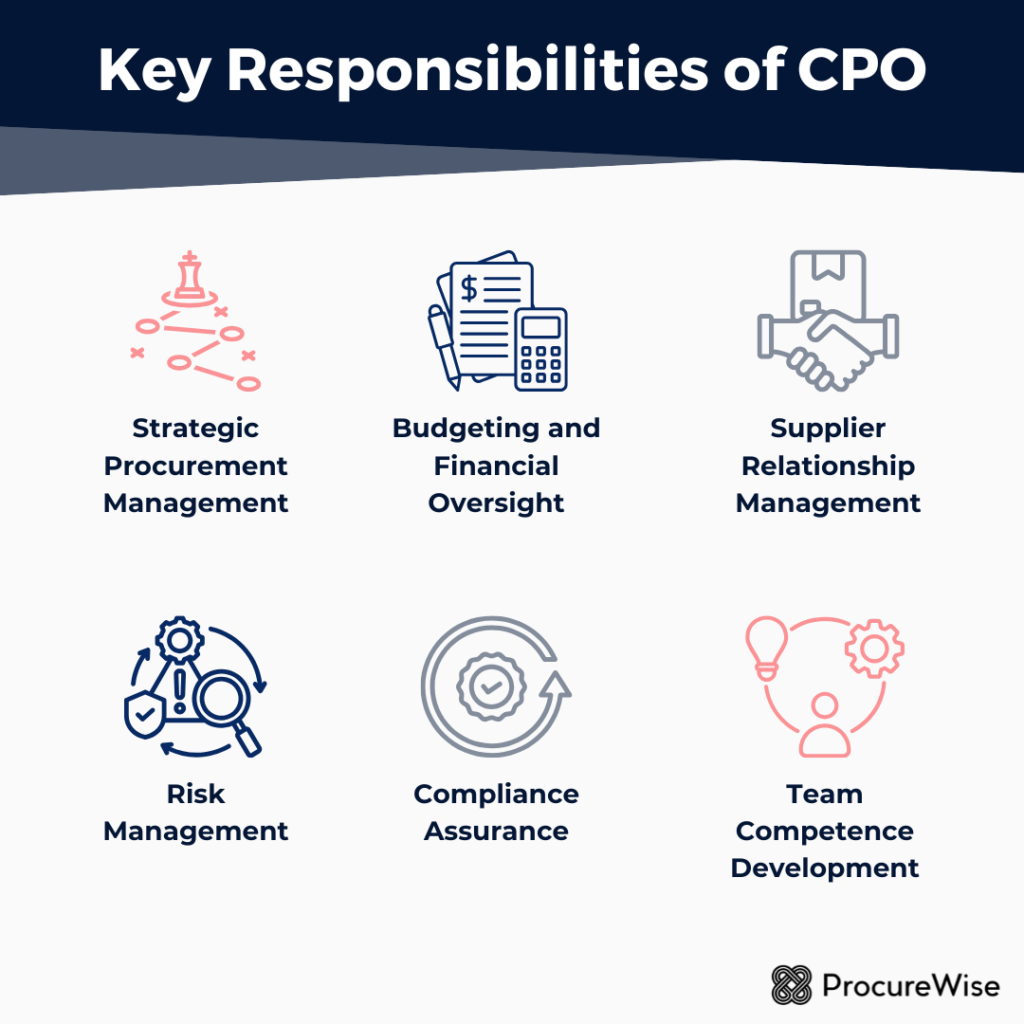
The Chief Procurement Officer (CPO) plays a critical role in an organization by overseeing the procurement function and ensuring it aligns with the company’s strategic objectives. Key responsibilities include:
✏️ Strategic Procurement Management: The CPO develops and implements procurement strategies that drive cost savings, enhance supply chain efficiency, and support the overall business strategy.
✏️ Budgeting and Financial Oversight: Collaborating closely with the Chief Financial Officer, the CPO estimates expenses and allocates budgets effectively, whether for the entire procurement department or specific projects.
✏️ Supplier Relationship Management: The CPO builds and maintains strong relationships with key suppliers, establishing clear communication channels and conducting regular performance reviews to foster collaboration and innovation.
✏️ Risk Management: Identifying potential risks related to procurement processes is essential. The CPO develops mitigation strategies to address external and internal risks that may impact operations.
✏️ Compliance Assurance: Ensuring adherence to national and international procurement laws and regulations is a fundamental responsibility, helping the organization avoid legal issues and maintain operational integrity.
✏️ Team Competence Development: The CPO invests in training and development programs to enhance the skills of procurement team members, ensuring they are equipped to meet modern procurement challenges.
By fulfilling these responsibilities, the CPO not only drives operational efficiency but also positions procurement as a strategic asset, contributing to the organization’s long-term success and competitive advantage.
✅ Benefits of Having a Chief Procurement Officer (CPO) ✅
A Chief Procurement Officer (CPO) plays a critical role in an organization, driving strategic value and enhancing overall operational efficiency. Here are some key benefits of having a CPO:
✔️ Cost Savings: Through effective procurement strategies, CPOs identify opportunities for cost reduction and negotiate better terms with suppliers, resulting in substantial savings for the organization.
✔️ Strategic Alignment: CPOs ensure that procurement activities are aligned with the company’s goals and objectives, contributing to long-term organizational success and sustainability.
✔️ Risk Management: With expertise in identifying potential risks within the supply chain, CPOs develop and implement strategies to mitigate these risks, safeguarding the organization against disruptions.
✔️ Supplier Relationship Management: A CPO fosters strong relationships with vendors and suppliers, promoting collaboration and innovation that can lead to improved product quality and service delivery.
✔️ Data-Driven Decision Making: By leveraging analytics and procurement data, CPOs gain insights into spending patterns, enabling informed decisions that enhance procurement processes and optimize resource allocation.
✔️ Compliance Assurance: CPOs ensure that procurement activities adhere to relevant laws and regulations, minimizing legal risks and promoting ethical sourcing practices.
✔️ Operational Efficiency: By streamlining procurement processes, CPOs enhance efficiency, reduce cycle times, and improve overall productivity within the organization.
In summary, a CPO not only manages procurement but also serves as a strategic partner within the C-suite, driving value across the organization and ensuring sustainable growth.

🛠️ Essential Qualities and Skills for Effective CPOs 🛠️
The role of a Chief Procurement Officer (CPO) is multifaceted, requiring a diverse set of qualities and skills to navigate the complexities of modern supply chains. As organizations face an ever-evolving external environment, the effectiveness of a CPO hinges on their ability to integrate strategic vision with operational excellence. Below, we explore the essential qualities and skills that define successful CPOs.
➡️ Strategic Thinking: At the core of an effective CPO’s role is the ability to think strategically. This involves aligning procurement initiatives with the broader objectives of the organization. A strategic CPO must not only understand current market trends and supplier dynamics but also anticipate future market shifts. The capacity to foresee industry changes positions the CPO as a key player in organizational growth, enabling them to identify opportunities for innovation and improvement.
➡️ Analytical Skills: In an age where data drives decision-making, strong analytical skills are essential for a CPO. They must be adept at gathering and processing large volumes of data, assessing it critically, and translating complex information into actionable insights. This skill allows CPOs to optimize procurement processes, identify cost-saving opportunities, and make informed decisions that contribute directly to the organization’s bottom line.
➡️ Effective Communication: A CPO must excel in communication to be successful in their role. This includes not only conveying procurement strategies clearly but also collaborating effectively with both internal stakeholders and external partners. A strong communicator ensures everyone involved in the procurement process understands their roles and responsibilities, which is crucial for aligning efforts with the overall business goals.
➡️ Negotiation Expertise: Negotiation skills are paramount for a Chief Procurement Officer. The ability to articulate requirements clearly and negotiate favorable terms with suppliers can lead to significant cost reductions and enhanced supplier relationships. An effective negotiator understands the nuances of each deal, enabling them to secure the best possible outcomes for the organization.
➡️ Leadership Skills: The CPO is often seen as a leader within the organization, responsible for guiding their team through challenges and fostering a culture of continuous improvement. Exceptional leadership skills help CPOs inspire and motivate their teams, encouraging collaboration and innovation. A strong leader can also navigate complex organizational dynamics to align procurement efforts with strategic priorities.
➡️ Curiosity and Adaptability: Curiosity drives a CPO to explore new technologies, methodologies, and best practices within procurement. This inquisitive nature enables them to remain agile and adaptable in the face of change, producing a procurement strategy that can evolve with the organization and its external environment. Embracing curiosity not only enhances the CPO’s decision-making capabilities but also promotes a culture of learning within the procurement team.
➡️ Technological Proficiency: As procurement increasingly relies on advanced technologies and data analytics, a successful CPO must be comfortable with technological tools that enhance efficiency and transparency. Familiarity with platforms like Amazon Business, for instance, can provide CPOs with valuable insights into spending patterns and streamline procurement operations. Leveraging technology effectively allows CPOs to demonstrate their strategic value and secure their place in the C-suite.
In conclusion, the blend of strategic thinking, analytical prowess, communication effectiveness, negotiation expertise, leadership qualities, curiosity, and technological proficiency are integral to the success of a CPO. By cultivating these essential qualities and skills, CPOs can drive innovation and ensure that procurement not only supports operational goals but also contributes to the strategic vision of the organization.
🥊 Challenges Faced by Chief Procurement Officers 🥊
In a rapidly evolving market, Chief Procurement Officers (CPOs) face numerous challenges that impact the efficiency of procurement processes. Changes in customer needs, increasing demands for transparency, and the adaptation to new technologies are key hurdles they must navigate. Let’s examine the most pressing challenges that CPOs need to address effectively.
💥 Supply Chain Disruptions: Geopolitical tensions, natural disasters, and pandemics pose significant risks to supply chain stability.
💥 Diversified Sourcing: The need for diversified sourcing strategies to mitigate risks and enhance supply chain resilience.
💥 Balancing Cost and Sustainability: Difficulty in reconciling cost-effective procurement with the growing demand for sustainable practices.
💥 Internal Resource Limitations: A lack of internal resources can hinder the implementation of effective procurement strategies and sustainability initiatives.
💥 Supplier Performance Tracking: Challenges in effectively tracking and evaluating supplier sustainability performance.
💥 Executive Support: Gaining buy-in from top management for sustainable procurement policies can be difficult.
💥 Cost Concerns: Concerns regarding the potential costs associated with implementing sustainability initiatives can limit procurement efforts.
💥 Compliance with Regulations: Navigating and adhering to various compliance and privacy laws surrounding the procurement process is increasingly complex.
💥 Technology Adoption: Keeping up with technological advancements and integrating them into procurement processes can be a challenge.
💥 Cultural Shift: Instilling a culture of sustainability within the organization requires changing long-standing practices and mindsets.